Episode 46
Indie Films, Hollywood & Steering the Ship with Jon Sherman
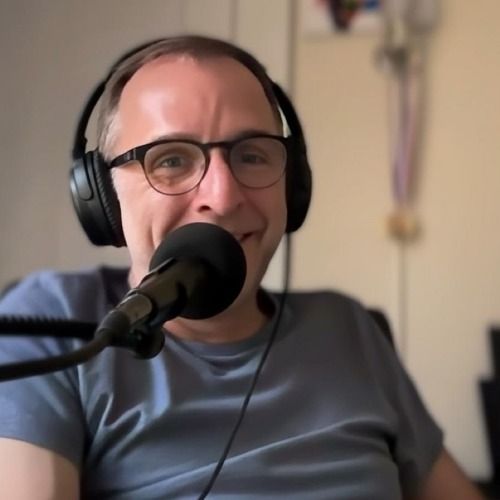
Filmmaker Jon Sherman has been my friend for years and I finally got him in front of a microphone before I left Ohio. We talk about growing up in Manhattan, making movies nobody would buy, Harvey Weinstein passing on his film, directing a hundred people when you have no idea what you're doing, teaching at Kenyon for 17 years, and the tattoo that may not say what he thinks it says.
You can, and should, follow Jon on Instagram @theythemusfilm
Please show some support for the podcast and get access to some extra content by subscribing to the Patreon page: http://www.patreon.com/onefjef
Instagram: @onefjefpod
Facebook: https://www.facebook.com/onefjefpod
TikTok: @onefjefpodcast
YouTube: https://www.youtube.com/@onefjef
Email: onefjefpod@gmail.com
You can also call the podcast and leave a voicemail at 1-669-241-5882 and I will probably play it on the air.
Thank you for listening, please do it again, and then make a film about it.
Onefjef is produced, edited & hosted by Jef Taylor.
Transcript
Was there ever a point during shooting this where you were
Speaker:just like, I'm in over my head?
Speaker:100%. 100%. And it was, it was going very smoothly until one day where
Speaker:things just started to go wrong.
Speaker:And I kind of just went and just sat in a corner and I just
Speaker:started like getting really upset.
Speaker:And I was actually really fortunate that there was a really sweet.
Speaker:Union Grip who came up to me, or maybe it was the gaffer, and he's
Speaker:like, John, whatever you're going through, you can't show it to the crew.
Speaker:Like you have to be in charge.
Speaker:And I was just like, thank you.
Speaker:That is really kind of you.
Speaker:That's the best advice you could ever get.
Speaker:Yeah.
Speaker:Yeah.
Speaker:Yeah.
Speaker:It was really sweet.
Speaker:You gotta steer the ship.
Speaker:You gotta steer the ship.
Speaker:This is episode 46 of onefjef.
Speaker:46 leans into that in between, slightly unsettled energy.
Speaker:In numerology it reduces to one, pointing to endings that quietly
Speaker:turn into beginnings, like a reset you didn't fully choose.
Speaker:It carries this tension between structure and care, control and letting go, and even
Speaker:shows up in the body as 46 chromosomes.
Speaker:Your entire inheritance baked in.
Speaker:It's not a milestone number, it's the moment just before one when
Speaker:something is shifting under the surface but hasn't revealed itself yet.
Speaker:Hola de nuevo, mis amigos.
Speaker:Que tal?
Speaker:I'm in my sixth week living here in Mexico City and this abnormal life
Speaker:is starting to feel somewhat normal.
Speaker:As normal as possible, at any rate.
Speaker:I think it's safe to say that my guest today is one of the most
Speaker:accomplished filmmakers in Columbus, Ohio, and he's currently in the
Speaker:midst of shooting his new feature film, which I am very excited to see.
Speaker:His name is John Sherman, is an American writer director known for indie romantic
Speaker:comedies in the late 90s and early 2000s.
Speaker:His film I'm with Lucy helped him break into the indie film world with a sharp
Speaker:character driven take on relationships.
Speaker:And a notably strong cast.
Speaker:Beyond directing, he's worked with major production companies and
Speaker:later shifted toward education.
Speaker:He's now a film professor at Kenyon College, where he teaches and mentors
Speaker:the next generation of filmmakers.
Speaker:We talk about how we don't remember exactly how we met in
Speaker:this episode, but since recording it, I did remember, actually.
Speaker:I'd heard about Jon through some other film people in town.
Speaker:So I sent him a friend request or whatever it's called on LinkedIn.
Speaker:We met for beers at this beer garden called Gamut.
Speaker:That was in 2022.
Speaker:And since that first meeting, Jon and I have become good friends and
Speaker:actually spoke to his class at Kenyon about filmmaking a few years ago,
Speaker:which made me feel strangely legit.
Speaker:Having Jon on this podcast was in part an excuse to hear about his whole
Speaker:journey from indie filmmaking in New York to being a film professor in
Speaker:Ohio and all the stuff in between.
Speaker:And it's a good story, albeit a painful one as most filmmaking stories often are.
Speaker:But John's still doing it, and I admire that.
Speaker:Because as you'll hear in this conversation, filmmaking is
Speaker:hard and complicated work.
Speaker:But he's still doing it.
Speaker:I'd be remiss if I did not mention my Patreon page, which
Speaker:is at Patreon.com/onefjef.
Speaker:Please go there.
Speaker:Please go there now and sign up.
Speaker:Help support this independent podcast, which takes a significant
Speaker:amount of time and effort to produce and edit and everything else.
Speaker:And you'll also get access to some wonderful bonus content, some photos,
Speaker:videos, other episodes that haven't been released to the public and
Speaker:early access to the CDMX Dispatch episodes, which are about my strange
Speaker:existence here in Mexico City.
Speaker:Only five dollars a month, which is so little, if you really think about it.
Speaker:I found five dollars on the street.
Speaker:No, I didn't because I'm in Mexico.
Speaker:But if I was in the United States and I found five dollars on the street, I'd be
Speaker:like, Oh, what am I going to do with this?
Speaker:I guess I'll just throw it away.
Speaker:Oh, I can sign up and support this independent podcast
Speaker:with this five dollars.
Speaker:Oh, well then I'll do that instead.
Speaker:And if you already do subscribe to the Patreon page, then thank you.
Speaker:Thank you.
Speaker:Thank you so much.
Speaker:I really appreciate you.
Speaker:I appreciate your continued support and your existence.
Speaker:On this planet.
Speaker:This is the last of the episodes that I recorded before I left Columbus, and
Speaker:it couldn't be with a better human.
Speaker:I'm hoping that when he finishes shooting his film, he'll come directly to Mexico
Speaker:City for some much needed downtime.
Speaker:And tacos, of course.
Speaker:As always, thank you for listening.
Speaker:Thank you for being here.
Speaker:Here's my conversation with John Sherman.
Speaker:John, thanks for coming in, uh, to the old onefjef podcast.
Speaker:I know John from the film gathering, right?
Speaker:I think we met before that, but I don't know exactly.
Speaker:Yeah, whom or how yeah, I kind of had that same thought but I have no idea where it
Speaker:would have been or how but Somehow you got my number and got in touch, right?
Speaker:Right.
Speaker:I don't know but now it's the film gathering thing and then Yeah on
Speaker:and on and on so forth and so on and then I went and Spoke to your
Speaker:students gave them some great advice.
Speaker:I thought that was awesome.
Speaker:They're all going to be very rich now Uh, this is the good advice.
Speaker:Um, but thanks for thanks for coming in and you're teaching at Kenyon.
Speaker:You're a film teacher at Kenyon Yeah, i'm a film professor at Kenyon college, right?
Speaker:I've been teaching there.
Speaker:16th year No kidding, which is never something that I thought I would do.
Speaker:That's crazy You Yeah.
Speaker:Where were you born?
Speaker:Where'd you grow up?
Speaker:I mean, I was born in Illinois because my dad was in law school, but the
Speaker:intent was always to get back to New York City, where everyone was from.
Speaker:So When my dad finished law school, they packed us up in a car.
Speaker:Like, I love talking to them about this story because there were
Speaker:obviously no like car seats then.
Speaker:They like had me in a little crib in the back, terribly dangerous,
Speaker:just rolling around in the backseat, driving from Illinois to New York.
Speaker:So I, I, I mean, I consider myself a native New Yorker, but
Speaker:in fact, I was not born there.
Speaker:So you grew up in New York, basically.
Speaker:Yeah, I'm a real New York City kid.
Speaker:Which part of New York did you grow up in?
Speaker:I grew up in Manhattan, so I grew up, um, uh, Stuyvesant Town and Peter Cooper, like
Speaker:the last Oh, you lived in Stuyvesant Town?
Speaker:Yeah, the last of the middle class housing that you don't really see anymore.
Speaker:Yeah.
Speaker:And, um, you know, we, when I was born, we lived in Stuyvesant Town,
Speaker:and then we moved to Peter And my parents, everyone, my grandparents
Speaker:were all, like, first generation.
Speaker:They all came off the boat.
Speaker:Europe and my parents were first generation college and You know, they
Speaker:didn't have much money and stuyvesantown was great because and peter cooper We
Speaker:had a two bedroom apartment That I can remember had a view of the east river.
Speaker:I'm sure yeah.
Speaker:Yeah, and it was six hundred dollars a month but we had a divider my my
Speaker:sister and I were like My sister's two years younger and uh, this is like You
Speaker:That's probably the late seventies.
Speaker:Yeah.
Speaker:And we had like a modular divider in between the room.
Speaker:Right, right.
Speaker:And finally my mom convinced my dad that that was unacceptable.
Speaker:Right.
Speaker:To our way to raise children.
Speaker:Right, right, right.
Speaker:And they bought an apartment.
Speaker:Like we were like the Jeffersons.
Speaker:We moved on up to 57th and first.
Speaker:Oh.
Speaker:And they still live there.
Speaker:Wow.
Speaker:And I can remember my dad saying.
Speaker:Like, like it was a three bedroom apartment and he was like, 300, 000?
Speaker:That is so much money.
Speaker:We can't ever.
Speaker:300 grand for an apartment on 50th 57th?
Speaker:Yeah.
Speaker:He's like, we can't afford that.
Speaker:We'll never be able to afford it.
Speaker:And my mom convinced him.
Speaker:And that's one of the best investments they've ever made.
Speaker:You know, you basically like, like a chimpanzee could make money
Speaker:in New York state real estate.
Speaker:New York real estate.
Speaker:Back in the day.
Speaker:Back in the day, yeah.
Speaker:If anybody was smart enough to know that it was going to come back.
Speaker:I mean, we, we were, we weren't making an investment.
Speaker:We were just living there.
Speaker:Right, right, right, right.
Speaker:But, you know, it turned out to be, it's not a, it's not a great place
Speaker:to grow up in the sense that like there's honking outside until three
Speaker:in the morning because that's where you go onto the 59th street bridge.
Speaker:Right, that's probably why it was cheaper.
Speaker:Yeah, yeah, you know, I went to private school in Manhattan in in the Bronx
Speaker:Actually a school called Horace Mann that you may have heard of because there was
Speaker:a number of scandals associated with it But you know, so I saw the documentary.
Speaker:Yeah Yeah so I always had imposter syndrome because we had just moved to
Speaker:57th Street and like my friends all lived on Park Avenue and they were
Speaker:all really really wealthy and So like I was a poor kid compared to these.
Speaker:How did your parents afford Horace Mann?
Speaker:You know, my dad was a corporate lawyer and they could afford it.
Speaker:Oh, alright, so they had money.
Speaker:Yeah, they had money, but it was, it was a big deal for them, you know,
Speaker:because they didn't grow up that way.
Speaker:They grew up in Brooklyn, and like, to go to private school was unusual.
Speaker:But I mean, you don't want to go to a Like a public school in Manhattan.
Speaker:I could have you know, there's I mean It's not like it isn't that like now
Speaker:There are all these sort of schools within a school and charter schools,
Speaker:but back then it would have been a different choice But they decided
Speaker:that I should go to Horace Mann.
Speaker:What kind of a student were you?
Speaker:Were you like a cool kid?
Speaker:Were you a nerdy?
Speaker:Were you like in the film then?
Speaker:No, I went to school with some really really smart kids.
Speaker:Sure.
Speaker:The way I ended up sort of distinguishing myself was I
Speaker:started getting really into music.
Speaker:Okay.
Speaker:And like a lot of new wave bands and it was a, it was a crazy time
Speaker:where like all these bands from England would play like every Friday
Speaker:night at a club called The Ritz.
Speaker:Huh.
Speaker:And my friends and I would go and see like I saw the first
Speaker:ever American show of The Smiths.
Speaker:Huh.
Speaker:Like I met my best friend and my producer online At not online,
Speaker:like in line on the internet.
Speaker:Right in line.
Speaker:Right, exactly.
Speaker:In Ohio, we call it in line in, in New York they call it online,
Speaker:which I've never cared for.
Speaker:Never for.
Speaker:That is a really funny thing.
Speaker:I never really thought about that.
Speaker:It's true.
Speaker:It drives me a little crazy.
Speaker:'cause you're not literally standing on the line, you're
Speaker:in, you're in physical line.
Speaker:Yeah.
Speaker:But New York City.
Speaker:Yeah.
Speaker:Yeah.
Speaker:So my, my friends and I, we, we got there.
Speaker:Two in the afternoon for an Echo and the Bunnymen concert, and he ended up
Speaker:being my closest friend and producer.
Speaker:Back in the day, and we've known each other now, I guess, like 40 years.
Speaker:Your friend who you met in line at Echo and the Bunnymen.
Speaker:Exactly.
Speaker:That's Tim Peral.
Speaker:Shout out to Tim.
Speaker:So you were the guy at Horace Mann who knew, uh, All the,
Speaker:uh, the cool, the cool bands.
Speaker:Right.
Speaker:And that sort of distinguished me from the other kids who just wanted to go and
Speaker:make money and become lawyers and doctors.
Speaker:I see.
Speaker:Yeah.
Speaker:So at what point did film start to be like, Oh, Oh, uh, was it a while?
Speaker:So yeah, it was a while.
Speaker:So basically I went to Wesleyan in Connecticut.
Speaker:Okay.
Speaker:I don't know if you're familiar with that school.
Speaker:But.
Speaker:But, uh, Wesleyan has an amazing film program.
Speaker:And I was actually into music then, but there, I had a friend on my
Speaker:floor of my dorm who said, I'm going to go talk to this film professor.
Speaker:We were first year students.
Speaker:Yeah, and if you want to be in film, you have to talk to her now because
Speaker:there's a two year or A year, I think it was a waitlist to get into her classes.
Speaker:So I was like, yeah, that sounds good So I went with him and talked
Speaker:to this woman and got into her film classes and at that point I was only
Speaker:interested in like the European directors like Godard, Bergman, I used to go.
Speaker:Right, very pretentious.
Speaker:Yeah, pretentious.
Speaker:I mean, it was just, I didn't think much of American films, you know, I didn't
Speaker:know about classic American cinema.
Speaker:So I can still vividly remember going to a theater on 8th Avenue that was
Speaker:showing a triple feature of Pasolini and I was like the only person in
Speaker:there that wasn't like homeless, like just getting warm from the cold.
Speaker:And like those days, I mean, That was a great time to be able to do that.
Speaker:You know, those, those things don't exist anymore, right?
Speaker:Sad closed.
Speaker:Yeah.
Speaker:Yeah, I'm sad for film students.
Speaker:I feel like movie theaters are gradually going to start disappearing because I just
Speaker:the business model doesn't seem to be I mean the Netflix deal And all that it's
Speaker:all just a death knell for these theaters.
Speaker:It's unfortunate So you just took a film class and would it ever have
Speaker:occurred to you to go into film before?
Speaker:Absolutely not.
Speaker:And then you took a class and you're like, oh Yeah, this is an amazing
Speaker:thing, and a couple years ahead of me, uh, Joss Whedon was in that class, the
Speaker:Buffy the Vampire Slayer, and Michael Bay was also in the class ahead of me.
Speaker:Fuck yeah, bro.
Speaker:Exactly.
Speaker:I mean, you should have seen the student film that that guy made.
Speaker:I'm sure, I'm sure.
Speaker:It was cranes and everything.
Speaker:Did you ever see, like, the behind the scenes?
Speaker:There's, like, on a DVD of a behind the scenes of him directing, and, like,
Speaker:he's up on a, like, a giant podium, and he's going, and they're like,
Speaker:action, and he's like, blow that up!
Speaker:It's just like, and then he cut.
Speaker:He's, he's the best job ever.
Speaker:Yeah.
Speaker:He's, but you know, he always knew what he wanted to be.
Speaker:And that's more than I can say for myself.
Speaker:I suppose the most people can say for themselves.
Speaker:Yeah.
Speaker:He was that.
Speaker:And Joss too, like he knew, like he made a student, like we were all making
Speaker:pretentious black and white movies and Joss made a vampire movie and he knew.
Speaker:That, so he was always, and that's, I mean, that's a lot of
Speaker:the secret to their success, is they knew what they wanted to be.
Speaker:Right.
Speaker:And connections, but we won't even get, go there.
Speaker:Right, and perhaps rich parents.
Speaker:Yeah, money, it's a combination of money and having parents in the film business.
Speaker:I don't think Michael did, but Joss did.
Speaker:I think the money, having people with money, having, it is a big, big arbiter
Speaker:of who can make it in the film industry.
Speaker:There's certainly examples of people who have not, but like, most of them.
Speaker:It's the money, but it's also the confidence to think
Speaker:like you can be a director.
Speaker:Sure.
Speaker:And a lot of them sometimes it It really helps to be able to have people
Speaker:in your family that have done it that make you feel It's such a small
Speaker:little country all the people right?
Speaker:So you get introduced to all the people and that's how you get.
Speaker:Yeah.
Speaker:Yeah, because otherwise you're like How am I ever gonna get
Speaker:into this business, you know?
Speaker:Yeah, you wonder how much talent though is out there that just hasn't been able
Speaker:to be certainly there's some famous like some Some talented children of directors
Speaker:that have made some amazing films.
Speaker:Sofia Coppola, but like yeah for every Sofia Coppola I wonder how many other
Speaker:people People that were that just didn't have any money, you know, I mean now as
Speaker:a teacher I see it Yeah, you know and I see I see the talent and but they don't
Speaker:a lot of students Just don't have that belief or that drive that will take them.
Speaker:You just have to be relentless, right?
Speaker:right, you know and frankly like i'm not sure what it would what it takes
Speaker:to to succeed as a as like a as like a director in the film industry in
Speaker:these in this day and age, but I I don't imagine it's Fun necessarily.
Speaker:No You Yeah, it's not fun.
Speaker:You ended up majoring in film.
Speaker:At Wesleyan.
Speaker:At Wesleyan.
Speaker:And, uh, what kind of films did you want to make, or what kind of film did
Speaker:you make for your, like, thesis film?
Speaker:Yeah, my thesis film was really, I was very influenced by Tarkovsky.
Speaker:I, so I, I spent a junior year in Paris studying film, and
Speaker:it was most, and semiotics.
Speaker:Um, there were classes in French.
Speaker:Uh huh.
Speaker:And they were ridiculous.
Speaker:We spent like an entire semester in one class just analyzing the credits
Speaker:of Godard's A Woman is a Woman.
Speaker:Most pretentious fucking thing I've ever heard in my entire life.
Speaker:I know, I just love it so much.
Speaker:But at a certain point, I was just like How do you analyze the credits?
Speaker:What's, what's in the credits of A Woman?
Speaker:There's a lot of references to other filmmakers and to No kidding.
Speaker:Yeah, if you watch the movie, I can explain it to you.
Speaker:We can do that sometime.
Speaker:We'll do that in a different episode of the podcast.
Speaker:Yeah.
Speaker:So like Literally he would just, the teacher would just explain.
Speaker:But that was better than the other teacher who was like a Hitchcock expert but just
Speaker:ended up like chasing this one woman who was a friend of mine around the projector.
Speaker:. Isn't that like trying to like kiss her ? So like so great.
Speaker:So perfect.
Speaker:But at a certain point I just like film right there.
Speaker:Film right?
Speaker:Yeah, exactly.
Speaker:At a certain point I just checked out.
Speaker:'cause at.
Speaker:I don't know if you've ever been in Paris, but there's, you know, so like
Speaker:there are movie theaters that are playing classic American cinema all
Speaker:the time and Tarkovsky all the time.
Speaker:So at a certain point, I was like, I'm kind of done with these classes.
Speaker:I'm just going to go to the movies.
Speaker:And that really was my film school.
Speaker:More than anything else, just going.
Speaker:Going to the movies.
Speaker:Um, Solaris, uh, or like, uh, like, what was the other one?
Speaker:The Mirror is my nostalgia of the two that really made me want to make movies.
Speaker:Stalker is this other weird one.
Speaker:That's, I couldn't get through that.
Speaker:They're tough, you know.
Speaker:Um, Solaris, I remember the film.
Speaker:Burnt in the projector and no one was sure if the movie was really done or not
Speaker:people were just confused And didn't know whether they should leave but I loved
Speaker:it like every bit of it and my sister came to visit me and I made her I Made
Speaker:her sit through the mirror and she was just looking at me like you asshole.
Speaker:I'm never going to a movie with you Yeah, you pretentious fuck.
Speaker:Yeah.
Speaker:Yeah.
Speaker:Yeah.
Speaker:I've been there.
Speaker:Uh They did the burning the film joke in gremlins 2 as well.
Speaker:Do you remember that and when I think hulk hogan comes out?
Speaker:Anyway, it's it's well worn.
Speaker:Yeah Gremlins 2 is actually a pretty good film.
Speaker:I just watched it again recently.
Speaker:So, what was your final film of your, your graduating film?
Speaker:At Westland?
Speaker:It was, oh my god, it was so pretentious.
Speaker:It was so I mean, it sounds like Black and white.
Speaker:Nobody's surprised.
Speaker:I mean, Tarkovsky, black and white.
Speaker:Yeah.
Speaker:I loved it though.
Speaker:I mean, I had every image.
Speaker:Is it out there still?
Speaker:Can we You know, this is a sad thing because I've just, the actress who was
Speaker:in the film is a friend of mine now.
Speaker:I've met her.
Speaker:Sort of re met her and she wants a copy of it and I went to look and I had like
Speaker:a one inch videotape of it that I don't know where it's gone and It's tough.
Speaker:I don't know.
Speaker:It's lost.
Speaker:It's a lost film Like I've just been reading this really great novel about
Speaker:GW pops called the director that you should recognize You should read it.
Speaker:It's fantastic.
Speaker:But he had a lost film.
Speaker:His masterpiece was lost.
Speaker:So I like to think that my masterpiece is lost.
Speaker:Right, right.
Speaker:Was it a good film, do you think?
Speaker:No, but like it had some really pretty images.
Speaker:It won some prizes in film, like the Chicago Film Festival.
Speaker:Yeah, it was, it was really pretentious.
Speaker:What was it called?
Speaker:I can't even, it's too pretentious.
Speaker:No, you've got to tell me what it's called.
Speaker:Catherine in the Enclave.
Speaker:Okay, and what was the plot of it?
Speaker:Plot!
Speaker:Just a quick summary.
Speaker:It's about a woman in a relationship who is trapped in
Speaker:her memories and just visual.
Speaker:Right, right.
Speaker:It's very Tarkovsky, very, you know, kind of dream like.
Speaker:Yeah, yeah, yeah.
Speaker:Yeah, yeah.
Speaker:Like, I just remember a lot of a shot of, like, the beginning shot
Speaker:is like a coffee cup shaking.
Speaker:But, you know, it's funny, like, um, a friend of mine who did the
Speaker:music, he just sent me Like he had all the demos from it, we listened.
Speaker:It was really, you know, you don't realize like a lot of people work on these things
Speaker:with you and they have their own memories, you know, it's, it is what it is.
Speaker:And it's, yeah, no, I have the same kind of thing with my thesis.
Speaker:So a lot of people have a lot of memories of that.
Speaker:Yeah.
Speaker:Yeah.
Speaker:So it's not, I mean, it's a team sport.
Speaker:It is, it is.
Speaker:You know, and Becky Connor still talks about it.
Speaker:Like, you know, the actress, like, oh, that was a wonderful thing I was in.
Speaker:It was just like, what was the budget for this thing?
Speaker:Do you remember?
Speaker:You know, their thesis film.
Speaker:So they gave us the camera and it was just the budget for the film and developing it.
Speaker:Oh, I mean, I still spent like 20 grand on my thesis film,
Speaker:even though we got cameras.
Speaker:So that's more of like a graduate school thing.
Speaker:Oh yeah, right.
Speaker:Fair enough.
Speaker:You know, and I did that at Columbia.
Speaker:So I went to Columbia afterwards.
Speaker:Way too much money.
Speaker:That's when you spent the too much money on the thesis.
Speaker:Oh my god.
Speaker:And what was the thesis film there?
Speaker:At Columbia?
Speaker:Yeah.
Speaker:It was a script, because I knew that I wanted to make my own feature, so
Speaker:I just wrote the screenplay for it.
Speaker:Okay.
Speaker:And what was that screenplay?
Speaker:It was called Till Christmas, but it ended up, the distributor changed
Speaker:the title of it to Breathing Room.
Speaker:So I wrote that as my thesis at Columbia.
Speaker:How was Columbia?
Speaker:I don't know.
Speaker:I mean, I almost, thank God I didn't drop, I almost dropped out.
Speaker:I was so That was a master's program?
Speaker:It was a master's program, but if I hadn't finished that degree, that MFA,
Speaker:I wouldn't have been able to teach.
Speaker:So I just, thank God I stuck it out.
Speaker:I don't know why I stuck it out, because I hated it.
Speaker:Because you knew.
Speaker:Well, you know, now it's different.
Speaker:Now they've been able to hire all these great directing teachers.
Speaker:You know, you have people that made films, that won prizes at Sundance, that can't.
Speaker:Make features all the time, you know, these people that can't necessarily
Speaker:have a directing career are now teaching at Columbia So it's different now
Speaker:and people, you know, it's much more structured It wasn't the way that wasn't
Speaker:the case and I actually love the fact that it wasn't structured Because I
Speaker:could kind of do whatever I wanted.
Speaker:I started off as a directing major changed to a screenwriting major But
Speaker:I mean, you know, I went to college Wesleyan with really successful people.
Speaker:And at Columbia, my best friends were Bob Pulcini and Shari Berman, who did
Speaker:American Splendor and now do a lot of TV.
Speaker:Jim Mangold, who you probably know was in my class.
Speaker:Uh, Kim Pierce was in the class below me, really amazing
Speaker:director, did Boys Don't Cry.
Speaker:So there were a lot of people there that just really willed
Speaker:themselves to success, you know.
Speaker:But again, In graduate school, like no career planning, no helping, right.
Speaker:You know, it's just, it's just, you're on your own.
Speaker:You just have to make a will yourself to make some movies.
Speaker:Yeah.
Speaker:Yeah.
Speaker:You get to make movies, but like there wasn't even a set.
Speaker:Program at that point like how many how many people were in the program?
Speaker:Oh, I have a funny story about it So B. Lush Foreman was the head of
Speaker:the program then which was amazing There was probably 30 or 40 people
Speaker:in our class, which was way too much.
Speaker:There should have been like 10 You know, that's way too many
Speaker:filmmakers to graduate for the price.
Speaker:Yeah.
Speaker:Yeah, but but here's a funny story Milos had brought over a A lot of
Speaker:his friends from the Czech Republic, which was Czechoslovakia then.
Speaker:So he brought this guy named Vojta Jasny, who did a movie that, it
Speaker:won Cannes in like maybe 1966, 67.
Speaker:But he didn't really teach so much as he just kind of pontificated.
Speaker:But there was a famous story.
Speaker:Uh, the year before me where he told his class, New York is about cows.
Speaker:I want you to go out and film cows to me.
Speaker:And so literally people like went to like Pennsylvania for cows
Speaker:and of course he meant chaos.
Speaker:Right, right, right.
Speaker:That old, that old, that old misunderstanding.
Speaker:So, but he, I mean, he inspired us, you know, but it was not, I
Speaker:wouldn't call it a program per se.
Speaker:Right.
Speaker:I had a, uh, Eastern European teacher as well in film school and
Speaker:it was the same kind of a vibe.
Speaker:And he was a huge director where he came from, but we never,
Speaker:nobody, we didn't always know.
Speaker:He liked me a lot though, because I made weird, I think I
Speaker:made pretentious films as well.
Speaker:Sure.
Speaker:I mean, that's what you do in film school is you make pretentious films.
Speaker:You should.
Speaker:Pretentious, right, yeah.
Speaker:Yeah, absolutely.
Speaker:That's your chance to make your pretentious film.
Speaker:I know, like if you, I don't trust you if you go in and make
Speaker:a romantic comedy for Netflix.
Speaker:Right, that's what they wanted me to do at SCAD though.
Speaker:They kind of wanted me and everybody to make like these
Speaker:very kind of bland, anyway.
Speaker:It's an art school, I mean, shame on them.
Speaker:So In Colombia, is there, is there a love life?
Speaker:Do you, are you, are you dating women?
Speaker:Are you, are you?
Speaker:That's such a funny question.
Speaker:I love that.
Speaker:There were women.
Speaker:I, yeah, I had, I was dating one of my fellow film students.
Speaker:She's from Belgium.
Speaker:Nice, nice.
Speaker:So, but she dropped out after the first year because her funding, uh,
Speaker:yeah, that's too bad, was pulled.
Speaker:Yeah.
Speaker:So.
Speaker:Do you know where she is now?
Speaker:Yeah, yeah, I see, I saw, I just saw her when I went to, she lives in
Speaker:Brussels still, she writes novels.
Speaker:I just saw her when I went to Antwerp, we had an amazing reunion.
Speaker:Wow.
Speaker:I don't, I keep in touch with people, that is my, kind of my great skill.
Speaker:Yeah, you're really good at that, I've noticed that.
Speaker:You're really, uh, you are a, a people, uh, a people beaver.
Speaker:Gatherer.
Speaker:Yeah.
Speaker:Yeah.
Speaker:That's, I've learned that that is my great talent.
Speaker:And you remember names like nobody's business, it's kind of incredible,
Speaker:but, uh, well done on that.
Speaker:Yeah.
Speaker:I, I just enjoy, like, I was just.
Speaker:Doing this and I just enjoy like getting people together and making
Speaker:having them work together and make connections Yeah, I do too.
Speaker:I just don't like the networking at Like film festivals.
Speaker:I mean I got better at it, but it was always so awkward It's always some
Speaker:guy who's talking about cameras like the nuke and always that guy's talking
Speaker:about cameras and asking people what camera they use Or you're doing this
Speaker:where you're talking to them and they just and you see the person looking
Speaker:around To see who else they can talk to because you're clearly boring them.
Speaker:I mean that's the film business.
Speaker:I fucking hate that shit so much.
Speaker:Fucking disgusting.
Speaker:Yeah.
Speaker:Anyway.
Speaker:So you have the script you want to get made you get out of film school I had to
Speaker:learn how to make an independent film.
Speaker:It wasn't just about writing it So I worked I went to college with
Speaker:Daisy Mayer who did party girl.
Speaker:Okay, so I worked on that I did all the locations for her.
Speaker:Oh cool.
Speaker:And then I was the unit production manager.
Speaker:I mean Parker Posey.
Speaker:I sure did Yeah, she's cool as she seems like she is Yeah, she was actually much
Speaker:nicer than you would expect her to be.
Speaker:I would expect her to be nice.
Speaker:Still a star from that moment.
Speaker:Yeah.
Speaker:Working on that movie kind of taught me like, how do you go about making
Speaker:an independent film in New York?
Speaker:Mm. Then I did my own, but we had to raise the money.
Speaker:That was hard.
Speaker:Your first feature film is called, what was it called?
Speaker:It was Christmas.
Speaker:Something changed.
Speaker:Well, it was called Till Christmas.
Speaker:Right.
Speaker:So I wrote it with a friend of mine.
Speaker:Again, still friends with him.
Speaker:Right.
Speaker:Um, he had a relationship that.
Speaker:He and his girlfriend said, we're going to break up at Thanksgiving and we're
Speaker:not going to talk until Christmas and see if we still want to be together.
Speaker:So I thought, well, that's a nice structure.
Speaker:Like it's all set between Thanksgiving and Christmas.
Speaker:So it's kind of a New York Christmas movie.
Speaker:And we got it in the can for about 125, 000.
Speaker:Wow.
Speaker:And then there was one investor on 16, 16.
Speaker:Yeah.
Speaker:The hard and wonderful part of it.
Speaker:It was like, we couldn't finish it.
Speaker:So we got in the can for that.
Speaker:But I had a friend from college whose dad had, uh, was about to go
Speaker:into prison for savings and loan.
Speaker:And had to get rid of his money and he ended up putting
Speaker:another 125, 000 into the movie.
Speaker:Thanks Jimmy Maynard for whatever.
Speaker:Yeah, right.
Speaker:To help his son to get into the film business, which didn't do that, but
Speaker:like we were just really fortunate to be able to have that to finish it.
Speaker:So the budget was like 250, 000.
Speaker:Ah, that's hilarious.
Speaker:I think everyone on the film was paid like 250, 000 a week.
Speaker:Oh, all right.
Speaker:So, yeah.
Speaker:There was a great moment, my first rehearsal with, I got all these
Speaker:wonderful theater actors from New York, just really talented.
Speaker:And we were in rehearsal and I realized.
Speaker:I really didn't learn in Columbia how to talk to actors and how to, and
Speaker:they, they kind of ran circles around me and it was really, it was a really
Speaker:stressful and humiliating experience because the movie starts off with this
Speaker:dinner scene with all these actors.
Speaker:And I was like, how do I do this?
Speaker:How do I get this thing on its feet?
Speaker:And I learned to get out of the way.
Speaker:Uh huh.
Speaker:I was really like I really didn't know what I was doing right after film
Speaker:school, you know, that's crazy Yeah, and I really learned later How to work
Speaker:with actors and that's the one thing that film school should teach is how to
Speaker:work with actors and they just didn't Do yeah, I did I grew up in the theater.
Speaker:So I kind of got that already.
Speaker:That was the good thing I was I think I was good at was playing actors, but
Speaker:you were you taught it in grad school?
Speaker:No, that was definitely not I don't remember having a class
Speaker:about dealing with Unless it was an elective that I didn't take, but no.
Speaker:I missed that one.
Speaker:But then I had, my best friend at the time was in my thesis, so it was kind of
Speaker:a, you know, who I grew up acting with.
Speaker:Right.
Speaker:So it was already in.
Speaker:So how do you, how did the film, how did it go?
Speaker:So another really fun story.
Speaker:I was just telling it, My wife about this story too.
Speaker:It's just like, these things kind of come out, it's like trauma later.
Speaker:Tim, they do, they do, they really do.
Speaker:It's just like, why do these memories come out the way they do?
Speaker:So Tim Perel, who is the producer of the film, one of his internships,
Speaker:he was working for a guy named John Pearson, who's a legendary sales agent,
Speaker:who, he wrote a book called Spike, Mike, Slackers and Dykes, because
Speaker:he sold Spike Lee's first movie, Michael Moore's first movie, Slacker.
Speaker:And Yeah, so he had a huge reputation.
Speaker:So his idea was to take 15 minutes of the film and show it to distributors
Speaker:and try to sell it that way.
Speaker:And we had.
Speaker:two screenings and The Brothers McMullen had just come out and it
Speaker:was a big hit for Fox Searchlight.
Speaker:Yeah, so it was like the first big indie Indie indie.
Speaker:Yeah.
Speaker:Yeah so the guy who was the head of Fox Searchlight was there and he he
Speaker:we showed him 15 minutes of the film and We thought he was gonna buy it
Speaker:and it was gonna be like his next the next great independent, right?
Speaker:Success and we also showed it to this company called fine line.
Speaker:And that was new lines art film division.
Speaker:Okay, and In that 15 minutes of footage, we had one scene.
Speaker:It was a breakup scene.
Speaker:It was in a hallway.
Speaker:And because so much of the movie had been shot, it was romantic comedy, because
Speaker:so much of it had been shot in close up, we did that whole scene in a long shot.
Speaker:And we had, we included it.
Speaker:I thought it was a beautiful scene, but we included it in
Speaker:that first 15 minutes of footage.
Speaker:And the guy who was the head of fine line, we were watching the movie
Speaker:and we were in the back, we were in a screening room, and he screamed
Speaker:out, you have coverage for this?
Speaker:And I screamed back, no, it was an artistic decision.
Speaker:And then later when they didn't buy it, he said, we're just afraid
Speaker:there are more artistic decisions in your movie, which is great.
Speaker:The guy who's the head of Searchlight, he told us he was gonna, we showed
Speaker:it to him on a Friday, and we told, he told us he was gonna buy it,
Speaker:and we were so excited, and he then changed his mind over the weekend.
Speaker:He just got nervous.
Speaker:Oh, what a fucking horrible industry.
Speaker:What a horrible, horrible industry.
Speaker:You know?
Speaker:It's not hard.
Speaker:There's, a lot of jobs are hard.
Speaker:The film industry is horrible.
Speaker:It'll break your heart.
Speaker:It's horrible.
Speaker:Every time.
Speaker:You know?
Speaker:And again, a lot of industries will break your heart.
Speaker:The film industry Just media in general.
Speaker:It's all, I mean, I could go politics too.
Speaker:That's awful as well.
Speaker:Yeah.
Speaker:There's a lot of things that are horrible, but the film industry, I feel like
Speaker:it's a particular kind of Of horrible.
Speaker:Yeah.
Speaker:It's unfortunate what's happened.
Speaker:'cause it makes me not wanna make films.
Speaker:It's, I dunno, like you really have to want to do it.
Speaker:I've learned how to deal with it on my own terms.
Speaker:But yeah, I mean I have, there's more stories like
Speaker:this if you wanna get into it.
Speaker:So did you sell that film?
Speaker:We did.
Speaker:So what happened was John Pearson had a first look deal with Miramax at the time.
Speaker:Okay.
Speaker:And Harvey Weinstein watched it.
Speaker:So you had to fuck Harvey Weinstein.
Speaker:I mean, I can't even tell you, like, the stories of just watching Harvey
Speaker:Weinstein in action, you know.
Speaker:I sat in a bunch of rooms with him.
Speaker:What, like flirting with people?
Speaker:No, he was just, he was just such a strong personality.
Speaker:I just remember him screaming to his assistant, Ira!
Speaker:Cigarettes!
Speaker:Ira!
Speaker:And, you know, my friends Bob and Sherry worked really closely with
Speaker:him because they did the nanny diaries and they stood up to him.
Speaker:But I never really got the chance because he, he, Didn't want the movie.
Speaker:He was clearly not, he said, I'll take it, but we will, we need to be the first,
Speaker:the last money in and first money out.
Speaker:And we just didn't, we knew he didn't really want it.
Speaker:So he wasn't going to, right.
Speaker:So, we sold it instead to a small distributor called Arrow Films that they
Speaker:had done a bunch of movies that have come out, but they never paid us the advance,
Speaker:so we ended up having to sue them.
Speaker:But This is just one example after another about how horrible the film industry is.
Speaker:Yeah.
Speaker:You know, John didn't really know what to do with the movie, and I,
Speaker:one of Shamus, who Legendary writer and producer Um, he was my produce.
Speaker:He was the producing teacher at columbia and I ran into him on long island on the
Speaker:beach This is like very film industry.
Speaker:Yeah, and we bonded over the fact that we both had psoriasis And he ended up coming
Speaker:on as the sales agent in the end He's like, I think I can sell this movie better
Speaker:than john and john pearson didn't take it.
Speaker:Well, of course not.
Speaker:Yeah And, and he helped us, they helped us sell it to this company Arrow, but
Speaker:it was a brutal thing because we had to take it to, we thought the only way
Speaker:to get this movie sold is to get it to Sundance and we were told that we were in.
Speaker:And at the last minute they changed their mind and they didn't take it.
Speaker:They're allowed to do that back then?
Speaker:It was a different time, but I think it still goes on in a way that I
Speaker:think that you and I are not party to how these decisions get made,
Speaker:but with people that are important.
Speaker:Producers, distributors, they let them into the process and they
Speaker:have a different pipeline to this.
Speaker:So they told us it was in, and then it wasn't in all of a sudden.
Speaker:And that was, that was brutal because, yeah.
Speaker:And I remember Tim saying like, I feel like a failure and I was just like, Tim,
Speaker:it's the same movie it was, you know, like don't take it too seriously, but it
Speaker:was, it was hard because that was the end.
Speaker:We knew that we thought that was the end of it ever getting sold to a big
Speaker:distributor and you know, it probably was.
Speaker:I mean you actually did sell it at a certain point.
Speaker:Yeah, and did you get money back?
Speaker:Did it go in the theaters or anything?
Speaker:It was in the theaters, but we didn't get money back.
Speaker:That's, that's the story of my life.
Speaker:You know, it's like, the film industry.
Speaker:Yeah, no, I mean, you know, it was, they guaranteed us going into like 25 markets
Speaker:and, you know, it played at the Angelica for a week and then they tried to expand
Speaker:it wide and the reviews were like, the New York Times really liked it, but the
Speaker:other reviews were kind of so so and it went to Philadelphia and a bunch of
Speaker:other places and it just didn't, You know as as these things do it just didn't
Speaker:really make any money But you fucking made a movie that played at the Angelica.
Speaker:Yeah, so that's pretty sweet It was pretty great because the place that we actually
Speaker:ended up selling it was at the market in Cannes Mm hmm, and it was the same year
Speaker:that secrets and lies came out and won the Palme d'Or This was like very like
Speaker:indie indie film breakout years Yeah.
Speaker:And I don't like, I'm not going to bore you with my stories of,
Speaker:you know, like five of us going to the Cannes film festival and like
Speaker:sleeping on the floor of a hotel room.
Speaker:But it was pretty cool that like, we were just in the market
Speaker:selling our movie and we sold it.
Speaker:We sold it to Australia and Germany and a bunch of other places then, because
Speaker:it was really the reputation of good machine, you know, selling a film.
Speaker:And, but like Secrets and Lies won the Palme d'Or and then, you know,
Speaker:There we were at the Angelica later, like in the same multiplex of Secrets
Speaker:and Lies, and that was a pretty, that's pretty cool Yeah, but then the
Speaker:next minute like the film business will do something to humiliate you.
Speaker:Oh, yeah No, I mean you've already given me like five ten examples of
Speaker:the film industry being horrible.
Speaker:Yeah.
Speaker:Yeah, but the subway sound going over Or going under the Angelica
Speaker:was always that that's the one right with the subway goes under.
Speaker:Yeah, it does.
Speaker:Yeah, I always loved that Yeah, that was the pinnacle back in the day.
Speaker:It kind of still is but Now streaming has destroyed that but at that
Speaker:point that was the pinnacle of success like being in the Angelica.
Speaker:Oh, really the Angelica?
Speaker:Absolutely.
Speaker:Huh?
Speaker:I always thought that was kind of a like it's kind of a crappy theater.
Speaker:It's not like a great theater It was the it was the and kind of still is like
Speaker:the big art house Yeah, I'm a New York City and yeah, you know that and like
Speaker:in LA would be I'm not sure which one.
Speaker:I mean the Cedar Lee in Cleveland and the Cedar Lee in Cleveland?
Speaker:That comes later.
Speaker:When you have an indie success, like, it's the rare indie success
Speaker:that will play all over the country.
Speaker:Right.
Speaker:But like, you know, Slacker or one of those movies.
Speaker:But back then it was so different.
Speaker:Like, a Slacker now.
Speaker:Oh, I wouldn't.
Speaker:I wonder what it would look like.
Speaker:I mean, I'm thinking it would get out there, but it wouldn't do anything.
Speaker:Like, it was just such a strange film.
Speaker:Yeah, it's true.
Speaker:I mean there was no plot, so.
Speaker:I mean, but then you look at Slacker and you look at his career and you say,
Speaker:okay, that guy was really talented.
Speaker:Right, and you say, right, and you also say, what has
Speaker:Slacker done to film in general?
Speaker:Like, that opened, like, the whole thing up.
Speaker:I saw that and I was like, are you kidding me?
Speaker:You can do this?
Speaker:Yeah, exactly.
Speaker:Yeah.
Speaker:I mean, the guy, he's brilliant.
Speaker:He still talks about, you know, now you see him on Instagram
Speaker:talking about Tarkovsky and you're just like, thank God, man.
Speaker:Yeah, that uh, I mean he was the before sunset series or whatever it was.
Speaker:Sunrise.
Speaker:Yeah, but that's Slacker, you know without without John Pearson I don't know
Speaker:that that movie gets in the theaters.
Speaker:Yeah, I have no idea even installed that movie to anybody.
Speaker:Yeah, John did it Yeah, you know he made independent film.
Speaker:He made that niche by selling those movies.
Speaker:So So, you make the first film, you sell the first film, you don't make
Speaker:any money, it's eh, it's okay, it plays in the Angelica, yadda yadda yadda.
Speaker:Most people would have given up and gone to law school, as my
Speaker:wife at the time told me to do.
Speaker:Oh, when did you get married in here?
Speaker:When would you Oh yeah, we got married somewhere in there,
Speaker:I don't Where'd you meet her?
Speaker:We met at a party.
Speaker:Oh, okay.
Speaker:In East Village.
Speaker:Right, what did she do?
Speaker:She's a great person.
Speaker:She works in public health, she still does.
Speaker:Oh, wow, alright.
Speaker:Yeah, it's hard.
Speaker:I don't know that you can have a relationship and be a film, independent
Speaker:film director at the same time.
Speaker:I would say that it's impossible.
Speaker:I look at, I look at the really successful people and they
Speaker:were not able to manage it.
Speaker:Yeah, I think any, even not film, just any celebrity kind of thing at all.
Speaker:I don't know how they managed to maintain a relationship.
Speaker:And we had kids.
Speaker:I mean, well, I didn't have, my son was born in 99.
Speaker:And you're how old when your son's born?
Speaker:33? Okay.
Speaker:And I think I was like one of the first people in my friend circle
Speaker:to have kids, which is crazy.
Speaker:That is crazy.
Speaker:Well, New York though.
Speaker:Yeah, people waited, people worried about their careers, you know?
Speaker:Yeah, that's why I miss New York because I didn't feel like I was obligated
Speaker:to have children and marry somebody when I didn't live in New York, but
Speaker:here it feels like you're obligated.
Speaker:It's yeah, for sure.
Speaker:It's one of the rules.
Speaker:Yeah.
Speaker:So that was 97 And I'm trying to think Okay, so then after that it was hard,
Speaker:you know, I got the rights to I don't know if you know the book The Mysteries
Speaker:of Pittsburgh Oh, yeah, the Michael Chabon novel So I had the rights to
Speaker:that for a while and I thought I was that was going to be my next film Wow,
Speaker:you got on Chabon in the early days.
Speaker:Yeah, I had to I Had to woo him to get him, get the rights.
Speaker:Jason Schwartzman was attached to it.
Speaker:He wasn't famous yet.
Speaker:Oh, wow.
Speaker:Yeah.
Speaker:And the, and the people that were financing it didn't, didn't want him.
Speaker:They said he wasn't handsome enough, so that movie didn't get done.
Speaker:And there were a couple others that I was close on and I had, um, A
Speaker:friend in New York who is a writer said a friend of mine wrote a script.
Speaker:It's great.
Speaker:You should read it Um, it was called six blind men at the time and it was kind
Speaker:of like a romantic comedy That was also a thriller So, you know that a woman's
Speaker:getting married at the beginning of the movie and you don't know she's been
Speaker:on six blind dates over the past year and you see in sort of bits and pieces
Speaker:and you Kind of have to guess which one she oh, I see she marries clever.
Speaker:Yeah, it was very clever scripts and tim Showed it to a
Speaker:producer at Gaumont in France.
Speaker:They were interested in that, but it started like a three year development
Speaker:process to get that movie made.
Speaker:It was a very long, again, no money.
Speaker:You don't get paid.
Speaker:Yeah, you know, so here I am like having my first kid and it's like
Speaker:a really complicated pregnancy and my poor, my poor, at the time.
Speaker:Working in public health.
Speaker:To deal with it.
Speaker:And it was just like, and she's just like, are you going to make some money soon?
Speaker:And then you sign this contract to get paid a lot of money.
Speaker:And thankfully that one did get made and I actually got paid a bunch of money on it.
Speaker:It's called I'm with Lucy and it has a great cast.
Speaker:We were making it right before there was a Screen Actors Guild strike.
Speaker:Okay.
Speaker:So a lot of actors wanted to work.
Speaker:And so it has Monica Potter.
Speaker:I remember flying to Cleveland.
Speaker:I was like, well, Monica lives in Cleveland, still does.
Speaker:Oh, does she really?
Speaker:Yeah, flying from New York to Cleveland to get her to be in the movie.
Speaker:And then when she said yes, then it was kind of a jigsaw
Speaker:puzzle of getting the cast.
Speaker:But it has kind of an amazing cast for an independent film.
Speaker:It's, uh, Gael Garcia Bernal and Henry Thomas and, um, John Hanna.
Speaker:And I'm gonna forget people.
Speaker:I apologize.
Speaker:David Boreanaz, Julie Christie.
Speaker:They're not gonna listen to this podcast.
Speaker:Julie Christie, that's one.
Speaker:Yeah, we've had to, Tim and I flew to LA to meet with Julie Christie.
Speaker:She's like, why do you want me to be in this movie?
Speaker:I was like, because you're Julie Christie.
Speaker:And you're just the hired director for this?
Speaker:Well, technically, but like I developed the project.
Speaker:We brought it to that.
Speaker:You're getting paid for this, though.
Speaker:Only when you only get paid when the movie goes into production.
Speaker:So for three years, I didn't get any money.
Speaker:And then when it went into production, how much money did you get?
Speaker:That that time, 250, 000, which seemed like so much fucking money.
Speaker:Fuck yeah, dude.
Speaker:Yeah.
Speaker:Yeah.
Speaker:Yeah.
Speaker:I was really psyched.
Speaker:Right.
Speaker:You get one check.
Speaker:No, you get like, it comes in like four payments.
Speaker:Oh, but I had, I just, you know, gave it to my agent at the time.
Speaker:I had a really, he was a prestige agent, but he didn't actually like do anything.
Speaker:How'd you get the, how'd you get the agent?
Speaker:The agent watched.
Speaker:Okay.
Speaker:And he, you know, it was good.
Speaker:He, he, he set me up with a lot of Hollywood meetings.
Speaker:Right.
Speaker:And the thing about Hollywood that, or LA, let's call it, like
Speaker:that would just break your heart.
Speaker:It's like you go and you have these meetings, they're called generals.
Speaker:Yeah.
Speaker:Where you just go and talk to people and they just say like, yeah, they're
Speaker:like, what's your next project?
Speaker:Oh, we want to do that.
Speaker:And you leave that airport thinking, oh, I'm going to have five jobs.
Speaker:And of course, nothing ever materializes.
Speaker:They're yes men, they're yes people.
Speaker:Yeah, they just want to be, they just want to make sure
Speaker:that they get your next script.
Speaker:As long as, yeah, they got to make, get your fingers in
Speaker:as many people as possible.
Speaker:And one of them will become famous.
Speaker:Exactly.
Speaker:And then you'll.
Speaker:That's their job.
Speaker:It's really, it's awful.
Speaker:It's not fine.
Speaker:It's awful.
Speaker:Well, but for them.
Speaker:You understand why they do what they do.
Speaker:Right.
Speaker:But not, but if you go into that, not knowing that that's the case, you
Speaker:just like Someone has to tell you.
Speaker:Fucking bullshit.
Speaker:Yeah.
Speaker:Someone has to tell you.
Speaker:Um, so it's really up to you.
Speaker:You gotta, you gotta drive the train.
Speaker:You gotta get your own projects.
Speaker:And that's what we did.
Speaker:Right.
Speaker:Yeah.
Speaker:Right.
Speaker:So, so that movie should have been a three million dollar, two or three
Speaker:million dollar quirky romantic comedy, but Gaumont decided it was a 10 million
Speaker:dollar movie and they were gonna, they wanted to make a studio romantic comedy.
Speaker:But just because you pay that doesn't mean.
Speaker:Right.
Speaker:So it ended up being like about six million above the line.
Speaker:So what can you do with six million dollars in a film?
Speaker:Like, like, what is that?
Speaker:I mean, I have no idea what that kind of money, I mean, I made my
Speaker:Sundance film for five hundred dollars, so I really have no idea.
Speaker:But when you're confronted with, like, this is the biggest budget thing at
Speaker:this point you've made, so what are you spending most of the money on?
Speaker:I mean, above the, you've got, you pay, you pay the salaries, right?
Speaker:Yeah, so the salaries are taking up most of the money, right?
Speaker:So, so basically when Gaumont's making the movie, like, Like, Monica's agent
Speaker:at CAA says, Monica's quote is 1.
Speaker:25 million and they pay it.
Speaker:And they were morons for paying, for paying that.
Speaker:They should have sent She got 1.
Speaker:25 million?
Speaker:So that's already a tenth, more than a tenth of your whole Yeah.
Speaker:And she told me afterwards, like when we were drinking one night,
Speaker:she's like, I would have done this movie for 50, you know.
Speaker:And you don't tell me that now, I don't, I don't blame her.
Speaker:I, the agents, they just, you know, that's their jobs, the most money.
Speaker:And they think, Oh, we're in the big time.
Speaker:We're in France, you know, we're paying full pay, right.
Speaker:That we're paying the quote of the actors.
Speaker:Like everyone has their own reasons for doing what they do.
Speaker:Yeah.
Speaker:But it's unfortunate that most of the.
Speaker:It's money most of the time.
Speaker:It's always money.
Speaker:Yeah.
Speaker:Well, no, I mean, I think sometimes it's, you know, You were trying to make a
Speaker:great movie like it you weren't doing it for the money You were doing you wanted
Speaker:to make a great piece of art, right?
Speaker:Yeah, but the agents once they get of course underneath is the money
Speaker:and it's unfortunate that that's anyway It's an expensive endeavor and
Speaker:filmmaking is filmmaking is so much so expensive and so complicated The
Speaker:lesson that I learned is that You don't make the movie for the moat.
Speaker:I mean, it was a different time, but you just, I mean, I wouldn't have said.
Speaker:No to that money and I'd be an idiot to say no, right?
Speaker:But you make the movie for the budget that it should like you have to think
Speaker:about the back ends and how you're gonna sell It yeah, you know, they thought
Speaker:they were gonna sell it to studios But studios said sure it's 10 million
Speaker:dollars, but we're gonna have to spend 25 million to release this in theaters
Speaker:Yeah, that's too big an investment.
Speaker:So in the end, they just sold it to Sony And Sony paid, I don't know what
Speaker:it was at the time, but they just released it on DVD and, and cable.
Speaker:Oh, it went straight to DVD.
Speaker:Yeah, it was brutal, brutal.
Speaker:Poor Monica, she just, it was, it was gonna be, it was gonna make her career.
Speaker:And mine too, obviously.
Speaker:Right.
Speaker:So, I mean, it's a good movie.
Speaker:You know, you can watch it.
Speaker:It's on Tubi.
Speaker:It's a very sweet, romantic comedy.
Speaker:There are things I would have done differently and things that I had to do
Speaker:because it was France and they wanted a certain, certain things in the script.
Speaker:You know, the first 30 minutes of it was a rough, was rough going.
Speaker:Cause you're explaining a bunch of things that the, they said the European
Speaker:audience needed, which of course they didn't, but, um, Was there ever a
Speaker:point during shooting this where you were just like, one day you're like,
Speaker:I am in on, I'm in over my head.
Speaker:A hundred percent.
Speaker:A hundred percent.
Speaker:With a big union boost.
Speaker:I don't know what the fuck I'm doing.
Speaker:Yeah.
Speaker:And it was, it was going very smoothly until one day where things just started
Speaker:to go wrong and I kind of just went and just sat in a corner and I just
Speaker:started like getting really upset and I was actually really fortunate.
Speaker:There was a really sweet, uh, Union Grip, who came up to me, or maybe
Speaker:he's the gaffer, and he's like, John, whatever you're going through,
Speaker:you can't show it to the crew.
Speaker:Like you have to be in charge and you have to show.
Speaker:And I was just like, thank you.
Speaker:That is really good.
Speaker:That's the best advice you could ever get.
Speaker:Yeah.
Speaker:Yeah.
Speaker:Yeah.
Speaker:It was really sweet.
Speaker:You got to steer the ship.
Speaker:You got to steer the ship.
Speaker:When it's Union, like, like around lunchtime, the producers start
Speaker:gathering around you, around the monitor and start rushing you because
Speaker:you're about to go into double time.
Speaker:And I didn't know any of that stuff.
Speaker:And we got a DP, like, that we shouldn't have hired, he was a total jerk, and we
Speaker:should have hired somebody else, but we had, we heard a rumor that she was slow,
Speaker:and it was just, the stuff is so stupid.
Speaker:Such a horrid, ridiculous industry.
Speaker:Ridiculous.
Speaker:You just want to make a fucking movie.
Speaker:That's why I did everything with nobody, I did like five people.
Speaker:How many people were you in charge of?
Speaker:How many people were on this crew?
Speaker:A hundred at least.
Speaker:A hundred people?
Speaker:Good lord, I can't even imagine.
Speaker:Yeah.
Speaker:Yeah.
Speaker:I can't even imagine.
Speaker:Yeah.
Speaker:It was hard.
Speaker:It was just, you just gotta go into it and just be in charge.
Speaker:But there were days where I just, I really didn't know what I was doing.
Speaker:Well, see, that's the thing.
Speaker:I've often don't know what I'm doing when I'm making films, but I've
Speaker:oftentimes, like I just work with people that I feel like they know what
Speaker:I want and they know what they're doing.
Speaker:So if I get to a point where I don't know what I'm doing, I can just turn
Speaker:to my friend who's the DP or whoever, and be like, what are we doing here?
Speaker:We gotta figure something out.
Speaker:Yeah.
Speaker:And he will be like, yeah, we, we, we, we got it.
Speaker:But like, yeah.
Speaker:If you get from that level to like the level that you're talking
Speaker:about, that's where it gets to.
Speaker:You don't know these people.
Speaker:You're just, yeah.
Speaker:Yeah.
Speaker:I don't think I would enjoy that.
Speaker:No, it was hard.
Speaker:Like I needed a mentor.
Speaker:Like, you know, so Hal Ramis was in the movie and he was kind of a
Speaker:little bit of a mentor to me, but.
Speaker:He just was like, man, that's a nice looking shot.
Speaker:That is a nice.
Speaker:And he really made me feel good.
Speaker:That's helpful.
Speaker:Yeah, definitely.
Speaker:But there were other times where I would just felt really alone.
Speaker:And I was just like, I need somebody to say to me, like, you need to.
Speaker:Shot list and this in a way that's doable.
Speaker:Yeah, and I just didn't I just didn't know right It's crazy that I mean for myself
Speaker:to that all the film school still and you're thrown into a film situation And
Speaker:you and it's like you got to learn it all over again or learn it for the first time.
Speaker:Yeah So and Tim also told me afterwards he Tim's amazing producer.
Speaker:He told me afterwards like I They want like before the movie even
Speaker:started not nothing to do because once the movie started like we thought
Speaker:it was gonna be brilliant Right.
Speaker:Well because it seemed like because we had like Anthony LaPaglia and he was
Speaker:such a good actor You have to think it's gonna be brilliant because it was going
Speaker:really well, right, you know, and But he told me like They tried, they were
Speaker:going to fire you like five times in pre production just to get somebody else.
Speaker:And I was just like, uh, that's always great.
Speaker:He told you that afterwards.
Speaker:Cause he's a great guy and a really good, he just protected me.
Speaker:So then this movie goes straight to DVD and, uh, and then what happened then?
Speaker:What are we, what are we doing next?
Speaker:We're still in New York.
Speaker:It's still in New York.
Speaker:Where are we in Brooklyn?
Speaker:Where do we live in Brooklyn?
Speaker:We live in Park Slope.
Speaker:Oh, what part of Park Slope?
Speaker:Whereabouts?
Speaker:Union and 8th Avenue.
Speaker:Oh, okay.
Speaker:I was at 7th and 9th.
Speaker:Oh, okay.
Speaker:And then I was South Slope.
Speaker:Eh, 7th and 9th.
Speaker:It's not South Slope anymore.
Speaker:Well, at the time it was.
Speaker:You're like by the F. Yeah.
Speaker:And I was by the 2 3.
Speaker:I was right above the F, yeah.
Speaker:That was prime park slope over there.
Speaker:It is.
Speaker:I was just there.
Speaker:It's really happening.
Speaker:Yeah, it's very nice now Yeah, so you need to make another
Speaker:you want to make another movie.
Speaker:You got to make more money.
Speaker:So what do you do now?
Speaker:Mm hmm.
Speaker:So you have two kids now?
Speaker:No, Alex was born in 1999.
Speaker:I had one kid.
Speaker:Okay good.
Speaker:Olivia was born in 2003 Okay.
Speaker:So it played in Europe.
Speaker:It was, you know.
Speaker:Okay.
Speaker:So it did play in Europe, but it did straight to DVD in the US.
Speaker:Okay.
Speaker:But I signed with ICM, who they were a big agency at the time.
Speaker:And they were like, yeah, don't worry.
Speaker:We're going to get you a directing for hire job.
Speaker:So at that point I was like, okay, I'll be a studio director.
Speaker:So I then started to interview for jobs and I learned very quickly that.
Speaker:Nobody cares how you're going to direct a movie.
Speaker:They just want to know how you're gonna fix their shitty horrible script So it
Speaker:was really a hard lesson to learn right, you know And no one told me and you just
Speaker:have to go in there and like do a dog and pony show Like but why are they making
Speaker:the movie if it's a terrible script?
Speaker:You just, you just described Hollywood.
Speaker:Okay.
Speaker:I think that you just, just literally, right, right, right.
Speaker:I mean, that's the only part that controls the script, right?
Speaker:Cause once they say yes.
Speaker:Then it's out of their hands.
Speaker:But why even say if the script isn't good don't say yes Like
Speaker:I just it's just so ridiculous.
Speaker:Have you been to the movies recently?
Speaker:Right, well you probably haven't yeah, they were all bad and they're all bad
Speaker:in development and you know You just your job is to fix their script So I had
Speaker:friends from college The Weitz brothers.
Speaker:So Paul Weitz was my friend from Westland and he had directed
Speaker:American Pie and hit it really, really big with his brother, Chris.
Speaker:And.
Speaker:I don't know how I got a hold of the script.
Speaker:I think it was through a different producer, but I
Speaker:was attached to this movie.
Speaker:It would have been a brilliant independent film that they were going to produce.
Speaker:And this is before American Pie or after?
Speaker:It was after American Pie.
Speaker:They had just done About a Boy.
Speaker:Okay, so this is relevant to the story because they made that movie for working
Speaker:title So I was up for all these directing jobs these horrible movies and I wasn't
Speaker:getting them and but there was one movie And I was right at that point.
Speaker:I was like, I don't think I can do this anymore.
Speaker:This is just really hard this is brutal and you know, I had to two kids at that
Speaker:point and I was trying to just make a living and I They sent me a script that
Speaker:was a teen movie that Working Title Films was making and I was like, you
Speaker:know, I think I can fix this one, even though it was, it was a weird story.
Speaker:It was about, um, a girl in Malibu who gets into trouble and gets sent
Speaker:to a boarding school in England.
Speaker:Okay.
Speaker:But the ace in the hole that I had was that the White's brothers
Speaker:had just made this movie for, they just made about a boy for Working
Speaker:Title and they called the head.
Speaker:The head producer at Working Title and said, hey, you
Speaker:should hire John to do this.
Speaker:And I just, I interviewed really well for that movie.
Speaker:It's all who you know.
Speaker:And it's also, yeah, it is all you know.
Speaker:But at that point, I also flew myself out to LA to meet with them in a room.
Speaker:I knew that that was the only way I was gonna get the job.
Speaker:Yeah.
Speaker:And not do it over the phone.
Speaker:It was before Zoom, obviously.
Speaker:Right.
Speaker:And somehow I got that job.
Speaker:And it was a big deal, you know, and that one that was crazy because we needed to
Speaker:discover somebody It was we needed like the 16 year old girl and I met every Young
Speaker:actress in Hollywood in a room with them.
Speaker:Like it was just crazy.
Speaker:And they were trying to decide who to hire.
Speaker:And just like long story short, like what ended up happening was
Speaker:we had narrowed down to a couple of actresses that were going to be in
Speaker:it and we were scanning locations.
Speaker:We were, we were probably three months out from shooting the movie and we were
Speaker:going to hire somebody to be in it.
Speaker:We were going to be in London for a year doing post because of the tax credits.
Speaker:So got my kid.
Speaker:Or at least Alex was old enough to go to school in London and the movie fell apart.
Speaker:And that was just, that was, and they did it in the worst way possible.
Speaker:When I got the job, it was so hard to get the job.
Speaker:I was told this is a go movie and it turns out that the head of the
Speaker:studio hadn't really approved it.
Speaker:So they told me, They said, you need to go out there and convince her
Speaker:you're going to make this movie.
Speaker:And I put together a whole, like it was before like pitch decks, but I
Speaker:did pitch decks, all those things.
Speaker:And they called me right when I was about to get on the plane or like a few hours
Speaker:before I was about to get on the plane.
Speaker:They were like, don't get on the plane.
Speaker:And what I found out was they decided they were going to make a different movie
Speaker:and they put this one in turnarounds and it was brutal because I had bought
Speaker:a house and I like, and I was right.
Speaker:Cause like, I was like, Oh, you know, they told me like, Oh,
Speaker:you're going to direct this one.
Speaker:But.
Speaker:You'll do the next movie with Tom Cruise.
Speaker:How much were they gonna give you for this one?
Speaker:350, 000. Okay.
Speaker:But again, like you don't get that until the movie starts shooting.
Speaker:So they give you a 10, 000 development fee, 5, 000 at the
Speaker:front and 5, 000 at the end.
Speaker:But they were flying me out because it was DGA rules and I was about to join the DGA.
Speaker:So I was flying first class.
Speaker:All the time.
Speaker:That's fun.
Speaker:Tell it.
Speaker:Yeah.
Speaker:Fun.
Speaker:And staying at fancy hotels, but like, I wasn't making any money
Speaker:and like, I couldn't enjoy it.
Speaker:I was just like, yeah, you can't, you know, it's not, it's all anxiety.
Speaker:It's all anxiety because I'm like, how am I going to get this movie made?
Speaker:And right.
Speaker:Like, probably could have taken advantage of that situation, being
Speaker:in LA and being a director and like, meeting all these actresses.
Speaker:Right, right.
Speaker:These stories are so interesting to me, because you don't hear stories like
Speaker:this, and I think that a lot of people's impression of the film industry is not,
Speaker:they don't understand what it really, how dark and twisted it really is.
Speaker:And uh, I'm impressed that you continued to give it a go even after the first
Speaker:one because you you know You've seen the darkest parts of the film industry
Speaker:and you know, yeah, I mean well done, sir Well, so we maintained your dignity.
Speaker:Well, I'll tell you this.
Speaker:You never did suck anybody's dick for this That's good, that's good.
Speaker:I never slept somebody had that no one asked me I mean they were
Speaker:tight I mean there's I've I've Cool.
Speaker:Was there a story that you got, was there an actress who was trying to So my friend
Speaker:Federico and I from, from Wesleyan, we had a pitch that we developed because it
Speaker:was based on Federico's father in law's in the, the, uh, Italian film industry.
Speaker:Okay.
Speaker:And we watched this movie and we just thought it was so funny.
Speaker:It was, and you, again, so politically incorrect now, but basically it
Speaker:was the story of a therapist.
Speaker:He finds out his wifey is having an affair.
Speaker:Okay.
Speaker:And it turns out she's having an affair with one of his
Speaker:patients who he knows is gay.
Speaker:So his job is to bring this guy out of the closet to break up the
Speaker:relationship, which you can't, but like, At a certain time, like, every
Speaker:gay agent in Hollywood got so mad at us.
Speaker:Sure, sure.
Speaker:But, like, it was fucking funny.
Speaker:Which is every agent in Hollywood.
Speaker:Federico was a brilliant writer.
Speaker:Right.
Speaker:And he actually was the one who wrote the script.
Speaker:And it was so funny.
Speaker:It would have been such a good movie.
Speaker:It would have been like a Billy Wilder movie.
Speaker:Right, right.
Speaker:But in a different time.
Speaker:Right.
Speaker:You could see it being made in, like, 1950.
Speaker:Yeah, yeah, yeah, yeah.
Speaker:Wrong time.
Speaker:But, like, we were just right on the edge there.
Speaker:Yeah.
Speaker:You know?
Speaker:And I remember going into a meeting with a gay producer and like, we were
Speaker:going to the studio to, cause you have to, first you pitch it to a producer
Speaker:and then you pitch it to the studio.
Speaker:And the producer said to us like, Oh, we're all gay here.
Speaker:We can, and Federico and I didn't correct him.
Speaker:It's like, how low are you going to be like, to just pretend like you're
Speaker:gay because the producer tells you, like, it just, that was a moment.
Speaker:We're all just like we're all going selling my soul.
Speaker:I mean a lot of them were gay.
Speaker:So let's I mean, yeah There's a lot of closeted Hollywood.
Speaker:Well, these guys at least like most gay producers were totally offended
Speaker:by this idea But this guy thought it was the funniest thing in the world
Speaker:And I kind of think that that guy was the one that was right he was and they
Speaker:should have made the film Absolute.
Speaker:Todd Solens Got it.
Speaker:Would've been a huge hit, right?
Speaker:Todd Solans got films made for in, in, in the nineties that
Speaker:were completely inappropriate.
Speaker:Yeah, but that was dark.
Speaker:Like this was funny.
Speaker:Yeah.
Speaker:You know, think Pat Pat's the King Kong.
Speaker:He's gotta get this guy outta the closet.
Speaker:And literally like, so what ends up happening is the guy headss up falling
Speaker:in love with his therapist transference.
Speaker:You know, it was fucking brilliant.
Speaker:. That movie would've been a huge hit.
Speaker:That was the one that was truly the one that got away.
Speaker:What was that one called?
Speaker:This one Hurt a bit.
Speaker:Which I thought was the fucking funniest title.
Speaker:That is a good title.
Speaker:But that's Federico, he's brilliant.
Speaker:That is a good title.
Speaker:Um, so, So what happens next?
Speaker:At what point are you like, I gotta move, I gotta get a job.
Speaker:Yeah, so the movie falls apart.
Speaker:I have to sell the house in LA.
Speaker:That was brutal.
Speaker:Brutal.
Speaker:Humiliating.
Speaker:Nice house.
Speaker:Beautiful craftsman house, 1910.
Speaker:Uh, Larchmont Village.
Speaker:The thing about LA that I learned is that unlike New York, you're always on.
Speaker:So like you go to a dinner party and everyone's gauging like
Speaker:where you fit on the totem pole.
Speaker:The hierarchy.
Speaker:Right.
Speaker:So like when I was there for the Working Title movie, Everyone wanted
Speaker:to kiss my ass because I was up high.
Speaker:Right.
Speaker:But I'd also been there when I was low and no one wanted to
Speaker:talk to me and I was like, Right.
Speaker:You people suck.
Speaker:I'll say I did feel that a little bit when I got, I got the short
Speaker:film into Sundance, like, I'm sure that was a thrilling experience.
Speaker:More people came to my parties for a while.
Speaker:Yeah.
Speaker:And then people started dropping off.
Speaker:You better have a really strong sense of yourself because it's not about you.
Speaker:I know, no, it's whatever, it was years ago.
Speaker:So, at what point are we, Do we get the job offer?
Speaker:Are we trying to look for?
Speaker:So my son, bless his heart, he's diagnosed with type 1 diabetes
Speaker:when he's like 8 years old.
Speaker:Okay.
Speaker:And he proceeds to, again, just like he's acting out, he's angry, I don't blame
Speaker:him, like getting diagnosed with a disease where you have to take insulin every day.
Speaker:Yeah.
Speaker:He proceeds to get himself kicked out of three different schools in New York
Speaker:City in a year, public and private.
Speaker:I'm not working at the time, my wife is working and she wants to be the one taking
Speaker:care of him and I'm taking care of it.
Speaker:And I was like, I need to get a job, and I need to, and I can, you know,
Speaker:I can probably teach because I have an MFA, and I think of film this way.
Speaker:And you've had experiences that give you credibility to, you know.
Speaker:Exactly, and I taught at Columbia, my alma mater, first semester, which
Speaker:was unfortunate that I was doing that when I was making a TV movie for
Speaker:Oxygen, so I did a really poor job, and they should not have hired me.
Speaker:I didn't see the TV movie from Oxygen.
Speaker:No, nor should you.
Speaker:No, I'm excited to see it, though.
Speaker:What was it called?
Speaker:It's called My Sexiest Mistake.
Speaker:It's literally, it wasn't my title.
Speaker:It's based on a romance novel.
Speaker:We changed it.
Speaker:Of course it was.
Speaker:We changed it into something that was a little more What did you change it to?
Speaker:No, we changed the whole story.
Speaker:Oh, the story, not the title.
Speaker:The title remained the title, because that was a book that
Speaker:Right, right, right, right.
Speaker:How much you get paid for that oxygen thing?
Speaker:50, 000, which is pretty useful in a time.
Speaker:For like what, a week or two of shooting?
Speaker:It was, no, it was more like three weeks with a little prep.
Speaker:Three weeks?
Speaker:That's, yeah, it was good money.
Speaker:See the thing is with films, if you, when the money comes, it comes in a big chunk.
Speaker:That's it.
Speaker:And that's the problem.
Speaker:That's it.
Speaker:Yeah.
Speaker:Yeah, that's it.
Speaker:And I, but I had an agent at the time.
Speaker:And then for taxes.
Speaker:You gotta pay the agent and pay the manager.
Speaker:It was a manager I had.
Speaker:Right.
Speaker:So you've already lost 30 percent of whatever year.
Speaker:It's 10%, 10 percent and then 5 percent to your lawyer.
Speaker:Right.
Speaker:So you're already paying 25 percent off the top in taxes.
Speaker:So you're not making that much yet.
Speaker:I mean, that's the thing about Hollywood is there's always people
Speaker:who will take part of your salary.
Speaker:With their hands sticking out.
Speaker:Yeah, yeah, for sure.
Speaker:So at that point I was like, I can teach, I need a teaching job and
Speaker:thank God for Kenyon college that they That was the only one you applied
Speaker:to or did you apply to a bunch?
Speaker:No, I applied to a bunch and you won't, like, I'm, I'm sort of mentoring
Speaker:a filmmaker right now who's really amazing filmmaker, who's having
Speaker:trouble getting a teaching job.
Speaker:And she's just like, I don't understand why I can't get a teaching job.
Speaker:I've made two features.
Speaker:And I'm like, there's politics and so many other issues.
Speaker:Like, it's interesting going from this, the politics of filmmaking to the
Speaker:politics of, of, of higher education.
Speaker:Yeah, right.
Speaker:Well, you know, as a film professor, I only have an MFA,
Speaker:so that's the terminal degree.
Speaker:So that's only a two year degree compared to everybody else that has a PhD. So
Speaker:there's really very little pressure on you to be, they just think of you
Speaker:as like a, Dumb as a sack of bricks.
Speaker:Oh, that's fun, which is fine.
Speaker:But then they're jealous too.
Speaker:They don't expect much They don't expect much and they're jealous because of
Speaker:course all the students want to take your classes because it's film, right?
Speaker:I'll take academia a hundred times out of a hundred as opposed to the film
Speaker:business Well, I would too because you've had the same job for 17 years.
Speaker:So that's already people are better people.
Speaker:Yeah for sure Yeah, smarter people better smarter people better human beings, but
Speaker:there's still money and people Backbiting and all these kind of things involved.
Speaker:The politics in academia are hysterical.
Speaker:So you say things like, I've heard you say this a lot, I feel so fortunate
Speaker:to be working for Kenyon, which I don't disagree with, but do you feel
Speaker:like that's a thing, I don't mean to go too deep here, but like, do you
Speaker:feel like that's a thing that's maybe like keeping you from a life change?
Speaker:Like that you feel fortunate to be there so that that's your, in a
Speaker:way you're like, oh I'm fortunate to be here so I shouldn't, Yes.
Speaker:You know?
Speaker:Yes.
Speaker:It's 17 years, John.
Speaker:It's a long time.
Speaker:It's a really long time.
Speaker:That's my life now, you know.
Speaker:So, you know, I was complimenting you before we started talking
Speaker:on air about I recorded that.
Speaker:Oh, you did?
Speaker:Great.
Speaker:Well, you should, you should use it because it's really good.
Speaker:You're like, I don't want to ever get too comfortable.
Speaker:And I, I think of myself that way too.
Speaker:I crave change when I feel like things are getting stale.
Speaker:I get it.
Speaker:But you have to understand that like being a Kenyan allowed, not only did
Speaker:it give me health insurance, but my kids could go to school for free.
Speaker:Yeah.
Speaker:So my job.
Speaker:It's a fucking Kenyan.
Speaker:Exactly.
Speaker:So my job was to stay in this job to get them through school.
Speaker:Right.
Speaker:Alex started there and he ended up here.
Speaker:Not because he was there during COVID.
Speaker:He ended up transferring to Ohio State.
Speaker:Olivia went there.
Speaker:So literally my job was just to get them through.
Speaker:Well, not your job is done.
Speaker:Right.
Speaker:So now I don't know what's going to happen.
Speaker:I mean, luckily it's at a time when like academia is kind of falling apart anyway.
Speaker:So come to Mexico city, John.
Speaker:I know I was like, but now your wife is an artist.
Speaker:I love it.
Speaker:I know.
Speaker:I know.
Speaker:And well, she, She really felt like, with Mexico, she felt like, hmm, this is weird.
Speaker:I don't know if you feel this.
Speaker:I don't know if you're going to move to like, Roma Norte, or
Speaker:Condesa, or one of those names.
Speaker:Yeah, the tourist triangle, yeah.
Speaker:Yeah, she felt like, ooh, I feel weird being white here,
Speaker:and like, having this life.
Speaker:Oh, yeah, no, I get that.
Speaker:Like, there's a lot, I even, there's even anti gringo graffiti now.
Speaker:Yeah, no, I saw it, there were protests.
Speaker:There's actually, definitely a sentiment.
Speaker:Yes, that's definitely a part of my thought, but frankly, like, my experience
Speaker:in Mexico City, like, certainly you see it, but I have not felt that.
Speaker:I agree.
Speaker:I felt good vibes from people all over the place.
Speaker:Yeah, it's a city of 20 million people.
Speaker:They're happier there.
Speaker:And the vibes are better and people are just nice and like Patricia who's the
Speaker:woman I'm dating friends with whatever we'll call it She she completely lives
Speaker:in Condesa, which is arguably the nicest neighborhood in Mexico City That's
Speaker:where I want to live and she has a nice apartment and she pays very little
Speaker:like 600 a month Oh, she works she's in a non profit Like an international
Speaker:non profit, um, but she makes Mexican money because that's how they pay.
Speaker:When you're an international company, they pay you the money that you get, you know.
Speaker:But she's pissed off about it because the person upstairs moved out and
Speaker:she wanted to move into the upstairs place and then the rent, the landlord
Speaker:raised the rent a ton because he can.
Speaker:This is the problem in Europe too, like when I was in Barcelona, I was
Speaker:just in Portugal, it's just like When you have these people moving
Speaker:into, it just distorts the economy.
Speaker:It's like international gentrification.
Speaker:Yeah, yeah.
Speaker:And the people who are from there can't afford to live there anymore.
Speaker:And this is, this is the way the world is going to go.
Speaker:I mean, it's just like, as people need to flee this country.
Speaker:It's ironic that Donald Trump is kicking all the Mexicans, trying
Speaker:to kick all the Mexicans out.
Speaker:You're going there.
Speaker:And I'm going there.
Speaker:But I don't know, because I feel like, well, there's a benefit to, I
Speaker:mean, it's not as if there's not a benefit to these countries to have.
Speaker:People with a lot of money coming there because like the businesses
Speaker:and it's commerce and all that so it's a very difficult Line to walk I
Speaker:think for the like with the mayor of Mexico City who's a woman as well.
Speaker:Yeah, she does a good job It's an amazing city.
Speaker:Oh, it is.
Speaker:Yeah, it's having a moment too The weather's good.
Speaker:I mean, you're, the weather's wonderful.
Speaker:Yeah, because you're so high.
Speaker:Pollution sucks, but you know, pollution is a problem.
Speaker:Um, water.
Speaker:I mean, there's natural resources are an issue.
Speaker:That too.
Speaker:And the, and the city sinking and there's earthquakes and all the things.
Speaker:Yeah, sure.
Speaker:Yeah.
Speaker:But you know, that's exciting.
Speaker:It's more exciting.
Speaker:Uh, I don't look, at least it'll be more exciting than being here.
Speaker:Yeah, no, I mean, I was just, I was like ready to move to Porto when I
Speaker:was in Portugal, but then I think of my kids and I, it's, it's evolving.
Speaker:You know, they don't care.
Speaker:They'll be fine.
Speaker:Just do it.
Speaker:Your kids will be fine.
Speaker:I know.
Speaker:They'll probably be happy if you left.
Speaker:They can come visit.
Speaker:Right.
Speaker:Exactly.
Speaker:Exactly.
Speaker:When I travel, I'm like, Oh, I love Mexico City.
Speaker:Oh, I love San Sebastian in Spain.
Speaker:I could live there.
Speaker:Oh, I could live in Port.
Speaker:I really have to think about like the language and all that.
Speaker:Like, I'm sure learning Spanish is a big thing.
Speaker:I barely know it.
Speaker:Yeah.
Speaker:Yeah.
Speaker:I mean, you definitely are gonna, I mean, you'll get really good at it.
Speaker:I'll get better at it.
Speaker:Yeah.
Speaker:One would hope.
Speaker:Are you taking a class?
Speaker:Are you deciding to?
Speaker:Uh, I haven't had a chance.
Speaker:I've got so many things that I'm doing right now that it's a little overwhelming.
Speaker:Like I'm literally, I started driving an Uber for money because I can't get a job.
Speaker:So I started just getting a little extra money with Uber.
Speaker:And that's been interesting.
Speaker:It's more like an experiment.
Speaker:Like, I'm always in Ubers, like not always, but you
Speaker:know, you're in Ubers a lot.
Speaker:Yeah.
Speaker:To be on their side of that is an interesting experience.
Speaker:Yeah.
Speaker:Uh, nobody tips, by the way.
Speaker:Nobody tips.
Speaker:Oh, I've gotten like two tips and I've done like 15 rides, I think.
Speaker:Like zero?
Speaker:Zero.
Speaker:Yeah, nobody tips.
Speaker:That's disgraceful.
Speaker:It really is.
Speaker:It really is.
Speaker:I tip every time.
Speaker:Yeah.
Speaker:No, I was just, in Portugal they use Bolt, which is, it's so cheap there.
Speaker:And I was just, I was 25%.
Speaker:Oh, yeah.
Speaker:Plus also you feel so guilty being an American now because you know,
Speaker:your country is so horrible that.
Speaker:I do not.
Speaker:Feel guilty about being an American.
Speaker:I feel like people can should should sympathize with me because I'm an
Speaker:American because this is not my choice Yeah, I think we've lost
Speaker:they they don't understand anymore.
Speaker:I got a certain the first the first Trump administration They definitely
Speaker:said I understand you're not one of the 50 percent that voted for him.
Speaker:Now.
Speaker:They're just like fuck you Hey, I work for the Lincoln Project.
Speaker:I tried to help I made them funny videos about Donald Trump and they
Speaker:didn't work at all Yeah, you just make fun of it made all the money You Yeah.
Speaker:Yeah.
Speaker:Where are they now?
Speaker:Yeah.
Speaker:They're irrelevant.
Speaker:Completely.
Speaker:They really are.
Speaker:But they're still pulling in the money from the liberals.
Speaker:Well, but back then it actually felt like some Republicans were
Speaker:actually making the choice.
Speaker:It did.
Speaker:It did.
Speaker:But now they're useless.
Speaker:Yeah.
Speaker:And that's actually And that's actually And that's actually a
Speaker:big part of the reason I'm Like, that's not even a big part.
Speaker:I would say a half of the political thing is half.
Speaker:Because it's bad vibes.
Speaker:Things are going to get so bad.
Speaker:And I'm I don't need to be a part of this.
Speaker:I'm going to be do video content for a cartel in Mexico.
Speaker:That's what I'm going to do.
Speaker:I'm going to do some kick ass fucking videos.
Speaker:I'm going to sizzle reel.
Speaker:You guys need a sizzle reel?
Speaker:They do.
Speaker:They just need some good PR.
Speaker:They need a good sizzle reel.
Speaker:So obviously, Jef made that TikTok for the cartels.
Speaker:Did you see that sizzle reel?
Speaker:That was awesome.
Speaker:Jef's running that cartel's TikTok.
Speaker:Well, seriously, they just need, you know, it's that thing like sports washing,
Speaker:they call it, you know, in terms of like, you could do that for them too.
Speaker:Running that cartel's TikTok.
Speaker:That's a great idea.
Speaker:Make a fortune.
Speaker:I just don't know how you reach out to them.
Speaker:And how you don't die at the end of the job.
Speaker:You just need to stay on their good side all the time.
Speaker:So as you know from watching all these mafia movies, you know that eventually
Speaker:you're going to live with the fishes.
Speaker:I don't think I'm going to leave that job alive.
Speaker:So that's the, yeah.
Speaker:So how do you stay on the right side?
Speaker:I don't think I want to do that.
Speaker:Yeah.
Speaker:That's pretty cool though.
Speaker:That's where the money is.
Speaker:Well, sure, sure.
Speaker:Although the funny thing is, you know, everybody, you tell them
Speaker:you're going to Mexico City, oh, aren't you worried about cartels?
Speaker:I have never, I mean, as far as I'm aware, you don't, I haven't seen it anywhere.
Speaker:Like, I mean, the northern, you know, the northern areas, for sure.
Speaker:But like, I haven't seen it at all.
Speaker:No, you wouldn't.
Speaker:And I've been in some sketchy areas, so.
Speaker:Of Mexico City?
Speaker:Somewhat, yeah.
Speaker:This is poor.
Speaker:You know, but I don't think, oh, there's certain areas.
Speaker:I mean the government is, you know that the cartels are infiltrated.
Speaker:I mean, sure.
Speaker:Yeah.
Speaker:And you just have to, the whole thing, but it's not going to
Speaker:affect you on a daily basis.
Speaker:Yeah.
Speaker:Unless I get the job doing the videos and then I'll be making bank.
Speaker:Then you're on the right side of it.
Speaker:Making muchos pesos.
Speaker:I know a little bit.
Speaker:Like, I mean, they just need some good social media.
Speaker:I agree.
Speaker:I agree.
Speaker:I could get their Instagram account going.
Speaker:Truth Social.
Speaker:What's the name of the cartel?
Speaker:The Sonoras or something?
Speaker:Yeah, there's a bunch of them.
Speaker:I don't know who's winning these days.
Speaker:Yeah, I could do some really edgy content.
Speaker:But there's definitely certain Sinaloa that Sinaloa, yeah.
Speaker:Yeah, like certain areas you're told to not travel as Americans.
Speaker:Yeah, yeah, yeah.
Speaker:And you'll be aware of that?
Speaker:No.
Speaker:You know, like another place that I took Go to a lot that I love
Speaker:that you should check out is Puerto Escondido on the Pacific coast.
Speaker:I've heard this Yeah, it's a beautiful surfing town.
Speaker:And again, just full of tourists and it's safe and I never Felt endangered at all.
Speaker:I would walk at night down the beach from one part to the other.
Speaker:I never felt Like, no, I mean, they're very friendly.
Speaker:Yeah, I'm getting out of here, but I don't blame you But I'm gonna miss it
Speaker:because you know Columbus is a fine town.
Speaker:It just needs to have is it though?
Speaker:Uh, I agree with you.
Speaker:I Mean, I have a nice life here, you know, I can drive.
Speaker:No, that's the thing.
Speaker:That's the thing.
Speaker:It's a very very comfortable there's I've come to this theory recently that
Speaker:there's like Towns that are like comfort zone towns and towns that are cities
Speaker:rather that are non comfort zone cities.
Speaker:New York.
Speaker:So like New York, LA There's cities that people don't live in not because they
Speaker:want to be comfortable But because they want to I don't know or have an exciting
Speaker:life whatever it is and there's cities that people go to just to be comfortable
Speaker:and get a house and have kids and have a wife and and and you know Yeah.
Speaker:Live there forever.
Speaker:Yeah.
Speaker:And Columbus is one of these cities.
Speaker:Most cities are like that.
Speaker:Cleveland, to a degree.
Speaker:Yeah.
Speaker:I've just not, I've never felt at home here.
Speaker:I think the stress of it, like, I think if you don't think of it as necessarily a
Speaker:permit, like you say, like, oh, I'm moving for two years and I'll see how it goes.
Speaker:I'll go for six months.
Speaker:Whatever it is, and that will lessen the stress of feeling
Speaker:like you're uprooting your life.
Speaker:I mean, you can only get a six month visa, so I can only go for
Speaker:I was going to ask about that.
Speaker:Right.
Speaker:I mean, I can eventually, if you have enough money, you can get, you know,
Speaker:temporary citizenship, which is, but I'm not even worried about that now.
Speaker:I'm just going for six months and then see how it goes and, um, go from there.
Speaker:But I just need to get, like, you know, I need to start moving.
Speaker:That's the thing.
Speaker:I need to move in order to get Change.
Speaker:Yeah, we'll see how it goes, but selling a lot of my belongings has
Speaker:really been great I I've really been rethinking the idea of possessions
Speaker:and why we collect all this crap and I don't even you know, yeah Yeah, great.
Speaker:So we'll see so we'll see so if you come back you would just have Fewer things.
Speaker:Very, very, very, very few things.
Speaker:Or I can just, I can buy things again.
Speaker:Like, I sold my piano.
Speaker:Yeah, what do you need?
Speaker:Exactly.
Speaker:Do I need, I have a box of DVDs up in the attic.
Speaker:Why?
Speaker:I can't throw them away because some of them, I'm like, but
Speaker:what if that's not on TV?
Speaker:And I can't.
Speaker:You're smart.
Speaker:I mean, to hold on to physical media is important because I, I
Speaker:own a lot of, well, I own a lot.
Speaker:First of all, you have the director's commentary on those, which is, look,
Speaker:I don't even have a DVD anymore.
Speaker:When's the last time you watched that?
Speaker:No.
Speaker:Exactly.
Speaker:You're right.
Speaker:Exactly.
Speaker:I've watched one DVD in four years of living here.
Speaker:I agree with you.
Speaker:But I hate the fact that like a lot of the movies that I use now for teaching, I
Speaker:own on Amazon and I don't really own them.
Speaker:I bought them.
Speaker:If they own them and they can take them away at any time.
Speaker:No, and this is the world we live in.
Speaker:But then you can just pirate them and you can get them back.
Speaker:I guess I could do that.
Speaker:I didn't think of it that way.
Speaker:It's a big change, but I think it's great.
Speaker:I mean, look, I've been here for now, since 2010.
Speaker:I've been involved in the film business or the film world.
Speaker:It's not a business.
Speaker:It's not possible to make a living in film here.
Speaker:There's a lot of young people that I adore.
Speaker:I feel bad.
Speaker:They, I adore them and, and they're making stuff and they're doing great.
Speaker:I do.
Speaker:And I bless their heart.
Speaker:You're not gonna, yeah.
Speaker:Yeah, but it's like, just do it.
Speaker:Yeah.
Speaker:You know, and I, you can worry about the other stuff later.
Speaker:Do it while you can't, we don't have to worry about money.
Speaker:And yeah, you're gonna be footloose and fancy for it.
Speaker:Yeah, I mean, or you can get a job.
Speaker:And also be a filmmaker, but just don't think that you're
Speaker:going to make a living at it.
Speaker:Yeah, it's there's nobody or anywhere for that matter I don't think it's just here.
Speaker:I think that just the idea of making a living as a filmmaker in this world, I
Speaker:think is Increasingly almost impossible.
Speaker:Yeah, I mean having just made a film that is now on avod and I see Like
Speaker:you basically, it's the same thing as Spotify except we can't tour, like bands
Speaker:now make their money by touring and merch, which I don't think they even
Speaker:make very much, but we don't have that.
Speaker:So it's a very expensive hobby.
Speaker:I'm making a fortune from this podcast.
Speaker:A fortune.
Speaker:Yeah, you deserve it.
Speaker:You deserve it.
Speaker:Yeah, yeah.
Speaker:I'm going to be a tycoon.
Speaker:Um, so you've been here for 17 years.
Speaker:I want to ask, when you realized you were going to move to
Speaker:Ohio, what was the thought?
Speaker:There.
Speaker:Yeah.
Speaker:I mean, I, New York City has a particular disdain for Ohio.
Speaker:They do.
Speaker:They really do.
Speaker:But you have to remember that I, my son was not in school at
Speaker:the time and I was so grateful.
Speaker:So we moved to Bexley and they were just like, yeah, bring him.
Speaker:It'll be fine.
Speaker:We'll take care of him.
Speaker:And God bless them.
Speaker:The first day, you know, he had school anxiety, like as one would have had
Speaker:to be kicked out of three schools.
Speaker:So try this in New York city.
Speaker:Like he went to school in Bexley and he refused to go into the building.
Speaker:So the.
Speaker:The guidance counselor, bless his heart, who's now a principal at
Speaker:another school, because he was so good.
Speaker:He said, Oh, just watch me get him in the building.
Speaker:He calls the Bexley police.
Speaker:He says, you stand over here, stay out of the way.
Speaker:He calls the police and the Bexley police, try this in New York, the
Speaker:Bexley police come and they're like, you're going into school, young man.
Speaker:And they frog march him.
Speaker:And he was so fucking pissed off, but don't you know, like he
Speaker:went back after that first day.
Speaker:He's like, it's fine, you know, and he had some issues going along, but
Speaker:like he made it through school here.
Speaker:Yeah, and God bless Ohio because I don't think he could have done that.
Speaker:There's great schools in Ohio.
Speaker:And I mean, not all of them, but yeah, New York schools we were looking at.
Speaker:Where these, you know, there's this whole like industry, it's a total scam.
Speaker:Oh my god, New York City.
Speaker:Where you pay 60, 000 a year and the board of ed pays you back
Speaker:because your student has special needs, you know, whatever it is.
Speaker:I just knew people who like literally rented a cheap apartment in Park
Speaker:Slope just so that their kids could go to the school in Park Slope.
Speaker:I mean, yeah, the fucking rabbi in Park Slope did that.
Speaker:I mean, it's like a man of God.
Speaker:Yeah.
Speaker:You know, like that shows you.
Speaker:I mean, do you blame him?
Speaker:I mean, you want to get a good education for your kids.
Speaker:Yeah.
Speaker:You know, like lying is, yeah, yeah.
Speaker:Who cares?
Speaker:No, Columbus is a great place to raise kids.
Speaker:Um, for sure.
Speaker:Um, great schools, great libraries.
Speaker:Ohio has great libraries.
Speaker:Um, Go Buckeyes.
Speaker:I saw you read the thing about, no, no, I'm joking.
Speaker:Cause I think about your podcast about the M I crossing out of the M's.
Speaker:When I saw that too, I was like, what the hell is this?
Speaker:But you know, most people are not, or.
Speaker:Maybe most people are like that, but the people, there are
Speaker:plenty of people who are not.
Speaker:And I, I, I feel blessed to have found the people that are not.
Speaker:I certainly have too, but like that Ohio State thing, it
Speaker:kind of, It's the whole city.
Speaker:It's the identity of the city in a big manner.
Speaker:I mean after a loss, the city is like 9 11.
Speaker:Yeah, right.
Speaker:Yeah.
Speaker:It's when I go grocery shopping, but I'd be too.
Speaker:It's a real unusual I could say things but I don't want to, I don't want to,
Speaker:I don't want to anger my listeners.
Speaker:No, you don't want to burn it down on your way out.
Speaker:Yeah, I don't want to burn it down on my way out.
Speaker:Your millions of listeners will be pissed.
Speaker:Yeah, my millions of listeners will be very angry.
Speaker:But um, And I'm all for professional like sports.
Speaker:It's fine.
Speaker:Whatever.
Speaker:It, it's a nectar of the, I love the band, I love the marching band, whatever.
Speaker:I mean, I love the sound of a good marching band.
Speaker:I still have never watched an Ohio State football game from beginning to end.
Speaker:Will I ever, I absolutely have.
Speaker:Yeah.
Speaker:Oh, you have?
Speaker:Oh mean I go to the hockey games.
Speaker:I watch football now.
Speaker:One, again, I've never gone to a hockey game, but I, I, I grew up in
Speaker:Cleveland, so there's a whole thing with the sports and so you have to,
Speaker:but I can kind of take it or leave it.
Speaker:But I do like the marching band.
Speaker:I used to listen to the marching band music in my headphones on the subway
Speaker:on the way to work at like seven in the morning or whatever, and I thought it was
Speaker:the funniest thing because it'd be like looking at people, everybody's miserable.
Speaker:And I'm just like, it made me laugh so hard.
Speaker:It cheered me up every day.
Speaker:I had no idea what a marching band was.
Speaker:I had no idea about any of this.
Speaker:Oh yeah, I had a film idea.
Speaker:Maybe, maybe you want to do this.
Speaker:A guy meets a girl at a bar, and they, and they, he gets, you know, they
Speaker:have a date or whatever, and they go back to his place, and he's really
Speaker:into marching band music, so they get high, and he's like, check this shit
Speaker:out, bap, bap, and she's like So is he like naked playing the trombone?
Speaker:Who knows, I mean, I don't know if he plays the instruments, but
Speaker:he's got like old bootlegs of Sousa, and he can only come when
Speaker:there's marching band music playing.
Speaker:There you go, dot the I. Right, right, that's that Italian
Speaker:guy, he would do that one.
Speaker:The Italian director with the story about the gay guy and the therapist.
Speaker:Oh, right.
Speaker:In his wheelhouse.
Speaker:Yeah.
Speaker:Yeah.
Speaker:I don't know what ever happened to that director.
Speaker:So, John, what's the plan?
Speaker:What's, uh, 17 years, your kids are getting grown up.
Speaker:Don't ask me that question.
Speaker:Oh my God.
Speaker:I'm asking you right now.
Speaker:So I'm, you know, I have a new feature that I'm going to do in April.
Speaker:Right.
Speaker:You're working on a feature.
Speaker:So that keeps me, so that's interesting.
Speaker:You know, like I spent, And I spent two years writing a script that was based on
Speaker:a true story about Nazi homeschoolers.
Speaker:Yeah, I remember you talking about it.
Speaker:Yeah, and I was like, I was, well, yeah, but I was like, this is so crazy.
Speaker:Can you believe this happened?
Speaker:And now it's completely mainstream.
Speaker:Like literally nobody, it was like a warning shot.
Speaker:That's funny.
Speaker:Literally nobody cared.
Speaker:Nazis?
Speaker:Oh, great.
Speaker:You know?
Speaker:That's funny.
Speaker:So I had to drop out.
Speaker:That ten years ago would have been yeah, yeah ten years ago Anytime,
Speaker:but that'll teach you to make a movie about current events You never should
Speaker:do that because right events will always surpass especially now Yeah,
Speaker:you couldn't make this stuff up.
Speaker:Like you couldn't create a character like just see united 93 I didn't.
Speaker:Oh.
Speaker:The Paul Greengrass movie.
Speaker:It's an amazing film.
Speaker:Paul Greengrass is one of my favorites.
Speaker:Anyway.
Speaker:Yeah.
Speaker:Go on.
Speaker:He could make, he could literally make reading a menu interesting with like
Speaker:his moving camera and the handhelds.
Speaker:He, he, he, he started that whole thing.
Speaker:Yeah.
Speaker:But, but 1993 is his, his, his best.
Speaker:It's, it's a masterpiece.
Speaker:Cause it's non actors.
Speaker:It's better than the Bourne one?
Speaker:It's so good.
Speaker:It's non actors and he had, but he had actual people who were working on 9 11.
Speaker:He shot them in the places where they worked.
Speaker:And had the thing playing out in real time.
Speaker:So it was all improv.
Speaker:So he's got it playing out in real time and they're reacting in real time to
Speaker:the things that are It's a good movie.
Speaker:That's amazing.
Speaker:It was in my wheelhouse.
Speaker:I should see that.
Speaker:I have the DVD if you want to borrow it.
Speaker:Oh, I'll take it from upstairs.
Speaker:Yeah, yeah, yeah.
Speaker:Before you leave.
Speaker:Gift me that one before you go.
Speaker:I'm not going to gift it to you.
Speaker:I'm going to take it.
Speaker:I'm going to go upstairs and steal it.
Speaker:I think it's only I don't think it's even 4K or I don't think it's even like HD.
Speaker:I don't need any K. like Yeah, no case.
Speaker:All right.
Speaker:No, but while you're having your goodbye party, I'm going to sneak upstairs.
Speaker:You might win it.
Speaker:You might win it at the party.
Speaker:Oh, is it door price?
Speaker:Oh, my God.
Speaker:The door prices are going to be impressive.
Speaker:I hope you like creamed corn.
Speaker:You got a lot of cans of that to give away?
Speaker:Yeah, yeah, yeah, yeah.
Speaker:I accidentally bought some creamed corn and I've got to get rid of that.
Speaker:So John, you're making this movie.
Speaker:So this is interesting.
Speaker:And the movie you're making is about what?
Speaker:Last year at Kenyon, I. Went to this training of learning how to
Speaker:be, um, there's a lot of conflict in higher ed, as you can imagine.
Speaker:So we, we had this training about learning how to be a mediator.
Speaker:So I was the only male in, there were 30 people in the training of students
Speaker:and staff, and I was the only male, I was like, this is interesting.
Speaker:And it was very much like improv acting.
Speaker:I just, and I, I also happened to meet.
Speaker:Onefjefpod, Patreon, patreon.
Speaker:com, onefjefpod.
Speaker:com, onefjefpod.
Speaker:com, onefjefpod.
Speaker:com, onefjefpod.
Speaker:com.
Speaker:As an older person, I don't feel, I feel like I can write the story, but I don't
Speaker:feel like I can write the dialogue.
Speaker:And I've always wanted to work like in a Mike Lee style.
Speaker:So we did a workshop with a bunch of, we first, we cast it.
Speaker:And then we did a workshop with, we ended up casting up Cincinnati and
Speaker:Dayton actors, and we developed the screenplay through this workshop and.
Speaker:It usually takes me like two years to write a script and literally I've
Speaker:written it because of the workshop.
Speaker:I wrote this draft in a month.
Speaker:Love it.
Speaker:Yeah.
Speaker:Love improv.
Speaker:And I'm ready to go.
Speaker:Like all of a sudden I'm like, okay, here's, it's going to be a hundred
Speaker:thousand dollars and I'm not going to talk about how I financed it cause
Speaker:that's irrelevant, but you can guess.
Speaker:The retirement plan is lower.
Speaker:Right, right, right, right.
Speaker:But okay, whatever, and yeah, you got the 401k.
Speaker:I'm not your wife.
Speaker:Exactly, exactly.
Speaker:And I've got all these wonderful people that are going to be working on it.
Speaker:It's going to be great.
Speaker:The last two weeks in April.
Speaker:Yeah.
Speaker:So we're saying we're going to do it.
Speaker:No, I'm excited about it.
Speaker:Uh, the thing with improv stuff is that It'll feel so much more authentic.
Speaker:It'll feel lived in.
Speaker:Well, we, we, there is a script now.
Speaker:Of course, yeah.
Speaker:So we improv'd in a workshop, and then we went.
Speaker:But it'll still feel lived in, because the characters came from these people, right?
Speaker:So it's like, yeah, yeah.
Speaker:So we have to keep it fresh.
Speaker:That'll be the fun part of it.
Speaker:Yeah.
Speaker:So we're doing that in April, and then after that, I literally have no idea.
Speaker:Am I going to go back to teaching?
Speaker:Yes, in the fall.
Speaker:I don't understand higher education.
Speaker:I don't want to understand it.
Speaker:Um, I taught.
Speaker:It's CCAD or Columbus College of Art and Design for one semester.
Speaker:That's a highly dysfunctional place.
Speaker:Oh, are you kidding me?
Speaker:You don't say.
Speaker:I know you don't.
Speaker:Don't even get me started.
Speaker:I think it was voted the worst value of any education in the country.
Speaker:Oh, was it?
Speaker:Wow, John just shitting here on, John just going down.
Speaker:That is, it's this, it's in a statistic.
Speaker:It's not, I didn't have any.
Speaker:What, what, what was the firm that did this, uh, this, this statistic?
Speaker:I'm gonna say Challenger Gray.
Speaker:Because one of the, maybe the Hello Sunshine, I don't know.
Speaker:You know what Columbus does a lot?
Speaker:I'll fuss it on social media.
Speaker:Columbus is always referencing USA Today polls.
Speaker:Yes, second best coffee shop.
Speaker:Always.
Speaker:It's always like, the best city to do this.
Speaker:And I'm like, dude, it's USA Today, bro.
Speaker:That is a city with just an incredible inferiority complex.
Speaker:Level of desperation there.
Speaker:I've learned this from having Having been on the board of the Greater
Speaker:Columbus Arts Council, like, this is a city with a giant inferiority complex.
Speaker:We're okay.
Speaker:Really, we're good.
Speaker:We were on the USA Today again.
Speaker:Really, we're good.
Speaker:Yeah, we got the USA Today poll.
Speaker:People, we were voted 17th best in the country.
Speaker:Columbus, yeah.
Speaker:You just can't even make this stuff up.
Speaker:John, I'm getting out of here.
Speaker:You need to get out of here, too.
Speaker:Okay, this is great.
Speaker:This is really fun.
Speaker:I appreciate you coming on, John, but I do have a question before we finish, and
Speaker:it doesn't really connect to anything that we've really talked about, but what
Speaker:do you think happens when you die, John?
Speaker:I did hear you were going to ask this, it's, unfortunately it's
Speaker:nothing, it's just a big blackout.
Speaker:Is that really what you think?
Speaker:Yeah.
Speaker:Yeah.
Speaker:Because, what do you remember before you were born?
Speaker:I don't think it's about whether you, I mean, that's a good point,
Speaker:actually, but I don't think you necessarily need to remember anything.
Speaker:You think that there was something?
Speaker:I don't think it has to be memories.
Speaker:I don't know.
Speaker:I don't know.
Speaker:I think consciousness continues to, continues to exist.
Speaker:Okay.
Speaker:I don't, I think the physical body may go, but I think consciousness continues to go.
Speaker:Or at the very best I feel like maybe it's just like a continue,
Speaker:like a long dream that happens.
Speaker:Because there's, I've read books about People who have had near death
Speaker:experiences, and everybody says this on their podcast eventually at some point,
Speaker:I've read books about somebody who's had, I've got it, I should get like a buzzer.
Speaker:Bing!
Speaker:You did it.
Speaker:But I have read books about this, and the, the similarities are
Speaker:incredible, and the things that they've talked about are incredible.
Speaker:So they're, like, it makes me think that there's, God, that there's
Speaker:something, there's something.
Speaker:I got an article, In the BBC today, uh, my cousin sent it to me.
Speaker:It's about a mushroom that when people, if you don't cook it right, if you eat it
Speaker:kind of raw, it makes people hallucinate.
Speaker:Little people everywhere.
Speaker:Oh, like they even say to you when you go to like a hot pot in the country when you
Speaker:get this mushroom They're like cook it for 15 minutes or you'll see the little people
Speaker:and I was like, wow I gotta get some of this mushroom and in the whole article
Speaker:like you see they see people people all over their arms and their Legs, they
Speaker:see little people everywhere like elves.
Speaker:Yeah, so I want to get some of that I just have low expectations and if
Speaker:there's anything else It's all a bonus.
Speaker:Well, that's valid.
Speaker:I just, my, my job here is to just leave it all on the table.
Speaker:If you know from having, the way I travel, you know, I just go and
Speaker:I just leave it all on the table.
Speaker:I appreciate that about you.
Speaker:And I feel like that's what I'm doing in leaving, in leaving Columbus and not
Speaker:worrying about money and just doing it.
Speaker:Yeah, because if you're holding on too tight and you let go, the
Speaker:universe will take care of you.
Speaker:I do believe that in one way or another, but like, you don't know what's gonna be.
Speaker:You're gonna, I have no idea.
Speaker:I don't know who you're going to meet, what job you're going to do
Speaker:down there, but you never would have experienced it if you had stayed here.
Speaker:Remote work I'm trying to get.
Speaker:Whatever.
Speaker:But like, whatever happens.
Speaker:It's Better than what's going on here.
Speaker:Yeah, I'm not going to be bored and comfortable anymore.
Speaker:I'll be I'll be uncomfortable and living a something interesting,
Speaker:whatever that ends up being.
Speaker:There's a stupid little tattoo that I have on my right shoulder.
Speaker:Yeah.
Speaker:That's in Thai, that I got in Thailand because I went there to do kickboxing.
Speaker:Boxing and it just says, never afraid.
Speaker:And you just gotta go and just do something and just never be afraid.
Speaker:Indeed.
Speaker:And it probably actually says like, stupid white man, it probably does.
Speaker:And says, small Dick , small dick.
Speaker:Right, right.
Speaker:someone.
Speaker:They laughed at me.
Speaker:I showed it to some people in Thailand and they just laughed at me.
Speaker:They were just like, it's so small.
Speaker:Why don't you tell them to make it bigger?
Speaker:I've never, I'm not a tattoo guy.
Speaker:Anyway, John Sherman, so much for coming.
Speaker:I appreciate you.
Speaker:I'll miss you.
Speaker:And, uh, yeah, I'm sure we'll keep in touch because that's who you are.
Speaker:100 percent we're going to.
Speaker:Yeah, of course we are.
Speaker:Yeah.
Speaker:Thanks, buddy.
Speaker:And that was John Sherman.
Speaker:Thank you again, John, for coming in to my home or my former home.
Speaker:To talk to me for a couple hours.
Speaker:You can follow John on Instagram @theythemusfilm.
Speaker:That's @theythemusfilm.
Speaker:One word on Instagram.
Speaker:You can follow the podcast on Instagram @onefjefpod and on a bunch of other
Speaker:social media platforms that I don't really have the time or energy to list off,
Speaker:but you can look in the show notes for all of these things whenever you want.
Speaker:I have nothing else to say.
Speaker:I'm exhausted, and I am waiting for my
Speaker:Ooh, did you hear that?
Speaker:Food.
Speaker:Food?
Speaker:No, I'm waiting for my food.
Speaker:Yes, but that was thunder.
Speaker:Do you ever have a day when you wake up and your brain just
Speaker:doesn't want to cooperate with you?
Speaker:That's the kind of day I'm having.
Speaker:Anyway, I'm going to leave you today with a quote that I was
Speaker:reminded of on a podcast recently.
Speaker:And that is a quote by Ram Dass.
Speaker:And that quote is, We're all walking each other home.
Speaker:Very good, Jeffrey.