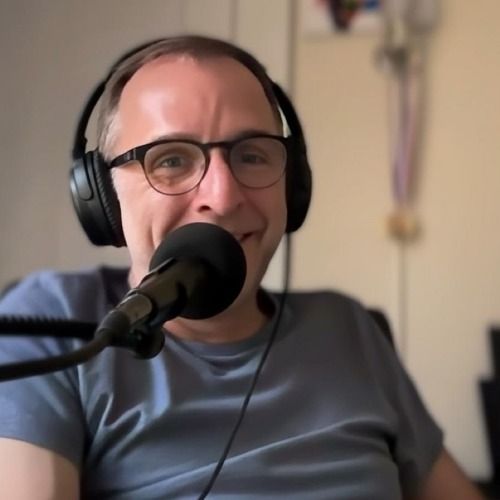
Episode 62
The Hacker Who Moved to Mexico City
I met Ted in Spanish class. He grew up across the bridge from Boston in a neighborhood where, as he puts it, everybody was a car thief, and that's where he says his fascination with beating the system started. It took him onto the internet before most people knew what it was, and into a career spent hiring people to hack into Boston's biggest investment firms.
Please show some support for the podcast and get access to some extra content by subscribing to the Patreon page: http://www.patreon.com/onefjef
Instagram: @onefjefpod
TikTok: @onefjefpodcast
Substack: https://onefjef.substack.com
Facebook: https://www.facebook.com/onefjefpod
YouTube: https://www.youtube.com/@onefjef
Email: onefjefpod@gmail.com
You can also call the podcast and leave a voicemail at 1-669-241-5882 and I will probably play it on the air.
Thank you for listening, please do it again, but finger it first.
Onefjef is produced, edited & hosted by Jef Taylor.
Transcript
We grew up in the streets.
Speaker:I mean, it was- Wow … it was rough.
Speaker:So, like, gunfire?
Speaker:Gunfire.
Speaker:We, we started carrying knives at age seven.
Speaker:Wow.
Speaker:But that was a good thing because then people were reluctant to beat the
Speaker:shit out of each other 'cause, that they knew everybody might have one.
Speaker:Right.
Speaker:So it was like detente.
Speaker:It was like the cold, cold war with, like, Gorbachev and Reagan.
Speaker:Everybody's carrying weapons that nobody's… Like, so it
Speaker:was actually an improvement.
Speaker:Problem solved.
Speaker:This
Speaker:is episode 62 of onefjef.
Speaker:Episode
Speaker:62. Episode 62.
Speaker:Episode 62.
Speaker:Hello de nuevo, mis amigos.
Speaker:Hello again, my friends.
Speaker:Here we are again.
Speaker:Here we are.
Speaker:Aqui estamos.
Speaker:I hope you're thriving, as I always do, and happy beginning
Speaker:of autumn to those who celebrate.
Speaker:Autumn in Mexico City feels much like the summer, except that the nearly
Speaker:daily rainstorms are no more, which is good, although I now have to water
Speaker:the plants on my terrace instead of letting Mother Nature take care of them.
Speaker:I'll get through this.
Speaker:Honestly, the rainy season here didn't feel as rainy as I thought it
Speaker:would, although it was apparently one of the rainiest summers ever here.
Speaker:Mexico City is very large, though, and so I guess it rained more in
Speaker:other areas than it did in mine.
Speaker:Or maybe I'm just not a good gauge of rainfall totals.
Speaker:Whatever.
Speaker:I will miss autumn in Ohio, though, what with the changing of the leaves and
Speaker:all, but I won't miss the eerie dread of another Ohio winter approaching.
Speaker:Not at all.
Speaker:It's gonna be a bit strange to not experience a horrible,
Speaker:cold winter this year.
Speaker:Good strange, though.
Speaker:Not bad strange.
Speaker:But I digress.
Speaker:I met today's guest in a Spanish class this past spring.
Speaker:The very same class that I met Jonathan the Hitchhiking German in episode
Speaker:58, which you should go back and listen to if you haven't yet, after
Speaker:you listen to this one, of course.
Speaker:Ted is not a hitchhiking German.
Speaker:He is, in fact, a retired computer hacker from Boston, which is why he asked that I
Speaker:don't use his last name in this podcast.
Speaker:I obliged.
Speaker:My conversation with Ted proves my theory that expats are an
Speaker:inherently fascinating bunch.
Speaker:Because this conversation is truly, well, fascinating, and I'm willing
Speaker:to bet you're gonna think so too.
Speaker:But before that conversation, might I remind you of the Patreon page that I have
Speaker:been reminding you of for 62 episodes.
Speaker:Well, 61 episodes, but now this is the 62nd time.
Speaker:But there's bonus episodes I've reminded you in, so quite a few times.
Speaker:Some of you, the elite, have heeded my Patreon call and gone to
Speaker:patreon.com/onefjef and signed up.
Speaker:Others of you have not.
Speaker:So once again, I humbly ask you, go to patreon.com/onefjef and sign up for as
Speaker:little as $5 a month, and support this fledgling little wee baby of a podcast
Speaker:as it tries to find its feet, tries to find its audience, and tries to find some
Speaker:money for all the hard work that I put into it every single week just for you.
Speaker:Go to patreon.com/onefjef and sign up.
Speaker:Thank you very much.
Speaker:And to my ongoing Patreon subscribers, the elite, the best of the best,
Speaker:I love you all, I appreciate you all, and thank you once again.
Speaker:Thank you for listening.
Speaker:Thank you for being here.
Speaker:Here is my conversation with Ted from my Spanish class
Speaker:My girlfriend got pulled over by the policia.
Speaker:Oh, really?
Speaker:And she, uh, she held her ground.
Speaker:She, quote-unquote, "ripped them a new one," as we say in the States.
Speaker:Wow.
Speaker:What,
Speaker:what did she get pulled over for?
Speaker:Um, allegedly, like, the little frame around the license plate.
Speaker:Oh.
Speaker:But she got pulled over for a bribe, or she w- they wanted a bribe.
Speaker:How much did
Speaker:she have to pay?
Speaker:Nothing.
Speaker:She said, "Tow my car.
Speaker:I'm not paying a bribe." And, uh, the guy went back to his car and came back and
Speaker:said, "Well, we'll just give you a warning this time." 'Cause she called his bluff.
Speaker:That was here in Veracruz?
Speaker:That was about 10 miles outside- Wow … the city.
Speaker:Uh, so Ted, we met in, uh, Spanish class.
Speaker:Yes.
Speaker:Uh, one of the stranger
Speaker:I mean, I haven't taken a lot of Spanish classes, but that class
Speaker:is, uh, it's got some character.
Speaker:Oh, yeah.
Speaker:It's got some … Yeah, yeah, has some spice.
Speaker:Anyway, what, uh, what brought you to Mexico City, Ted?
Speaker:Uh, I retired around four years ago.
Speaker:Mm-hmm.
Speaker:Early retirement.
Speaker:Ah, very well.
Speaker:I highly encourage it if folks can do it.
Speaker:I'm doing my best, Ted.
Speaker:Let me
Speaker:tell you.
Speaker:Um, and, uh, I never wanted to, uh, experience a Boston winter again.
Speaker:That was one of my- Totally,
Speaker:yes
Speaker:… uh, must, must avoid things.
Speaker:And I had a friend, uh, Juan-
Speaker:Hmm
Speaker:… who went to MIT m- many years ago.
Speaker:Mm-hmm.
Speaker:And we were having dinner, and, uh, Juan said, "Hey, I grew up and my
Speaker:family still lives in Mexico City.
Speaker:Why don't you check out Mexico City?"
Speaker:Right.
Speaker:" The climate is perfect, and it's a great place." Hmm.
Speaker:So about four years ago, I, uh, hopped on an airplane and came here and-
Speaker:Huh … rented a couple of Airbnbs-
Speaker:Huh
Speaker:… and, uh, instantly fell in love with the city.
Speaker:What was your first impression of the city?
Speaker:I think, uh, in this area especially, just the, uh, I d- you, you s- you think
Speaker:of a large city and 20 million people.
Speaker:Yeah,
Speaker:yeah,
Speaker:yeah.
Speaker:But then the green.
Speaker:Yeah.
Speaker:Just the- Yeah, yeah … the, the beautiful, you know-
Speaker:Yeah
Speaker:… floras and-
Speaker:It's like we're in a forest.
Speaker:Yeah.
Speaker:Yeah.
Speaker:Yeah.
Speaker:In a, in a, in a very urban city.
Speaker:Right.
Speaker:So, yeah.
Speaker:It's very, very lush.
Speaker:So you came to Mexico City for, for how long?
Speaker:Um, I think the first time was, uh, I, I spent a couple weeks in Cancun
Speaker:'cause I just wanted to lay on a beach.
Speaker:Of course,
Speaker:right, right.
Speaker:And then a couple of weeks here.
Speaker:I met up with my friend Juan-
Speaker:Yeah
Speaker:… and his wife Carol, and, uh, they showed me around a bit.
Speaker:Mm-hmm.
Speaker:And, uh-
Speaker:And that was what year?
Speaker:This was … So four years ago, I guess.
Speaker:2018.
Speaker:Okay, so right after COVID.
Speaker:So the- Yeah … flood had begun by this point.
Speaker:Yeah, exactly.
Speaker:Yeah.
Speaker:Yeah,
Speaker:yeah.
Speaker:Uh, there were, uh, muy, muy Americanos there.
Speaker:Muchos Americanos,
Speaker:si, si.
Speaker:Um,
Speaker:so yeah.
Speaker:What did you do?
Speaker:Were you just a tourist?
Speaker:Yeah, yeah.
Speaker:All right.
Speaker:I just walked around, and it's, it's interesting.
Speaker:The f- the first Airbnb I got was in, uh, Juarez.
Speaker:Mm-hmm.
Speaker:Um-
Speaker:Same
Speaker:… and, uh, I'm a book lover.
Speaker:Right.
Speaker:And I was looking for some books in English-
Speaker:Yeah
Speaker:which sometimes can be a little challenging.
Speaker:For sure, for sure.
Speaker:Or you get, like, one shelf-
Speaker:Right
Speaker:… which is understandable.
Speaker:And I googled this bookstore called Under the Volcano-
Speaker:Uh-huh
Speaker:… based on a Malcolm Lowry novel- Uh-huh.
Speaker:Okay … which I actually read this year.
Speaker:All right.
Speaker:Yeah, it was pretty cool.
Speaker:All right.
Speaker:And I said, "Well, gee."
Speaker:So I wandered down from Juarez-
Speaker:Uh-huh
Speaker:… and I found the bookstore, which is a, a highly recommended bookstore.
Speaker:It's in an old American Legion-
Speaker:Oh,
Speaker:cool … kind of stucco building- Oh … with all these World War II-
Speaker:Right on
Speaker:… pictures and stuff.
Speaker:Huh.
Speaker:And it's got big, uh, big iron grates.
Speaker:Yeah.
Speaker:And there was a sign outside to say, "If you're coming for the bookstore,
Speaker:yell into the gates, 'Books.
Speaker:Books.
Speaker:I want books.'"
Speaker:Is it just an English bookstore?
Speaker:It's a all English used bookstore- All English, all right … used bookstore.
Speaker:Oh, right on.
Speaker:By the o-
Speaker:You have to, I have to get that address, 'cause that's,
Speaker:uh- Yeah … that's amazing.
Speaker:It's a gem.
Speaker:Yeah.
Speaker:And, uh, so I yelled upstairs, and, uh, this young woman came down and let me up.
Speaker:Yeah.
Speaker:And she said, "Have you been here before?" And I said, "No." And she basically
Speaker:said, "Okay, all the books are used.
Speaker:The prices are marked." Hmm.
Speaker:"We take, uh, efectivo, cash." Yeah, right, right, right.
Speaker:"Or PayPal." And then she picked up her book and started reading.
Speaker:Yeah.
Speaker:And I, this bookstore was just ama- I'm a bookstore guy, and this- Tons,
Speaker:big, big?
Speaker:Uh, no, just one large room.
Speaker:Oh, just full of books.
Speaker:But full of just amazing fic- I'm a fiction guy too- Yeah … so
Speaker:this was, this was very near- Oh … and dear to my heart.
Speaker:Books,
Speaker:man
Speaker:So, so what happened, I, I bought… Uh, let's think.
Speaker:I think I picked up, uh, Salman Rushdie's first book.
Speaker:Okay.
Speaker:Midnight's Children.
Speaker:All right.
Speaker:Good book.
Speaker:And then, uh, so I, I get out of the bookstore, and I say, "Well, I'd like
Speaker:to read this book." And I looked at the map, and there was Parque Mexico- See?
Speaker:… for my first time.
Speaker:And, uh, they have those nice little reading areas.
Speaker:Uh-huh.
Speaker:And I sat there and read this book and wandered around that
Speaker:park and, and, and I was sold.
Speaker:Magic.
Speaker:I was sold.
Speaker:Magic.
Speaker:For sure.
Speaker:Yeah.
Speaker:So how many times have you been back?
Speaker:Uh, every year since then.
Speaker:Every year since then
Speaker:for the- Every year.
Speaker:And then you're gonna move here.
Speaker:Uh, I'm thinking of moving here.
Speaker:Absolutely.
Speaker:W- what do you think it is?
Speaker:Like, for me, I think it's the, um, the, the randomness of it, right?
Speaker:The architecture's amazing, but it just like one street to the next it'll
Speaker:be these crazy old colonial houses, and then suddenly you're seeing like
Speaker:modern buildings, et cetera, et cetera.
Speaker:I kinda love that.
Speaker:It feels very like, uh, you never know what you're gonna find.
Speaker:You know what I mean?
Speaker:I see.
Speaker:Plus the food.
Speaker:Yeah.
Speaker:Yeah, yeah.
Speaker:Uh, I, I, the, the architecture- Yeah, yeah … as you
Speaker:mentioned, is just amazing.
Speaker:Yeah.
Speaker:You got the Spanish architecture- Yeah, yeah … then a modern duplex.
Speaker:Yeah.
Speaker:And then cru- some crumbling building that just has so much character.
Speaker:Yeah, yeah, yeah, yeah.
Speaker:Or you, you peek down a little, uh, eh, through somebody's, uh, doorway
Speaker:and there's this huge courtyard-
Speaker:Yeah
Speaker:that they have.
Speaker:Yeah.
Speaker:Yeah.
Speaker:Um, I g- I, one thing that always gets me is is I kind of think of the city,
Speaker:I guess this is a, a metaphor perhaps, if you go to Parque Mexico, there's a
Speaker:big kind of, um, amphitheater there.
Speaker:Yep, yep.
Speaker:And if you go, the, I think the best time is Sun- Sunday evening.
Speaker:Mm-hmm.
Speaker:There's no rules.
Speaker:Yeah.
Speaker:If you have a pu- pit bull and you wanna play catch with the pit bull
Speaker:in the middle- Do whatever you want … there's, there's little four-year-olds
Speaker:l- learning how to ride bikes.
Speaker:There's guys whipping Frisbees across- Oh, yep … maybe 100
Speaker:yard, you know, the amphitheater.
Speaker:Right, right,
Speaker:right.
Speaker:Guys doing tarot card readings.
Speaker:There's chara- Yeah, yeah … tarot card.
Speaker:And then a- around the, uh, perimeter there's salsa dancing.
Speaker:Yeah.
Speaker:You can pay for those classes.
Speaker:Yep.
Speaker:Incredibly sensual, too.
Speaker:Yeah.
Speaker:I mean, it's just like you, you- It's a vibe … you w- I always joke, I
Speaker:say, "This is like, this is hotter than porn." Just watching, watching these
Speaker:people do this amazing, exotic- Yeah
Speaker:sensual- Yeah … um, salsa dance.
Speaker:Yeah.
Speaker:So, yeah.
Speaker:Yeah, it really, it is a vibe, uh, Mexico City, and I don't really
Speaker:know how else to describe it.
Speaker:And, and, and Parque Mexico is really, the dog park there is,
Speaker:there's like, I watch it for hours.
Speaker:Yeah.
Speaker:Um, so many dogs.
Speaker:Have you been mugged?
Speaker:I have never been mugged.
Speaker:Okay.
Speaker:Uh, I've never had a problem with, uh, anybody.
Speaker:Yeah.
Speaker:I've been on, I've been on beaches around Mexico, and I leave my bag there.
Speaker:Yeah.
Speaker:I leave the passport in the hotel.
Speaker:Yeah,
Speaker:yeah, that's a good idea.
Speaker:But-
Speaker:Yeah
Speaker:… I have never had, uh, remotely any problem.
Speaker:And I, I often tell folks when they, uh, mention the dangerous, the alleged
Speaker:dangerous factor- Yeah … I said, "I honestly feel safer on a Saturday night in
Speaker:midnight or 1:00 AM in Mexico City- Yeah
Speaker:downtown- For sure … versus downtown Boston."
Speaker:Yeah.
Speaker:I do think, and I've heard more stories that have surprised me lately of people
Speaker:saying, "Just, you know, be careful. Don't walk down-" Yeah … dark streets
Speaker:in the middle of the night, you know, 'cause it's not the criminals necessarily,
Speaker:it's the police that shake you down.
Speaker:Yeah, I see.
Speaker:Especially if you're a foreigner.
Speaker:Mm. But they t- I've decided if e- that ever happens to me I'm just
Speaker:gonna act like I don't s- I, I don't, confused, or act like I speak French
Speaker:or something, and they'll eventually be like, "I don't care." Yeah.
Speaker:"You know, this is not worth my time." Did you start learning Spanish right away?
Speaker:Uh, I, it, it's in fits and starts.
Speaker:Yeah?
Speaker:So at the time I had an American girlfriend-
Speaker:Ah,
Speaker:does this help … who was fairly fluent in Spanish.
Speaker:Oh, well, that
Speaker:does help.
Speaker:Um, however, my attempts were, uh, met with laughter in many cases.
Speaker:By her?
Speaker:By her and- Oh,
Speaker:that's helpful
Speaker:… the Americans were much more stricter than, uh, Mexicanos.
Speaker:Oh,
Speaker:really?
Speaker:That was just- Of course … my, my take.
Speaker:Of course.
Speaker:They were very like, "No, no, it's pequeño." You know, like- Yeah,
Speaker:yeah, yeah … very, very precise.
Speaker:Gotta follow the rules, man.
Speaker:Yeah.
Speaker:Yeah, yeah.
Speaker:So that was a little bit discouraging.
Speaker:So I'd kinda start on and off.
Speaker:Mm-hmm.
Speaker:Um, sometimes I went i- uh, tried to learn, uh, Español to the point where
Speaker:I'm almost getting a migraine like- Yeah
Speaker:like two or three years ago.
Speaker:Yeah, yeah.
Speaker:And sometimes I'm q- I'm an older guy, so I-
Speaker:Sure
Speaker:… think it's a little more- Yeah … difficult, uh- Yeah … you know?
Speaker:Um, but I met this, uh, this friend Lima.
Speaker:Okay.
Speaker:And, um, so her story was her dad was from Lima, thus her name.
Speaker:That's convenient.
Speaker:Lima Peru.
Speaker:Yeah.
Speaker:And her mom was from Okinawa.
Speaker:Oh, wow
Speaker:… Japan.
Speaker:And, uh, she was here working for the United Nations.
Speaker:Mm-hmm.
Speaker:And she was like, I don't, I forget, the B2 level Spanish.
Speaker:Right.
Speaker:So she spoke fluent Japanese, really good English-
Speaker:Right
Speaker:… and incredible Spanish.
Speaker:So I kind of, I was like, "Geez, I wanna do that." Yeah, yeah, yeah.
Speaker:And it's, it's as, as you know, it's- It's hard
Speaker:it's a challenge.
Speaker:Yeah.
Speaker:It's- It's, it's really hard.
Speaker:But it's rewarding.
Speaker:Mm. Like, when you understand something else- Oh … and you're on the street and
Speaker:you're like, "Oh, I actually understand that now." I'm like, "Oh, it actually, it
Speaker:actually works." It doesn't happen very often, let's be clear, but when it does
Speaker:happen, it's a magical, magical time.
Speaker:Do you know there's 17 tenses?
Speaker:I-
Speaker:17, Ted.
Speaker:I- I'm working on- Sev- … the first or second one.
Speaker:When, when my teacher told me that, which was just this week, he
Speaker:was like, "You shouldn't ask, but 17." And I was like, "Oh my God.
Speaker:No thank you." You grew up in Boston?
Speaker:Yes.
Speaker:I grew up in, uh, Chelsea, Massachusetts.
Speaker:It's a, uh, little gritty town- Yeah
Speaker:right over the bridge from Boston.
Speaker:Mm-hmm.
Speaker:In, um, in the '70s.
Speaker:Yeah.
Speaker:Thoroughly middle class.
Speaker:We, we grew up single- Yeah … single welfare mom.
Speaker:Oh, yeah.
Speaker:Tough streets.
Speaker:What
Speaker:happened to your dad?
Speaker:Just-
Speaker:Uh, alcoholic.
Speaker:Oh.
Speaker:Left.
Speaker:Did you ever, do you remember him or did he leave?
Speaker:Ne- never met him.
Speaker:Oh, wow.
Speaker:No.
Speaker:Are you ever curious?
Speaker:Um, I, I always think about, like, people who are adopted-
Speaker:Mm-hmm
Speaker:… and that f- they'll track down folks- Yeah … and they'll go to every length.
Speaker:Eh, my mom raised us.
Speaker:Um-
Speaker:It's also like if he didn't try to find you, why should you go find him?
Speaker:Exactly.
Speaker:Right.
Speaker:Exactly.
Speaker:Yeah.
Speaker:But, um, yeah.
Speaker:Grew up in a really gritty town.
Speaker:My brother still, now that we're both thoroughly middle
Speaker:class, he'll still- Right
Speaker:he'll still send me an email, um, uh… It's, the city's a
Speaker:little, little, uh, nicer now.
Speaker:Yeah.
Speaker:Um, but he would say, "Hey, we beat Compton," meaning when
Speaker:they would list the top 10 crime cities- … Chelsea, Massachusetts-
Speaker:Wow … would be above Compton.
Speaker:So, so it, oh, so
Speaker:it was really-
Speaker:Oh, we were, we grew up in the streets.
Speaker:I mean, it was-
Speaker:Wow
Speaker:it was rough.
Speaker:So, like, gunfire?
Speaker:Gunfire.
Speaker:We, we started carrying knives at age seven.
Speaker:Wow.
Speaker:But that was a good thing because then people were reluctant to beat
Speaker:the shit out of each other 'cause, that they knew everybody might.
Speaker:Right.
Speaker:So it was like detente.
Speaker:It was like the cold Cold War with, like, Gorbachev and Reagan.
Speaker:Everybody's
Speaker:carrying weapons, like nobody's…
Speaker:So it was actually an improvement.
Speaker:Problem solved.
Speaker:Right.
Speaker:So did you ever get in any s- any scuffles or anything when you were-
Speaker:We were always fighting.
Speaker:Really?
Speaker:We were always fighting.
Speaker:The, the, the challenge in a community like that, and, and I've reflected
Speaker:a bit back, actually I was talking to my, my girlfriend about this
Speaker:recently, is that, you know, if you grow up in that type of like South
Speaker:Side of Chicago- Sure, sure, sure
Speaker:or, you have two choices.
Speaker:Well, uh, technically three.
Speaker:Uh-huh.
Speaker:You can either be a lion or you can be a lamb- Or the third choice, that's,
Speaker:this is a, a, a smaller percentage- Right … you can be a comedian.
Speaker:Ah, fair enough.
Speaker:Yeah.
Speaker:' Cause if you're a comedian, you kind of get both sides-
Speaker:Yeah … are kind of- That's
Speaker:kind of what I-
Speaker:living through this … got through high school.
Speaker:Yeah.
Speaker:So honestly, I didn't like being a lamb, so, uh, I was a, I was a tough kid.
Speaker:And you weren't funny enough to be a comedian- I, I, no … so you had to- No,
Speaker:I wasn't … you had to carry a knife.
Speaker:So do you ever, like, did you usually win the fights?
Speaker:Um, here's the situation.
Speaker:So when you and I was about seven or eight-
Speaker:All right
Speaker:… and this was, this was badass, you know- Sure, sure
Speaker:… ' 70s.
Speaker:Yeah.
Speaker:Yeah.
Speaker:And I, I tell my son the challenge at that time was that, you know, and people
Speaker:don't realize how important abortion is.
Speaker:Yeah.
Speaker:You know, this was generations of kids who if there were abortions, we probably
Speaker:none of them would have ever existed.
Speaker:Right.
Speaker:And all the dads were out of this- Right … neighborhood.
Speaker:These neighborhoods were entirely women
Speaker:centric.
Speaker:Oh, like single moms and all that?
Speaker:Yep.
Speaker:Yeah, yeah, yeah.
Speaker:They were all single moms who- Wow … we used to joke, uh, I joke
Speaker:with my friend now, I say, "Geez, back in the day they should have
Speaker:taken one of those dust croppers-
Speaker:and, and, and just, and just thrown Prozac out of- … 'cause all the m- We
Speaker:joke every- Right … every mom back then would lay on the couch- Be depressed.
Speaker:Yeah, yeah, yeah … with a cigarette and watch the soap operas and-
Speaker:Yeah, yeah … the telenovelas.
Speaker:Yeah.
Speaker:So yeah.
Speaker:Yeah, yeah.
Speaker:Yeah.
Speaker:But, um, yeah, I fought enough.
Speaker:If you keep fighting somebody, especially if they're older than you-
Speaker:Yeah
Speaker:um, the neighborhood looks at it as like, how many times are you
Speaker:gonna beat up that little kid?
Speaker:Uh-huh.
Speaker:So at a certain point, I did get a reputation.
Speaker:Yeah.
Speaker:I, I, I'm the same height I was when I was 12, so- Right … hope that I-
Speaker:That
Speaker:helps … started early.
Speaker:Yeah.
Speaker:And I had a, I had a very sharp tongue.
Speaker:I cringe at… So my, my main weapon was my tongue.
Speaker:Okay.
Speaker:Yeah.
Speaker:I could not repeat what I would say.
Speaker:Your mom, blah, blah, blah, blah,
Speaker:blah.
Speaker:Oh, yeah.
Speaker:That's light, but yeah.
Speaker:Wow.
Speaker:Wow.
Speaker:Uh, that's unexpected.
Speaker:Anyway.
Speaker:Unexpected touch.
Speaker:Were there ever guns?
Speaker:So some of us, we were, we had about a gang of 10 people.
Speaker:All right.
Speaker:Um- Did you have
Speaker:a name?
Speaker:Was there a name for
Speaker:the gang?
Speaker:No, no, no.
Speaker:Okay.
Speaker:If we were all Black kids-
Speaker:Uh-huh
Speaker:… we would've been a gang.
Speaker:We would've been in jail.
Speaker:Oh,
Speaker:so the white people- We- … made it not a gang.
Speaker:The cops would come by, and most of the cops were white and racist-
Speaker:Oh … and say, "Oh, just-"
Speaker:I
Speaker:see … "All right. Just go home."
Speaker:Huh.
Speaker:" Go, go over there and- Yeah, yeah … you know- Crazy kids
Speaker:go to that parking lot and drink." Yeah, yeah, yeah.
Speaker:Just leave us alone.
Speaker:Yeah, yeah.
Speaker:We're gonna-
Speaker:Get the Black people.
Speaker:Yeah.
Speaker:Yeah, yeah.
Speaker:Sadly.
Speaker:So we were never labeled a gang, but we had about 10 or 12 of us, and
Speaker:there were really big, tough guys.
Speaker:Uh-huh.
Speaker:And that saved us from… We really didn't have to fight,
Speaker:'cause we all protected each other.
Speaker:Oh, wow.
Speaker:So f- and, and the other thing is we were a good crew.
Speaker:Right.
Speaker:We didn't, we didn't fuck anybody over.
Speaker:Right.
Speaker:We didn't deal heavy drugs.
Speaker:Right.
Speaker:Are there knife fights?
Speaker:I don't like to talk a lot.
Speaker:The, the… I-
Speaker:There were some knife
Speaker:fights?
Speaker:There were some knife fights.
Speaker:Wow,
Speaker:dude.
Speaker:But, but also, uh, yeah, but- Yeah, I'd rather
Speaker:Yeah, that was, that was-
Speaker:Wow.
Speaker:When did you realize that your childhood growing up was different than the-
Speaker:I'll defer to my brother recently told me this story.
Speaker:Mm-hmm.
Speaker:So he's in his mid-50s, and he said, um … And just, you know, we're white
Speaker:guys- Yeah, yeah, yeah … because we're on, you know- Yeah … The Voice Only.
Speaker:My brother had this really interesting observation, and he shared this
Speaker:with me only about three years ago.
Speaker:He said, he goes, "Ted," we were, you know, we were watching TV, and, uh,
Speaker:maybe he was, like, eight or nine.
Speaker:Right.
Speaker:And Good Times-
Speaker:Mm-hmm
Speaker:… was a, I'll-
Speaker:I remember,
Speaker:yeah … give some background here for folks
Speaker:… old, old sitcom, uh, I forget-
Speaker:An old sitcom.
Speaker:What was
Speaker:the plot of that?
Speaker:A working class/poor African American family- Uh-huh
Speaker:who lived in housing, housing projects.
Speaker:Right.
Speaker:And the janitor would come up and make jokes.
Speaker:Right, right, right, right.
Speaker:It was a
Speaker:comedy.
Speaker:Yeah.
Speaker:And what was interesting, my brother said, he goes, "Geez, Ted, you know, I
Speaker:was like eight or nine," or, you know, whenever that came, show came out.
Speaker:And he goes, "And I was watching the show, and it wasn't a race thing, like
Speaker:we were white and they were Black."
Speaker:Right.
Speaker:He goes, "I was really listening to the jokes they made, and they were making
Speaker:jokes about how poor they were." And he goes, "Then I looked at our, our family.
Speaker:I said, 'Wow, we're really poor.'" "Because this family's," you know, so
Speaker:that was the poorest kind of thing he saw.
Speaker:Wow.
Speaker:You know?
Speaker:Yeah.
Speaker:Wow.
Speaker:Yeah.
Speaker:We-
Speaker:Um, interesting.
Speaker:Interesting.
Speaker:So did you go to … Like, you finished high school, I assume.
Speaker:Yeah.
Speaker:Yeah.
Speaker:Yeah.
Speaker:And then you went, did you go to college?
Speaker:Yes.
Speaker:Where'd you go to college?
Speaker:What'd you go to college for?
Speaker:So I went to, um … So the, the real benefit of growing up in the Boston area-
Speaker:Mm-hmm
Speaker:… ton of colleges.
Speaker:Yeah, yeah, yeah.
Speaker:And back in the '80s, they were ver- public colleges were cheap,
Speaker:affordable, and excellent.
Speaker:Yeah.
Speaker:We can only dream.
Speaker:Yeah.
Speaker:Right?
Speaker:Yeah.
Speaker:So, um, in high school, um, I was still a tough kid.
Speaker:Mm-hmm.
Speaker:I would s- you know, there was, uh, I was, I was telling my, my girlfriend, I
Speaker:said, we were doing a theater production.
Speaker:Uh-huh.
Speaker:And me and my friend, we were so tough we could do anything.
Speaker:Yeah.
Speaker:We could skip rope.
Speaker:We could hang out with the gay kids.
Speaker:Right, right, right.
Speaker:Nobody was gonna m- you know?
Speaker:Right.
Speaker:You know, nobody's gonna mess with us.
Speaker:So we did the theater production.
Speaker:Wow.
Speaker:We did the background, and we didn't, weren't actors, but we did the- Oh, right.
Speaker:But still
Speaker:… sets and the lights- Yeah, yeah … and everything, and we loved it.
Speaker:Right.
Speaker:Yeah.
Speaker:And, um- What was interesting was, is that, um, there was one point
Speaker:where I got up in class and I said, "Hey, I'd like everybody to go to…"
Speaker:It was Peter Shaffer, The Private Affair.
Speaker:Okay.
Speaker:Not your s- typical high school-
Speaker:Yeah, never heard of it.
Speaker:Yeah
Speaker:… great, great play.
Speaker:And I said, you know, "Hey, I'd like to have people come to the play," and there
Speaker:was, um… There's a longer digression around- Of course … Boston and racism.
Speaker:Yeah, yeah, yeah.
Speaker:But there was this, um, guy who, you know, basically was like, "Fuck you.
Speaker:Why should we go to this play?
Speaker:It's for pussies."
Speaker:Mm-hmm.
Speaker:And at that point I said, "All right. After school, let's go." So this is
Speaker:what… You know, you're, you're, you're trying to get folks to go to a play.
Speaker:Like threatening them to go to the play.
Speaker:And,
Speaker:and, and they're like, you know, like… Anyway, so.
Speaker:Did he go to the play?
Speaker:Uh, he never went.
Speaker:Oh, boy.
Speaker:He should kick
Speaker:his a- But the background is, um, it was a Catholic high school,
Speaker:all boys Catholic high school.
Speaker:Ah,
Speaker:that it… Yeah.
Speaker:Um, it was a very, very tough high school in East Boston.
Speaker:Mm-hmm.
Speaker:And the background is, is that busing occurred in the '70s in Boston.
Speaker:Mm-hmm.
Speaker:So every racist white family didn't want their kids to go to
Speaker:school with Black kids- Right
Speaker:all these horrible kids.
Speaker:Of
Speaker:course.
Speaker:So they sent them to the Catholic school that accepted anybody at that point.
Speaker:Hmm.
Speaker:So it was kind of me and kind of our multicultural crew- Right,
Speaker:right,
Speaker:right … against all these- Right … white racist kids, which
Speaker:was another kind of- Huh … dynamic.
Speaker:Yeah, for sure.
Speaker:But that said, the priests were dying off, so we got-
Speaker:a couple of teachers, and who were really just genuinely, "I
Speaker:wanna give back to my community."
Speaker:Uh-huh.
Speaker:And I had one teacher who basically, since the priests
Speaker:were… Well, that's another story.
Speaker:Mm. Wow.
Speaker:Um, doing their thing.
Speaker:This guy could teach anything, and he grew up in the same kind of community.
Speaker:Uh-huh.
Speaker:And he taught, um, political thought and, uh, economics to us-
Speaker:Okay
Speaker:and Marxism.
Speaker:Of course.
Speaker:And, uh, you know, the, the- That's how
Speaker:they get you.
Speaker:Right.
Speaker:Right.
Speaker:There you go.
Speaker:Right.
Speaker:And he was really a mentor to me.
Speaker:Uh-huh.
Speaker:And I read, I read Plato's Republic.
Speaker:Wow.
Speaker:How old were you?
Speaker:Uh, 16, 17.
Speaker:I've never even read Plato's Republic.
Speaker:Yeah.
Speaker:Yeah,
Speaker:yeah.
Speaker:And I just, I was hooked on philosophy.
Speaker:Oh, wow.
Speaker:So, um- My brother and I took two very different paths.
Speaker:Mm-hmm.
Speaker:So we grow up with- when we were hung- growing up, we were
Speaker:hungry, there was no heat.
Speaker:This was the real-
Speaker:Right,
Speaker:right, right … the real deal.
Speaker:So my brother and I, back to TV, he loved TV, and he watched Leave
Speaker:It to Beaver and Father Knows Best.
Speaker:Me too.
Speaker:Yeah, yeah.
Speaker:These iconic American, the perfect family, and the-
Speaker:Yeah
Speaker:… the wife's always got the hair up, and it's- Yeah, yeah,
Speaker:yeah
Speaker:… there's some little issue with a young boy.
Speaker:Right.
Speaker:The most minor issue of all time, right.
Speaker:And so my brother just fell in love with that lifestyle.
Speaker:He said, "This is a window to a different world."
Speaker:He liked the idea of, like, the very stable family that
Speaker:was portrayed as a TV show.
Speaker:Exactly.
Speaker:Right.
Speaker:He totally was hooked on that.
Speaker:He wanted to be Wally or The Beaver, do you think?
Speaker:Um, I, I was more The Beaver.
Speaker:Yeah.
Speaker:He's Wally.
Speaker:Maybe he was more, more Wally.
Speaker:Yeah, yeah.
Speaker:All right.
Speaker:So he went to … It's a really interesting story.
Speaker:He, he said, "I wanna make money. I wanna have nice things."
Speaker:Mm-hmm.
Speaker:" I wanna live this middle class life that I've seen on TV." So he went to the
Speaker:library, and he looked up careers that paid the most after four years in college.
Speaker:Okay.
Speaker:And it was mechanical engineering-
Speaker:Oh, well, that checks
Speaker:out … of all things.
Speaker:Yeah.
Speaker:And he's still a mechanical engineer.
Speaker:He's got the white picket fence- Wow … the big mansion.
Speaker:He did it.
Speaker:Wow.
Speaker:For me, I just fell in love with reading and literature and philosophy.
Speaker:Uh-huh.
Speaker:And I said, "I'm gonna go study philosophy."
Speaker:Mm-hmm.
Speaker:And I almost wasn't gonna go to college, but my mentor was like, "Ted, go."
Speaker:Sure.
Speaker:"It's not as bad as this jungle you're in." Yeah.
Speaker:"You're in high school. Go." That
Speaker:was a good advice.
Speaker:Yeah.
Speaker:And, uh, I think it was about $1,000 a year.
Speaker:Jesus.
Speaker:Where'd you go to school?
Speaker:Uh, University of Massachusetts at Boston.
Speaker:Oh, nice.
Speaker:Nice.
Speaker:Um, no dorms.
Speaker:Oh.
Speaker:So it was really a urban- And you commu- you were commuting
Speaker:commuter,
Speaker:commuter school.
Speaker:So I'd hop- Wow … on bus.
Speaker:It took me about an hour and a half to get there each day.
Speaker:So
Speaker:you're still living in the, you know, the neighborhood.
Speaker:Well, that's the thing, you know?
Speaker:So I'm going and studying Wittgenstein and Heidegger and Lovingman- Right,
Speaker:right, right … and reading J.H.
Speaker:Florence, and then you go back home and, you know, the guys be-
Speaker:the drug addicts beeping the horn saying, "Oh, you wanna buy some-"
Speaker:Right
Speaker:… " stuff?" You know?
Speaker:Right, right.
Speaker:Or we're just drinking on the corner.
Speaker:So it was a, it was- Huh … still that kind of-
Speaker:That's really interesting
Speaker:… dichotomy.
Speaker:Yeah.
Speaker:It must have been eye-opening, though.
Speaker:Yeah
Speaker:… like going to, yeah.
Speaker:Interesting.
Speaker:When I was in college, they would, they would basically say, you know,
Speaker:I was an English lit major, and they would say that there's only one degree
Speaker:that's more useless than a English lit degree, and it's the philosophy degree.
Speaker:Yeah.
Speaker:Um, so what did you… I ended up teaching English in Korea.
Speaker:What did you end up doing- Oh … with your philosophy degree?
Speaker:So I had my philosophy degree.
Speaker:Um, I was an active alcoholic at the time.
Speaker:Okay.
Speaker:Graduated, and as any good philosophy major does, I became a, uh, messenger
Speaker:in Boston, in downtown Boston.
Speaker:Oh, like r- doing the bike thing?
Speaker:Yep, yep.
Speaker:Oh, cool.
Speaker:Bike and walk of some of the-
Speaker:What's that movie called?
Speaker:There's a movie about that with Kevin Bacon.
Speaker:Remember?
Speaker:Quicksilver.
Speaker:Quicksilver.
Speaker:Quicksilver.
Speaker:Remember that?
Speaker:Yeah.
Speaker:Was it just like that?
Speaker:Um, it, it, it was, it was always a heavy drinking crew.
Speaker:Oh.
Speaker:And, uh- Are you drinking while you're biking around?
Speaker:Um, no.
Speaker:We'd usually wait till- Wait till after … after.
Speaker:That's probably for the best.
Speaker:But there was a little pub, we'd all go afterwards.
Speaker:Uh-huh.
Speaker:And, you know, you'd s- then, and sooner or later everybody would get injured.
Speaker:Luckily I- Right … I switched over to walking messenger.
Speaker:Oh, that's smart
Speaker:Because then I could go into bookstores and wander around and- Right
Speaker:… that was that.
Speaker:It looked like a very dangerous job.
Speaker:I mean, the, the movie made it look very dangerous.
Speaker:So yeah, I was a messenger after, uh, with my philosophy degree.
Speaker:And, and the back- I just wanted to study philosophy and read, and I ha-
Speaker:I never kinda had that middle cl- I didn't even think about money at all.
Speaker:I just figured, oh, I'll go back- Huh … to a fa- I'd, I'd done factory work-
Speaker:Yeah, yeah, yeah
Speaker:in, in high school and college.
Speaker:I did a
Speaker:little of that,
Speaker:yeah.
Speaker:Well, maybe I'll go back to the factory.
Speaker:I just wa- I just loved philosophy, I loved literature, yeah.
Speaker:But there wasn't even, like, a dream job that you were thinking about when-
Speaker:Maybe writing.
Speaker:Yeah.
Speaker:That was it.
Speaker:All right.
Speaker:Yeah.
Speaker:Never had any kind of… No future, yeah.
Speaker:Right.
Speaker:Very, very, here I am.
Speaker:So when did computers enter your life?
Speaker:I was graduating college, it was '88- Mm-hmm … and the library was starting
Speaker:to install digital card catalog.
Speaker:They were taking out-
Speaker:Oh,
Speaker:right … the old long index cards … I remember that.
Speaker:Yeah, the really
Speaker:crappy digital- And I was like, "Oh, that looks interesting."
Speaker:Yeah.
Speaker:I was just inter- I was like, "Wow." Yeah.
Speaker:Now that I'm graduating.
Speaker:For sure.
Speaker:And, um, my friend had a, uh, an old, these were old, old
Speaker:laptops, just, uh, like a-
Speaker:Yeah
Speaker:… green screen, no, no graphics.
Speaker:100
Speaker:pounds.
Speaker:Yeah.
Speaker:Yeah, yeah.
Speaker:Big huge thing.
Speaker:He said, "Hey, Ted, do you want… You know, I'm upgrading.
Speaker:Do you want my laptop?"
Speaker:And I was, uh, I got fired from my messenger job for
Speaker:trying to union organize.
Speaker:Hey, you know- Hey … fight the power, bro.
Speaker:Yeah.
Speaker:The, the, the unemployment statement was, um, Ted's motivation is incongruent
Speaker:with the firm's larger ideals.
Speaker:That's true.
Speaker:It's true.
Speaker:True statement, right?
Speaker:Yeah, yeah.
Speaker:You can't argue.
Speaker:So, uh, I got this computer and I was gonna write, you know, I, I've still
Speaker:jour- to this day, I journaled just now.
Speaker:I d- I've been journaling my whole life and writing short fiction.
Speaker:Mm-hmm.
Speaker:And, and I said, "Oh, good, I can write stories on this computer- Sure … rather
Speaker:than writing down or using my type- typewriter." Well, I don't know.
Speaker:Typewriter, good Lord.
Speaker:Yeah.
Speaker:Um, so the computer had a little, um, opening that you could
Speaker:put a phone line in, a modem.
Speaker:Right.
Speaker:It had an old modem.
Speaker:Right,
Speaker:right.
Speaker:And my friend, uh, Dr. Dave from Ohio-
Speaker:Mm-hmm
Speaker:… uh, said, "Oh, geez, my, my, one of my roommates," and in Boston
Speaker:you live with five or six people.
Speaker:Yeah, yeah, yeah.
Speaker:It's just kind of the- Expensive, yeah … you know, post-college life.
Speaker:And he said, "Oh, geez, my, uh, my roommate, uh, used to be a
Speaker:hacker," and this is, like, '92.
Speaker:Wow.
Speaker:' 91 maybe?
Speaker:Yeah.
Speaker:He was an early hacker.
Speaker:Yeah, that's a long time
Speaker:ago.
Speaker:And he goes, "Oh, yeah, bring over the computer." And, and this guy was like,
Speaker:"Oh, man, you can connect this to a phone line." And he showed me how to-
Speaker:Uh-huh
Speaker:… connect the, the internet was not acceptable, a- a- accessible-
Speaker:Right
Speaker:… except university and some businesses.
Speaker:Yeah,
Speaker:you had to, like, dial into the specific- Yeah … Freenet thing
Speaker:or whatever.
Speaker:Or even, yeah, even then it was, this was, like- Yeah … this was bulletin
Speaker:boards, which for the listeners, computer enthusiast- Uh-huh … would get a second
Speaker:phone line, and they would hook up a computer with some software, and people
Speaker:could call into directly, no internet.
Speaker:Mm-hmm.
Speaker:You could call into this person's phone number, and there was
Speaker:some kind of directory somehow.
Speaker:Yeah, it was like BBS kind of a thing.
Speaker:Yeah.
Speaker:I forgot what they
Speaker:call it.
Speaker:Exactly, BBS.
Speaker:Yeah.
Speaker:And you could get a menu.
Speaker:It was, then this is all-
Speaker:Yeah
Speaker:… menu-driven.
Speaker:All text.
Speaker:Yeah, you- Yeah … could get some kinda files if you wanted,
Speaker:or just maybe if it was advanced, you could chat with somebody else.
Speaker:Yeah, it was just, a lot of those were just, like, a conversation,
Speaker:just like a, a message board kind of a thing was all it was.
Speaker:Exactly.
Speaker:And then there'd be files that you could l- you know, kinda get from
Speaker:the message board and so forth.
Speaker:Yeah.
Speaker:It was very rudimentary, but it was incredible.
Speaker:Oh,
Speaker:it- Incredible
Speaker:… it blew my mind.
Speaker:Yeah, yeah.
Speaker:So instead of writing, I really got into this bulletin board thing,
Speaker:and then my friend who sold me the computer said, "Hey, Ted, there's
Speaker:this new thing called the internet." And we live in Boston, we're lucky
Speaker:enough where there's connections.
Speaker:Right.
Speaker:So, and these modems were like- 2400 or something
Speaker:Yeah, like-
Speaker:So that's, yeah
Speaker:28, eight I think.
Speaker:Oh, yeah And 14, 14, 4 is 28.
Speaker:That was,
Speaker:that was getting good.
Speaker:Yeah, yeah That was all right.
Speaker:And 56 was amazing.
Speaker:Yeah, yeah.
Speaker:Yeah.
Speaker:Because the, the, the, my, my friend's friend showed me the modem,
Speaker:and he had gotten busted for credit card theft, believe it or not.
Speaker:Wow.
Speaker:'Cause there was no security, and he was a early…
Speaker:I don't know if Boston has a lot of-
Speaker:Right.
Speaker:It's like you're… It's just… For some reason you're always
Speaker:end, end up being s- you seem like you've been around, like, criminals-
Speaker:That is the case
Speaker:… for most of your life.
Speaker:Yes.
Speaker:Right, right.
Speaker:Well, you made w- made, you made good use of it.
Speaker:I'm, I'm, I'm-
Speaker:Yeah.
Speaker:So-
Speaker:So keep going.
Speaker:I'm sorry.
Speaker:So, yeah.
Speaker:No, no, no, no.
Speaker:So he had showed me, like… You know, he had told me, "You, I used
Speaker:to hack," but he really knew comp- Yeah … so he told me the modem.
Speaker:Yeah.
Speaker:My other buddy says, "Hey, Ted," for I don't even know how much
Speaker:it was an h- it was hourly rates.
Speaker:Internet was not unlimited.
Speaker:I remember.
Speaker:This was like- Yeah
Speaker:probably one of the first internet connections in Boston- Mm-hmm … just
Speaker:kinda two hippies smoking weed would be like, "Yeah, we, let's, let's-
Speaker:Right … give people the internet."
Speaker:Right.
Speaker:And me and my friend Steve started to do it, and back then, which I've, I
Speaker:think on, you would go to the bookstore and buy books on early in- Yeah.
Speaker:You would actually buy a
Speaker:paper
Speaker:book- Yeah, for sure … 'cause there was no
Speaker:resources.
Speaker:How
Speaker:to use the internet.
Speaker:Yeah.
Speaker:Yeah.
Speaker:So we- I forgot about that.
Speaker:Yeah
Speaker:… we bought a book, and we got these internet accounts.
Speaker:And we just love, we love the idea.
Speaker:You can go to France and get a file from France, so you can-
Speaker:Yeah … chat on what's now-
Speaker:Yeah
Speaker:IRC, Internet Relay Chat, which is- I
Speaker:always hated IRC,
Speaker:but yeah … maybe Discord.
Speaker:You, you know your stuff.
Speaker:Yeah,
Speaker:Discord.
Speaker:Yeah.
Speaker:That's
Speaker:right.
Speaker:Yeah.
Speaker:And we just became hooked, just for the passion, just, just as a hobbyist.
Speaker:Mm-hmm.
Speaker:We would be up all night figuring something out or-
Speaker:Yeah, yeah
Speaker:… you know, you… Et cetera.
Speaker:I'm not gonna- Yeah, yeah, yeah
Speaker:get too geeky, but-
Speaker:What… No, feel free
Speaker:… we loved it.
Speaker:Yeah.
Speaker:Right?
Speaker:So I'm living in Cambridge, in Inman Square at the time.
Speaker:I'm, I'm, I'm a unemployed messenger- … with a philosophy degree.
Speaker:I'm like- Right, right … "Where am I gonna go from here?"
Speaker:Right.
Speaker:And back then you would get the Sunday Boston Globe, which
Speaker:was about three inches thick.
Speaker:Yeah.
Speaker:Yep.
Speaker:And you'd pull out the Help Wanted section-
Speaker:Mm-hmm
Speaker:… and you'd get your red pen.
Speaker:Circle.
Speaker:I know.
Speaker:Is this like-
Speaker:God
Speaker:… man, I'm old
Speaker:… so retro.
Speaker:We would circle these things, and I saw this thing that said,
Speaker:"Delphi Internet Services."
Speaker:Uh-huh.
Speaker:Right?
Speaker:And it was the f- arguably, you know, these things.
Speaker:You know, arguably the first company that offered public internet access.
Speaker:This is before AOL did.
Speaker:Okay.
Speaker:Yeah.
Speaker:The AOL was our main competitor.
Speaker:Right.
Speaker:And it was right down the street on Mass Ave from me.
Speaker:Mm-hmm.
Speaker:So I said, "Hey, let me apply. This, this-" Why not?
Speaker:Yeah.
Speaker:"Wow, I love doing this.
Speaker:Let me apply." And I had an interview and they said, "Do you know how to
Speaker:transfer a file?" And I said, "Yes, I do.
Speaker:I know this and that, and I know…" Lynx was… There was no web browsers- Yeah,
Speaker:yeah, yeah … really considered then.
Speaker:Yeah.
Speaker:But there was a appli- all command line Unix links, L-Y-N-X.
Speaker:Yeah.
Speaker:And you would get hypertext.
Speaker:And that was cool 'cause you could tab and ta- uh, t- tap a
Speaker:different color to a URL, right?
Speaker:Yeah, I remember.
Speaker:I
Speaker:remember.
Speaker:And they were like, "Oh, you're in. You're hired."
Speaker:Yeah.
Speaker:So I would suppo- I was a support person.
Speaker:It was that easy.
Speaker:You just need to transfer a file back then and you're Ex-
Speaker:exactly.
Speaker:Yeah.
Speaker:"Can you trans- Okay, you're in." You're… Yeah.
Speaker:The… 'Cause there were no courses on internet tech.
Speaker:And this is in- Of course, yeah
Speaker:this is, this is Mass Ave between M- I- Right … literally,
Speaker:this place was between Harvard and MIT on Mass Ave. Right.
Speaker:Right, right.
Speaker:So I started that jo- I loved that job.
Speaker:'Cause I had done… I was a meat packer.
Speaker:Mm-hmm.
Speaker:I was a… I made boxes.
Speaker:I had done demo.
Speaker:Mm-hmm.
Speaker:I had done a lot of tough jobs in my- Right … my life.
Speaker:This was nice.
Speaker:You had, like, kind of a little cubicle and- Right.
Speaker:You're sitting
Speaker:down.
Speaker:Yeah, yeah
Speaker:… talking to people.
Speaker:Uh-huh.
Speaker:And we would teach people how to use the internet and connect to modems.
Speaker:So you,
Speaker:you were like customer support?
Speaker:Exactly.
Speaker:Okay.
Speaker:Yeah.
Speaker:And, um, since I, uh, I n- I guess I knew enough, and I was
Speaker:quickly promoted to manager.
Speaker:Wow.
Speaker:And, um, yeah, it was really interesting 'cause we would, uh, we
Speaker:would someti- since we're in Cambridge, we would hire kind of drop-out
Speaker:or burnt-out Harvard or MIT kids.
Speaker:Right.
Speaker:And we had to teach them 'cause there was, there was no- They didn't
Speaker:know … course in internet back then.
Speaker:Right.
Speaker:Right, right.
Speaker:Especially if we get to internet security.
Speaker:Right.
Speaker:Nada.
Speaker:Right.
Speaker:They were in programming.
Speaker:Yeah.
Speaker:You'd go to college and they would teach you how to program.
Speaker:Yeah, people didn't know what the hell it was.
Speaker:Yeah.
Speaker:I was on the internet probably about the same time- Yeah … '92, '93, '91 maybe,
Speaker:'cause I gradu- anyway, it doesn't matter.
Speaker:My cousin Joe gave me a extra computer that he had, this Commodore computer
Speaker:with a modem, and there was the Cleveland Freenet, which I think is one of the
Speaker:longest running Freenets in the world.
Speaker:It just closed down finally, unfortunately, but I think it was
Speaker:com- Case Western Reserve So we logged into that, and I remember
Speaker:going into the chat thing, which was all very confusing to look at.
Speaker:It didn't look user-friendly whatsoever, of course, and typing a message to what
Speaker:I knew was my cousin Joe's username, and then we typed back, and I was like, pff.
Speaker:My mind just- Yeah … you know, I just- Oh … typed in something in the
Speaker:screen, and it showed up on my… Yeah.
Speaker:Amazing.
Speaker:Yeah.
Speaker:Amazing.
Speaker:Yeah.
Speaker:I mean, it was a, it was an exciting t- … I would have worked that job for free.
Speaker:Right.
Speaker:That's how much I loved doing it back then.
Speaker:Yeah.
Speaker:I mean, it was just amazing.
Speaker:I mean, seeing what's happened with the internet now, I'm not sure how
Speaker:excited I would have been back then, but at the time it felt very exciting.
Speaker:Uh, exactly.
Speaker:Yeah.
Speaker:And, and, and one thing I was thinking back to when I was doing customer support
Speaker:and, you know, managing a team, um, the beauty of the internet, there was
Speaker:Usenet- Yeah … which is the equivalent of Reddit, so it's message forums.
Speaker:Yeah.
Speaker:And there was, uh, there was no moderator.
Speaker:No, they didn't need it.
Speaker:There was no mo- Right … you know, your moderation was if your words
Speaker:were reasonable, then there you go.
Speaker:Right.
Speaker:And if they weren't, you'd dismiss it.
Speaker:Right.
Speaker:But the… And then there was, um, Gopher, Gopher for fi- finding files.
Speaker:Mm-hmm.
Speaker:There was links- Vaguely remember
Speaker:this,
Speaker:yeah … to theoretically the web.
Speaker:Yeah.
Speaker:This was the early HTML.
Speaker:And, uh, that was about… And the IRC to chat.
Speaker:That was really the internet.
Speaker:Yeah.
Speaker:But I came into work one day, and they s- and they said, "Oh my God, the
Speaker:internet's exploded." And I said, "What happened?" And this is where, this is,
Speaker:like really I'm still processing this.
Speaker:It was the first advertisement in the history of the internet.
Speaker:So some law firm, an immigration law firm- Yeah, of
Speaker:course
Speaker:… spammed, spammed, that word was just becoming- Right … in use then.
Speaker:Right.
Speaker:Spammed Usenet forums.
Speaker:So it's like basically- Uh-huh,
Speaker:yeah
Speaker:… putting an ad. They, they somehow got wind of there's this internet thing- Mm-hmm
Speaker:… and we're gonna use… But that was the very first time theoretically- Right
Speaker:you could see an ad.
Speaker:Huh.
Speaker:And it's been all downhill since.
Speaker:Yeah, it really has.
Speaker:Yeah, yeah.
Speaker:Yeah, they really sold us the internet as this way to connect the world, and we'd
Speaker:all be more connected and have this global community, and as it turns out, it's
Speaker:just made us hate each other even more.
Speaker:Wah, wah, wah.
Speaker:So you're a manager at this, uh, internet company.
Speaker:You're selling internet.
Speaker:You're helping people- Yep … with internet.
Speaker:And, uh, and then, then what happens?
Speaker:Like I said, I loved the job.
Speaker:I think, don't quote me, but I think I… So I came up with an idea, 'cause it was
Speaker:so frustrating doing customer support.
Speaker:Nobody had to use the internet.
Speaker:Right.
Speaker:So I think I came up, and they advertised it in news- newspapers literally, I
Speaker:gave one of the first internet-based courses on how to use the internet.
Speaker:Oh, look at that.
Speaker:I would do, like, a internet chat- Ah … and teach people how to use the service.
Speaker:Yeah, yeah.
Speaker:So-
Speaker:Wow
Speaker:… that's my claim to fame, I guess.
Speaker:Wow.
Speaker:And, and I had a early enough website that I just put the site up, me and
Speaker:my friends started figuring out HTML.
Speaker:Right.
Speaker:Right, right.
Speaker:And you would get, like, 42 million hits from all over the world.
Speaker:Sure,
Speaker:' cause it's
Speaker:the only website.
Speaker:Because there weren't many- Yeah, yeah.
Speaker:… it wasn't, it wasn't my content.
Speaker:Yeah.
Speaker:There wasn't many websites
Speaker:then.
Speaker:Do you remember the URL?
Speaker:Oh, you got me on
Speaker:that one.
Speaker:No?
Speaker:Yeah, yeah.
Speaker:No.
Speaker:Yeah.
Speaker:Wow, yeah, it used to be a pain in the ass to make websites.
Speaker:So to answer your question, um, so part of the challenge was it was
Speaker:$20 for 20 hours, and then- Crazy
Speaker:an hour, a dollar, a buck an hour or something like that.
Speaker:Right, right, right.
Speaker:So all of these kids would sign up with their parents' credit cards.
Speaker:They would get addicted to this thing.
Speaker:Of course.
Speaker:And then their parents would get a bill for, like, 400 bucks.
Speaker:Right, right, right.
Speaker:And they would, you know, the tick of- Yeah
Speaker:you know, and that was it.
Speaker:So then they learned how to hack back i- they became hackers.
Speaker:That was the first-
Speaker:Ah
Speaker:… ' 93, yeah, '94, that was the first wave of hackers.
Speaker:They learned how to get in without paying.
Speaker:So you, they could do a credit card generator, which back then- Oh, yeah, I
Speaker:remember … you put your credit card in.
Speaker:It wouldn't actually see if it was valid.
Speaker:Right.
Speaker:It would, there was a- Just
Speaker:give you
Speaker:a… Yeah … just a checksum.
Speaker:And then…
Speaker:And they quickly knew.
Speaker:Yeah.
Speaker:So these kids started hacking the hell out of my service.
Speaker:So I'm doing customer support, but then I was like, "Man, let's go." Yeah, we go.
Speaker:Yeah.
Speaker:Yeah,
Speaker:yeah.
Speaker:This, this bec- this was fun.
Speaker:Right.
Speaker:So we, we'd, we'd have, like, a, an old-school map on the wall, and we
Speaker:would pinpoint the different hackers and track them down, and that's- Oh,
Speaker:there were so many hackers.
Speaker:Oh, yeah.
Speaker:Right.
Speaker:These kids loved to, to, to hack, yeah.
Speaker:Right.
Speaker:And they were good.
Speaker:They were, they're, they were, they were really good.
Speaker:They were very creative.
Speaker:They would rat each other out, which made it easier on us- … 'cause
Speaker:there were always wars.
Speaker:And, uh, I remember one time this kid was just, he was setting up 50 accounts
Speaker:every day- Wow … because he knew it would kill off so many of them quickly.
Speaker:Right.
Speaker:So it took some work.
Speaker:I finally tracked him down.
Speaker:I finally caught him 'cause I found his original account that
Speaker:his father had the credit card in.
Speaker:Yeah.
Speaker:And I said, "I'm calling this kid's dad. That's it." In some
Speaker:little town in Pennsylvania.
Speaker:Right.
Speaker:I call the, I call up the middle and he goes, uh, "Reverend
Speaker:Williams here." I go, "Oh, hi.
Speaker:Hi, Reverend.
Speaker:How you, how you doing?" I said, "Do you have a son and, you know,
Speaker:named Johnny or something?" Right.
Speaker:"Yes, I do." I go, "Does he have a computer?"
Speaker:"I got him that computer to, to do good in school-" "… and to go to college." Wow.
Speaker:I go, "Well…" So then I had to explain that there was a telephone wire-
Speaker:Right, right … in
Speaker:the, in, in- Right, right … in, in he s- and, and he, uh… We
Speaker:ended the conversation with, "Well, thank you kindly, sir. I'm gonna
Speaker:take him out to the woodshed."
Speaker:Wow.
Speaker:That was the- Beating him with a slice … punishment hackers got back then.
Speaker:Right.
Speaker:So you basically taught yourself how to hack?
Speaker:Uh, yep, yep.
Speaker:There w- Or how to prevent hacking, I guess.
Speaker:To prevent.
Speaker:Right.
Speaker:So first I played defense, but in order, if you play good
Speaker:defense, you gotta play offense.
Speaker:Gotta try.
Speaker:So I learned all of the tricks and, and it was interesting too, um, I was older
Speaker:then, so I wasn't as, you know, I, I…
Speaker:And I had full access to anything on the internet.
Speaker:Right,
Speaker:right,
Speaker:right.
Speaker:And still.
Speaker:But it was always intriguing that even back then in Boston,
Speaker:you could, um… There was a util- Unix utility called Finger.
Speaker:Okay.
Speaker:Bad, bad phrasing perhaps.
Speaker:But you could, quote-unquote, "finger" anybody on any computer
Speaker:in Boston networks- Right
Speaker:Harvard, Tufts.
Speaker:Right.
Speaker:And you could see if they were online by typing in finger space and their username.
Speaker:Right.
Speaker:I think they've discontinued that term.
Speaker:I think they stopped that- Yeah, yeah, yeah … a, a ways back.
Speaker:Yeah.
Speaker:But yeah, so I, I lear- I was just intrigued by just
Speaker:more theoretically really-
Speaker:Mm-hmm
Speaker:… kinda how did, how did they do it?
Speaker:I'd find out their methods.
Speaker:Yeah.
Speaker:And then they would actually… So AOL was our competitor, and some kids partic- they
Speaker:actually wrote a program called AO Hell.
Speaker:Mm-hmm.
Speaker:And it was like a graphic interface that you could hack just using buttons.
Speaker:This is the first kind of graphic hacking tool- Wow … as opposed to-
Speaker:I see
Speaker:commands.
Speaker:Yeah, yeah,
Speaker:yeah.
Speaker:And I just, I just was really intrigued by all this stuff.
Speaker:S- so, uh, I, I hesitate to ask this question- No, sure … but I am curious.
Speaker:Like, like how did they hack back in these early days?
Speaker:Yeah.
Speaker:Like, how were they hacking into AOL back in those early days?
Speaker:Again, a lot of times it was the, um, they didn't validate credit cards, so
Speaker:the checksum could get you pretty easily.
Speaker:So they
Speaker:never did?
Speaker:So they never va- I mean, if you had a car- oh,
Speaker:wow.
Speaker:You could just generate a different credit card every time it, it did the checksum.
Speaker:Right.
Speaker:And then you would just, you'd have to make up an address that somebody didn't
Speaker:have before, 'cause well, there was, there were very primitive controls.
Speaker:Right,
Speaker:right,
Speaker:right.
Speaker:This address is gonna get flagged 'cause some- there was
Speaker:already been a bogus account.
Speaker:Yeah.
Speaker:Mm-hmm.
Speaker:So it would have very primitive, like, kind of blacklist or something.
Speaker:Mm-hmm.
Speaker:And then once they were in there, as long as they behaved,
Speaker:which they usually didn't.
Speaker:Right.
Speaker:And, but the other thing is we would do some tracking as far
Speaker:as cr- um, phone numbers, 'cause kids would have to call- Sure
Speaker:from the same phone number.
Speaker:Sure.
Speaker:So that was kinda the equivalent of the IP address back then.
Speaker:Right, right, right.
Speaker:Um, but yeah.
Speaker:But,
Speaker:but, but that was the main way.
Speaker:They would just do fake credit cards?
Speaker:Yeah, yeah.
Speaker:I mean, a- as a parallel side, there was a whole other with
Speaker:Kevin Mitnick is a hacker.
Speaker:Uh, he, he died a couple years ago, but he was what's called a phone phreaker.
Speaker:Mm-hmm.
Speaker:So his angle wasn't necessarily the internet.
Speaker:He wanted to get into telecoms.
Speaker:Okay.
Speaker:There's a whole history of phone phreaking.
Speaker:There was, um, there was a whistle.
Speaker:You could go to a payphone, and you could-
Speaker:Ah, right, and make the
Speaker:sound of a modem … play the whistle, the sound of a modem- Yeah, yeah,
Speaker:yeah … and get a free phone call.
Speaker:There were different phone numbers that you could call back.
Speaker:And even in my community, there were all these numbers that you could f- 'cause
Speaker:long distance, amazingly, was pricey.
Speaker:Yeah, it was.
Speaker:It
Speaker:was really pricey.
Speaker:It's crazy.
Speaker:It's crazy.
Speaker:So if you could beat a f- a long distance phone code, you know, this… So there
Speaker:were all this kind of- Right, right
Speaker:ad hoc-
Speaker:Right
Speaker:… kind of hacking.
Speaker:Um, I think I initially was intrigued by hacking as I grew up, and everybody
Speaker:was a car thief in my neighborhood.
Speaker:Right.
Speaker:I mean, I'm, it all kinda connects together.
Speaker:It's, it's, it's a, they- Yeah … how do you hack?
Speaker:What's, how do you hack a car?
Speaker:Yeah.
Speaker:How do you hack, you know, getting welfare?
Speaker:How do you hack?
Speaker:Right.
Speaker:So I was always intrigued by-
Speaker:Right
Speaker:… how to beat the system or something.
Speaker:Mm-hmm.
Speaker:You know, or shoplifting, or okay, you take this little tab off, and it-
Speaker:Yeah,
Speaker:yeah, yeah, yeah … the thing won't go,
Speaker:stuff like that.
Speaker:When did you go full-time as the ha- as the anti-hacking hacker?
Speaker:Or
Speaker:whatever you wanna call it.
Speaker:So, um, after that job, um, that, that service lost to AOL.
Speaker:And then at that point, since I had a background in Unix and, um, hacking-
Speaker:Mm-hmm … and et cetera, I, um, you know, I had a recruiter, and they
Speaker:said, "Hey, there's this, uh, there's this company on Route 128," which
Speaker:was technology highway at the time.
Speaker:It was all these, you know, Boston had all these techno birds.
Speaker:Of course.
Speaker:And
Speaker:this is dot com, dot com rumblings here.
Speaker:Yeah, yeah, yeah, yeah.
Speaker:And AOL and, um- Yeah … you know, Yahoo, et cetera.
Speaker:M-
Speaker:mid-'90s we're talking about?
Speaker:Yeah.
Speaker:Yeah, mid-'90s.
Speaker:And, um, they said, "Why don't you apply to this firewall company?" And these
Speaker:were the first generation firewalls.
Speaker:Wow.
Speaker:' Cause you ne- suddenly people said- Yeah
Speaker:we need firewalls.
Speaker:Mm-hmm.
Speaker:Now, you could build your own and whatever, but-
Speaker:Sure
Speaker:… companies finally said, "We need…" The internet was, you
Speaker:know, it was going crazy and-
Speaker:Mm-hmm
Speaker:… there were firewall companies.
Speaker:So I applied and I said, "Yeah, I know Unix, and yeah, I do…" And
Speaker:they were just drooling over me.
Speaker:They're like, "Yeah, when can you start?"
Speaker:Wow.
Speaker:' Cause back then it was like- Yeah, nobody knew
Speaker:… nobody
Speaker:had this.
Speaker:Nobody knew.
Speaker:Nobody knew this background.
Speaker:Yeah.
Speaker:So, uh, I trans- trans… It was a, it was a small startup.
Speaker:Mm-hmm.
Speaker:And you could… And I loved these atmospheres too be- 'cause you
Speaker:could wear whatever you wanted.
Speaker:Right.
Speaker:And, uh, so I got a job at a, a firewall company And, uh, loved doing it.
Speaker:Again, customer support.
Speaker:Okay.
Speaker:Teaching folks how to configure firewalls- Right,
Speaker:right, right
Speaker:… and et cetera.
Speaker:And, you know, our customers still would get hacked because they would
Speaker:misconfigure- Of course … the firewall.
Speaker:Of course.
Speaker:So I still had… And then, and what we would do, too, that's w- when I
Speaker:got kind of pen tested and put on my hacker hat, you would have to
Speaker:do a penetration test against the firewall to make sure- Ah, I see
Speaker:it was a pretty damn good firewall.
Speaker:I see.
Speaker:You're selling this thing- Yeah, yeah, yeah … to, you know, really
Speaker:big companies- Yeah, yeah … right?
Speaker:But it was still very homegrown.
Speaker:Mm-hmm.
Speaker:40, 40 people chilling out- Yeah … you know, throwing balls
Speaker:at each other and- Yeah, yeah, yeah … goofing around, and- Yeah, yeah.
Speaker:I got some stock options, and I, I think- Oh, nice
Speaker:the ex-wife probably got those, but-
Speaker:Ah,
Speaker:that's too bad … I forget how that played out.
Speaker:Yeah.
Speaker:But anyway, but I loved doing it.
Speaker:Yeah.
Speaker:It was a great job.
Speaker:Yeah, yeah.
Speaker:So I was just happy.
Speaker:I was like, "Wow, I'm…" You know, I came from this poor- Right … background.
Speaker:I found my place.
Speaker:I've got a car.
Speaker:Yeah.
Speaker:They treat me w- I can wear whatever I want.
Speaker:Mm-hmm.
Speaker:I can be myself.
Speaker:It's a little chill company.
Speaker:Yeah.
Speaker:They loved me there.
Speaker:Money's decent, I imagine.
Speaker:The money was decent.
Speaker:Yeah.
Speaker:The stock options, right?
Speaker:Yeah,
Speaker:yeah.
Speaker:And what was inter- I was just happy there.
Speaker:I d- again, I never had no future- Right … trajectory to do anything.
Speaker:I was like, "Oh, this is cool." And I had, I had my, my son was born,
Speaker:and I said, "Things are good."
Speaker:Yeah.
Speaker:Life is good, right?
Speaker:Um, but then I had two colleagues, Dileep and Hermeng.
Speaker:Mm. And they were really hardworking guys from India, and they were actually,
Speaker:they were like, "Ted, Ted, um, we're getting our Microsoft certifications."
Speaker:And the funny thing is, is the, the building was this little building
Speaker:on Route 128, and the Microsoft certification center- Right next door
Speaker:was across the parking lot- Right, right … literally.
Speaker:Right.
Speaker:So it became… It was just more like something to do, really.
Speaker:I was like- Sure … "Oh, I guess I'll do that, too," and he go-
Speaker:Yeah … "Oh, you c- you can make money and get a better job." And I- Yeah,
Speaker:yeah.
Speaker:" Oh, okay.
Speaker:Okay, Dileep.
Speaker:I guess I'll do that." 'Cause I had no… I had never had a computer course.
Speaker:Sure.
Speaker:I used to teach.
Speaker:I would, you know, I would teach people.
Speaker:Right.
Speaker:Um, and I was the instructor for the firewall company to teach the-
Speaker:Right, right
Speaker:… young folks.
Speaker:So we would go across the… W- at lunchtime, you'd go across the parking
Speaker:lot, and you'd take your Microsoft certification, and it was, it was
Speaker:the walk of shame if you failed.
Speaker:But- It was just like wor- like, like Windows and this kind of thing?
Speaker:Yeah, yeah.
Speaker:Yeah, yeah.
Speaker:Like Windows Server, Windows- Right.
Speaker:So I became a Microsoft certified engineer.
Speaker:So- I-
Speaker:I mean, early on, too.
Speaker:Yeah
Speaker:… and I figured this, this sounds good.
Speaker:Can't hurt.
Speaker:I don't know Dileep.
Speaker:Yeah.
Speaker:And then Dileep said, "Ted, Ted, you can get a better job."
Speaker:You know, he goes, "We're stuck here with H1s or something, but you can
Speaker:go." Like, they were really… So the, the, the interesting thing about,
Speaker:you know, immigration, th- these, these folks really were responsible.
Speaker:I still see them on LinkedIn.
Speaker:They were responsible for getting my career, 'cause I
Speaker:was- Wow … just kinda like.
Speaker:Wow.
Speaker:They were like, "No, Ted. Now, you know, go, go get a better job."
Speaker:Okay.
Speaker:I said, "Oh, okay, okay." Yeah.
Speaker:So I updated a resume, and I don't even know what you did back then.
Speaker:Monster.com, I think.
Speaker:Sure.
Speaker:Monster.
Speaker:Yeah, that was the
Speaker:one.
Speaker:Yeah.
Speaker:The monster reared its head.
Speaker:Yeah.
Speaker:And by that point, financial services had realized the Internet's coming around.
Speaker:Mm-hmm.
Speaker:We have a lot of money.
Speaker:We need to protect our money.
Speaker:Mm-hmm.
Speaker:So, um, I got a job at, um- A financial service firm in downtown Boston
Speaker:Mm-hmm
Speaker:And back then there was no, uh, you're just like, "Oh, you
Speaker:are, you know that?" Right.
Speaker:"Come on in."
Speaker:Right.
Speaker:That's it, you know?
Speaker:Right, right.
Speaker:And so then I had to get a suits.
Speaker:They, there was still- Oh … suits days … fuck, yeah So I was kind of bummed out.
Speaker:Man, that sucks.
Speaker:But I had a son, and I figured, oh, I'm making more money.
Speaker:Right
Speaker:And I had more technical know-how than anybody in the IT… These IT departments
Speaker:were these huge armies of- Yeah … people who really didn't know much
Speaker:Have an idea what they were doing, yeah.
Speaker:Yeah.
Speaker:Yeah.
Speaker:So I knew what I was doing, so they were, you know, it was like, wow.
Speaker:So I transitioned, I did information security.
Speaker:Uh-huh
Speaker:Uh, it's information security, yeah, it's- And you're setting
Speaker:up firewalls and stuff- Yeah … for these companies, yeah Yeah.
Speaker:Yeah.
Speaker:And, um, just defending against the hackers.
Speaker:And- And
Speaker:back then, were there a lot of people trying to hack into this bank?
Speaker:So, you know, here's the thing, like, with, with, with investment
Speaker:firms it's a little tricky.
Speaker:So the, most of these were investment firms or banks.
Speaker:Right,
Speaker:right.
Speaker:It's really hard to steal money from these, uh, big money.
Speaker:It's really hard to steal big money.
Speaker:Right
Speaker:You know, to get, like, a huge transfer.
Speaker:Right
Speaker:But they would nibble, you know?
Speaker:They could maybe grab something or, you know, and, and these com- 'Cause
Speaker:the big tr- big transfers all get flagged, I imagine.
Speaker:Ex- Right, right … most of them.
Speaker:Yeah.
Speaker:Wire transfers sometimes you could get beat.
Speaker:They'd
Speaker:be- But if you were to set up a system where you were getting
Speaker:little tiny pieces of money every, like, hour, that would maybe-
Speaker:So that's called salami slicing.
Speaker:Oh.
Speaker:There's actually a name for that.
Speaker:Wow, that's quite another- Yep … unfortunate name
Speaker:… where somebody would just- Yeah … round up the penny.
Speaker:Oh, right.
Speaker:That they stole There was a movie where they did that.
Speaker:Yeah.
Speaker:Yeah, yeah,
Speaker:yeah.
Speaker:The irony of the… You know, yeah, this company actually, um, some of
Speaker:the senior management was indicted-
Speaker:and because they were kind of, they were a lot more shadier than the, the hackers.
Speaker:Right, right . And, and the hackers had other… Back then
Speaker:it was still hacking for fun-
Speaker:Yeah, yeah, yeah … and
Speaker:joy.
Speaker:But, I mean, there were probably people that were doing bad
Speaker:hacking all, I mean, there, yeah,
Speaker:yeah Yeah, we would see, like, you know, you would go into a firewall log and you'd
Speaker:see a bunch of stuff from- Random people
Speaker:you know, Russia, and you'd raise a flag, and you'd have a- Mm,
Speaker:right … Ukraine was really, really good hackers, and Eastern Europe.
Speaker:Oh, really?
Speaker:Oh, wow.
Speaker:They were the best.
Speaker:Wow.
Speaker:Um- I
Speaker:wonder why that is?
Speaker:Uh, yeah
Speaker:Yeah, I mean, chess champions too, so it's gotta be some connection there.
Speaker:Yeah,
Speaker:there's, there's-
Speaker:Yeah, yeah
Speaker:really, they were just really-
Speaker:Yeah
Speaker:… good at it.
Speaker:Yeah.
Speaker:And sometimes, like I said, for fun, not… N- now it's
Speaker:more, it's all monetized now.
Speaker:Why would you do this for fun?
Speaker:Yeah,
Speaker:yeah.
Speaker:There's no more fun in the world.
Speaker:Well,
Speaker:yeah.
Speaker:Yeah, anyway.
Speaker:I mean, I- Well, they were like… It
Speaker:can be
Speaker:now.
Speaker:Out- outside of the community.
Speaker:Yeah, yeah.
Speaker:Um, so yeah, I, I, I started at that company and I put
Speaker:on the suit and everything.
Speaker:Yeah.
Speaker:And then, you know, just not gonna name any names, but, um, you know,
Speaker:I started, I would say, "Oh, you…" Some other firm would want me.
Speaker:Mm-hmm.
Speaker:And they said, "We'll give you this much." Right.
Speaker:And, and these, these Boston firms have a lot.
Speaker:I mean-
Speaker:Yeah, yeah, yeah.
Speaker:I mean, Wall Street does the trading, but I always say Boston is the
Speaker:one that decides the investment.
Speaker:Right,
Speaker:right.
Speaker:If you think Fidelity, State Street, et cetera- Those are all… Yeah … tho-
Speaker:those are the folks that figure out- Yeah, that's true … what trades to make- Yeah
Speaker:… and then they send it to Wall Street.
Speaker:Yeah.
Speaker:So at that point I was a, you know, I was… I headed up all these information
Speaker:security departments of very tri- I mean, billions to trillions of dollars.
Speaker:Right.
Speaker:And-
Speaker:Right
Speaker:… they trusted me somehow- Right … I guess so.
Speaker:Did anything terrible ever, or any, ever get through?
Speaker:Um-
Speaker:On your watch?
Speaker:I ke- I kept a pretty tight ship.
Speaker:Mm-hmm.
Speaker:And like I said, it was very convoluted.
Speaker:You'd have to… I mean, trading is interesting, right?
Speaker:Because you'd say, well, if you can get into the trading desk-
Speaker:Mm-hmm … you can figure out what a company is gonna trade- Sure … and
Speaker:you can make money off of that trade.
Speaker:Of
Speaker:course.
Speaker:So if like… And I never worked for Fidelity, so I'll
Speaker:use the Fidel- Fidelity example.
Speaker:Fair
Speaker:enough.
Speaker:You know, if Fidelity's gonna move, you know, 7 billion of IBM tomorrow,
Speaker:and you know about that- Right, you can make a ton … you can place bets.
Speaker:Yeah.
Speaker:And you can, you know it's gonna go up.
Speaker:For sure.
Speaker:So stuff like that.
Speaker:So there were, you know, there was always kind of, uh- theoretical stuff.
Speaker:But it's- Right
Speaker:it's, it's very hard to do even if you got through a, a, a firewall or something.
Speaker:Um- I mean, the, the… most of my job was just, uh, desktop viruses.
Speaker:I mean- Oh, wow.
Speaker:Yeah … it wasn't very sexy, but, like, okay, a virus which… or
Speaker:a, there was a… What was it?
Speaker:Oh, this was horrible.
Speaker:SQL Slammer.
Speaker:So this was a, a hacker wrote a hack about, um, a database, SQL database.
Speaker:I know what's SQL,
Speaker:yeah.
Speaker:And it was so damn good, it- the unintended benefit is it took down
Speaker:half the internet because it scanned.
Speaker:Its scanning capability, not the hacking- Ah, I
Speaker:see … it was mis- a misconfiguration.
Speaker:Right.
Speaker:Right, right.
Speaker:So things like that, that would, you know, keep me up at night.
Speaker:And when we did have incidents, I was the p- you know, the…
Speaker:I'd get the call at- Right … 3:00 AM.
Speaker:They're like, "Ted-
Speaker:Right
Speaker:… fix this stuff," you know.
Speaker:So… And the other thing we would do is we would hi- I would
Speaker:hire penetration testing firms- Another- … to hack into our banks.
Speaker:Another unfortunate term … those are the terms I was-
Speaker:There's a lot of interesting terms they use.
Speaker:Finger, I think- Pe- penetration … salami slicing, penetration.
Speaker:Yeah,
Speaker:interesting.
Speaker:The, the, the, the Boston Catholics would… I would have these
Speaker:big board meetings to explain- Oh … where they're, "Can we change
Speaker:the name on those things?" Yeah,
Speaker:yeah, yeah, yeah, yeah.
Speaker:Yeah, they,
Speaker:they're very, very Catholic in Boston.
Speaker:Yeah.
Speaker:Yeah.
Speaker:I mean, I'm not arguing with that, quite honestly.
Speaker:Yeah.
Speaker:Yeah.
Speaker:But, um, so yeah, so what… Part of my role was to, um, hire, um,
Speaker:penetration teams to hack into our banks or investment firms or whatever-
Speaker:Uh-huh
Speaker:… find the holes- Right … so we could patch them before the
Speaker:hackers could leverage them.
Speaker:Right.
Speaker:Right.
Speaker:And, uh, that was always interesting because there was a clash of
Speaker:old-school hackers with, you know, stuffy- Yeah, yeah, yeah, yeah
Speaker:suit-and-tie Boston Brahmin-
Speaker:Yeah,
Speaker:yeah, yeah, yeah … business
Speaker:people.
Speaker:Yeah.
Speaker:I always did a twofold approach.
Speaker:Uh, social engineering- hacking, and then the computer engineering
Speaker:And what's the social engineering?
Speaker:So the social engineering really involves, um, how can you hack without a computer?
Speaker:Mm.
Speaker:So the, I, the perfect example was, uh, at one point we hired this guy called Mr.
Speaker:Mojo.
Speaker:If he's out there, hello Mr. Mojo.
Speaker:Really cool guy.
Speaker:So this was like this dude from Texas with kind of a strag- straggly…
Speaker:The ponytails were big back then.
Speaker:How'd you find this guy?
Speaker:I had connections and, you know- All right.
Speaker:Fair enough … we would network.
Speaker:Fair enough.
Speaker:And I knew who… And, and the other thing is there were enough
Speaker:forums out there where you could find who was good and who wasn't.
Speaker:Sure.
Speaker:'Cause there was a lot of bullshitters-
Speaker:Yeah, yeah, yeah
Speaker:… who loved to… They couldn't do jack shit.
Speaker:Yeah, yeah.
Speaker:So basically we hired Mr. Mojo to do, uh, physical hacking.
Speaker:Mm-hmm.
Speaker:Social engineering hacking.
Speaker:Right.
Speaker:And, uh, I was sitting in my office in a building in downtown Boston, and
Speaker:he was supposed to appear at 3:00.
Speaker:Mm-hmm.
Speaker:And I'm doing whatever I'm doing, and I look up and I see kind of this tall guy.
Speaker:He's got the ponytail back so he looks a little-
Speaker:Right
Speaker:… appearance.
Speaker:Right.
Speaker:Right.
Speaker:And, uh, this, this, this raincoat he must have got out of Goodwill- … 'cause he
Speaker:had no, he never wore a tie or anything.
Speaker:Sure, sure.
Speaker:And he was like, "Dude, Mr.
Speaker:Mojo here.
Speaker:Yo." And I was like, "Um…" 'Cause usually the protocol is they call,
Speaker:you know, "Ted, somebody's here to see you." Yeah, yeah, yeah.
Speaker:"Okay, I'll come down and…" Yeah, yeah.
Speaker:You had to come down and get them.
Speaker:Yeah.
Speaker:And, you know, these were- He
Speaker:just got right in.
Speaker:Just…
Speaker:Yeah.
Speaker:Yeah.
Speaker:And I go, "How'd you get in?" He was like, he was like, "Smoking, dude."
Speaker:I go, "Oh, h- hold on here.
Speaker:What do you mean smoking?" He goes, "Well, wherever building I go into, the
Speaker:smokers always… If you hang out with the smokers- Mm … the visitors who visit
Speaker:the building will have a visitor sticker."
Speaker:Yeah, yeah.
Speaker:" And after they smoke their cigarette after the meeting, they throw
Speaker:their visitor pass in the trash."
Speaker:Oh,
Speaker:right, right, right.
Speaker:So he slapped it on his raincoat- Right … and just walked
Speaker:in like he owned the place.
Speaker:Like, "Hey."
Speaker:And what did he steal?
Speaker:Did he steal, like, s- important documents or something?
Speaker:Well, so what we would do is we would call it trophy hunting.
Speaker:All right.
Speaker:So we would give them some trophies to get.
Speaker:Mm-hmm.
Speaker:And the two trophies were the HR systems, and HR at the time was
Speaker:adamant about not going computer 'cause they didn't trust it.
Speaker:Oh, right.
Speaker:May- maybe for some good reason.
Speaker:Probably.
Speaker:And of course the trading desk 'cause-
Speaker:Right
Speaker:… that's where the money is.
Speaker:Sure.
Speaker:Right?
Speaker:So I said, "Dude, you gotta, you… I, I want you to, um- hack, try to
Speaker:hack the, get into HR, get a folder-
Speaker:Mm-hmm
Speaker:I think, uh, you'd probably… And get a trophy you'd give one
Speaker:of the big- Sure … whigs' names.
Speaker:Sure,
Speaker:sure, sure.
Speaker:And get into the trading desk and, I don't know, take a picture of the trading desk.
Speaker:Yeah.
Speaker:It's a trophy.
Speaker:Yeah.
Speaker:Trophy, right?
Speaker:He goes, "All right, dude." He goes, he goes, "Uh, can I come back
Speaker:later?" He's like, "I'm trying to quit smoking and I need a cigarette."
Speaker:"All right. Whatever you want, Mr. Mojo." Right.
Speaker:Right?
Speaker:So before he left, what later I found out, is he went into the stairways
Speaker:and he put masking tape on o- all of the locking doors, you know, how the-
Speaker:Uh-huh … the little lock would come up.
Speaker:Uh-huh.
Speaker:On the floors he needed to do.
Speaker:Mm-hmm.
Speaker:And then he went out and had a cigarette, you know, had a cigarette or whatever.
Speaker:He ca- snuck back in later of course, 'cause it- Right … wasn't
Speaker:a big deal for him to do that.
Speaker:And for the HR basically, he, uh, the cleaning people will
Speaker:always let anybody anywhere.
Speaker:Of
Speaker:course, yeah.
Speaker:So I think he got… The door, the door was already open,
Speaker:said hi to the cleaning person.
Speaker:Right.
Speaker:And we were, one of the security measures I implemented was shredding.
Speaker:Mm-hmm.
Speaker:You're gonna shred these documents.
Speaker:Wow.
Speaker:Early on, yeah.
Speaker:So we had these, these big, you know, garbage cans with shredding.
Speaker:Yep.
Speaker:So he took the, uh, the an- the, the security measure
Speaker:and turned it anti-security.
Speaker:He pushed the big shredding bin against the wall and, you know, businesses
Speaker:have those drop-down square- Yeah
Speaker:ceilings.
Speaker:Yeah,
Speaker:horrible ceilings.
Speaker:Yeah.
Speaker:So he pushed it against the HR room, bumped himself through the ceiling into
Speaker:the room- … and grabbed the trophy.
Speaker:The, the HR documents.
Speaker:So that was pretty easy.
Speaker:That's pretty awesome.
Speaker:And then, um, for the trading desk, either the… Sometimes just, it was so easy.
Speaker:Sometimes the cleaning person would let them in.
Speaker:Right.
Speaker:Right.
Speaker:They didn't know.
Speaker:Or he would, um, there were a couple of ways to break into
Speaker:these, uh, doors at the time.
Speaker:Um, one time you could take a, you'd get a coat hanger from the coat room-
Speaker:Mm-hmm
Speaker:… and just grab- Always there … a piece of paper out of a Xerox machine-
Speaker:Yeah
Speaker:… and stick it on and wave it over the, you know, stick it through the glass
Speaker:doors and wave it over the sensor- Ah
Speaker:and the doors would open, 'cause it was a- Always a coat hanger … motion detector.
Speaker:Yeah,
Speaker:yeah, yeah.
Speaker:Mr. Mojo was very popular.
Speaker:Hm.
Speaker:And, um, then- How much
Speaker:does a person like this get paid for that kind of a job, do
Speaker:you know?
Speaker:They do okay.
Speaker:Yeah?
Speaker:However, Mr. Mojo might not have known his true worth, 'cause
Speaker:he's just doing it for fun.
Speaker:Right.
Speaker:Right, right.
Speaker:This is the generation-
Speaker:Yeah.
Speaker:I wonder how Mr. Mojo got started in that.
Speaker:That's interesting.
Speaker:So yeah, we sent him to Dublin.
Speaker:We said, "All right. You can hack Dublin." He was psyched.
Speaker:He's like, "Dude, I never been to- All the way to Ireland … never
Speaker:been out of Texas." Wow.
Speaker:We sent him to Dublin, and Dublin had an interesting system.
Speaker:To get through the doors, you needed, um, it was a heat activation.
Speaker:Mm-hmm.
Speaker:It wasn't motion, 'cause they wanted to get a human b- Oh … a live human being.
Speaker:Right,
Speaker:wild.
Speaker:So again, it's always a cat and mouse game.
Speaker:Yeah, yeah, yeah.
Speaker:Okay, you can take the coat hanger.
Speaker:Yeah, yeah, yeah, yeah.
Speaker:So he got a… He saw the cleaning per- these cleaning people, you know,
Speaker:they're- Always the cleaning people
Speaker:they're, they're, they're very important.
Speaker:Yeah, yeah.
Speaker:He grabbed the plastic bag and he s- he slid it through the glass doors,
Speaker:and he blew it up and the, the heat from his breath- His breath … was
Speaker:enough to open the- … the door.
Speaker:So then we sent him to Milan.
Speaker:And we said, "How'd you do there?" And I got a early digital picture of him
Speaker:in the lunch room with a cappuccino and, like, a top secret trading manual.
Speaker:And I said, "How'd that go?" He goes, "Well, I just said I was from
Speaker:the US office, and they let me in.
Speaker:They showed me- … they gave me a seat.
Speaker:They were, they called IT to set me up, and then they showed me
Speaker:a cappuccino." It's, it's Italy, so you gotta have a cappuccino.
Speaker:Yeah,
Speaker:yeah, yeah, yeah, yeah.
Speaker:So they showed him the lunch room.
Speaker:Did you ever go to, like, any hacker conventions back in the day?
Speaker:Uh, yeah, yeah.
Speaker:So n- the, geez, early.
Speaker:'99 DEF CON was the hacker convention.
Speaker:That's what
Speaker:it's called?
Speaker:Yeah.
Speaker:DEF CON.
Speaker:No, I went in '99.
Speaker:It started in the '90s probably.
Speaker:Yeah, sure.
Speaker:And it was still the Wild West back then.
Speaker:Now it's very corporate.
Speaker:Right.
Speaker:Even Vegas, though, back then was kind of the Wild West.
Speaker:Yeah.
Speaker:So, um, yeah, I went in '99.
Speaker:The company paid for my trip.
Speaker:Mm-hmm.
Speaker:And it was, uh, the, the… I, I guess at the big management meeting they
Speaker:were joking that this was the, this was the least expensive conference they
Speaker:ever encountered, 'cause it was, like, $25 for, like, a cool hacker badge.
Speaker:How many people were there?
Speaker:Thousands already, even by- Wow … '99 was st- it was n- '99, so this is
Speaker:kind of just before the dotcom.
Speaker:Yeah.
Speaker:And the, and hacking was huge then, you know, everybody was huge.
Speaker:Mm. And it was really still kind of the Wild West ethos where the
Speaker:kids would get drunk and throw the furniture into the pool.
Speaker:And they'd go to the shooting range and shoot guns and everything.
Speaker:And, uh, this was early stages.
Speaker:So right now these conventions have become n- you know, they're corporate now.
Speaker:Right.
Speaker:And also the, sadly they're a pipeline for the NSA to get early talent.
Speaker:Oh, wow.
Speaker:Yeah.
Speaker:Because back in the day-
Speaker:That's fucked up
Speaker:yep, back in the day, the FBI would come.
Speaker:Mm-hmm.
Speaker:And they would be these pudgy, middle-aged, white, balding guys-
Speaker:Yeah, with beige suits or something … with a, with the fanny pack- Yeah,
Speaker:yeah
Speaker:… and the khakis and the boat shoes.
Speaker:Right.
Speaker:And, uh, at the time they would have a contest, spot, spot a fed.
Speaker:Spot a fed.
Speaker:And it'd be like, you'd be the, you know, they'd have, like, a
Speaker:conv- you know, would have…
Speaker:It was, you know, seminars.
Speaker:And s- like, s- this hippie dude would be like, "Dude, that's a fed. That's…"
Speaker:And this guy could not not be a fed,
Speaker:right?
Speaker:Right, right, right, right.
Speaker:And then they… But it was a very kind of, it was a very fun thing.
Speaker:Like, they'd say- And friendly … "Come on up, come on up."
Speaker:Right.
Speaker:And they'd be like, "Okay, are you a fed?"
Speaker:And the guy would just show his badge and like And they'd both get T-shirts and hug-
Speaker:Right … and it was a different vibe.
Speaker:It's a different time, yeah.
Speaker:Yeah.
Speaker:So now the, uh, yeah, now the NSA find, that's, that's where they find- Find
Speaker:talent.
Speaker:Yay … the,
Speaker:the talent.
Speaker:But the first, the opening ceremony was about 3,000 people, and as my son
Speaker:always says, like, when we go to Micro Center in K, like, the hackers in com-
Speaker:they're the smelliest people on earth.
Speaker:True.
Speaker:And these were the smelly people of the smelly people.
Speaker:Yeah, I can only imagine.
Speaker:And, um- Las Vegas in August
Speaker:Oh, right.
Speaker:Unclosed- Right?
Speaker:Yeah.
Speaker:Yeah.
Speaker:And suddenly they start the convention and you hear, like, all these, like
Speaker:… Right.
Speaker:And we say, and everybody's just looking at each other, and within, like,
Speaker:three minutes the temperature started inching up by a degree every minute.
Speaker:Oh, they took out the AC.
Speaker:They took out the AC.
Speaker:Yeah.
Speaker:Some had … They, and you see people playing with it.
Speaker:Right.
Speaker:So, like, "Oh, this is gonna be un-" People were about to … I was going,
Speaker:"I'm out of here then." Right, right.
Speaker:I'm like, "This is, this is deadly." Yeah.
Speaker:"And they smell. Everybody smells." Oh, God almighty.
Speaker:So suddenly the, the MC comes on, "All right.
Speaker:Hey, kudos.
Speaker:I tip my hat to you.
Speaker:We salute you.
Speaker:Can you please turn it on?" Yeah, yeah.
Speaker:You, you got the first hack of the conference, right?
Speaker:Yeah, you did.
Speaker:'Cause they'd, they'd always be hacked.
Speaker:Every … That was the other game- Right … to hack the hotel- Hack
Speaker:the hotel … the CRM, and hack the … And suddenly a couple people
Speaker:went and they brought it back up.
Speaker:So, um, but that was, that was the vibe back then.
Speaker:That's hilarious.
Speaker:So it was, like, actual bad hackers, not, you know, uh, uh, criminal
Speaker:hackers, and good hackers combining it
Speaker:up.
Speaker:It, it was e- everybody and anybody.
Speaker:And again, most of the, most of the presenters were just really,
Speaker:um, intellectually curious people.
Speaker:They weren't … They did, they didn't- Right, right … understand
Speaker:that, like, you could go and end up making $2 billion and doing a startup
Speaker:creating penetration testing tools.
Speaker:Right.
Speaker:That was f- the furthest thing from the mind.
Speaker:In fact, um, so in Boston, Boston was a hotbed for hackers, and,
Speaker:uh, there was a, uh, group of hackers called L0pht, L-O-P-H-T.
Speaker:Okay.
Speaker:And at the conference I attended, um, they released, uh, The Cult of the Dead Cow.
Speaker:I love these names.
Speaker:It was ca- it was called … What was it called?
Speaker:Oh, my God.
Speaker:Back Office was the Microsoft- Uh-huh … new amazing thing.
Speaker:Yeah.
Speaker:So they renamed their old hacking tool Back Orifice.
Speaker:Wow.
Speaker:Great name.
Speaker:Lot of, uh, yeah.
Speaker:So they could take over any Windows machine.
Speaker:Uh-huh.
Speaker:And there was this guy Hobbit who I know.
Speaker:Of course.
Speaker:Hobbit is an interesting guy.
Speaker:He refuses to wear shoes.
Speaker:Ah, yes.
Speaker:He just, his whole career he said, "I'm never wearing shoes.
Speaker:I don't like to wear shoes."
Speaker:Yeah.
Speaker:Okay, it's
Speaker:Hobbit.
Speaker:I
Speaker:think
Speaker:Steve Jobs didn't wear shoes either, I think.
Speaker:Yeah.
Speaker:So he ended up cracking Microsoft's, uh, password encryption for the hell of it-
Speaker:Wow
Speaker:uh, back in the '90s with this other guy called Mudge.
Speaker:Mm-hmm.
Speaker:And Mudge ended up in the defense industry or some- Of course … you know, so.
Speaker:But these were just a group of guys, and, and I, I always, when
Speaker:people always say, it's like, "Well, how about computer science?
Speaker:Did they study at MIT?" Mm. I was like, "Mudge was a Berkeley guy."
Speaker:Mm-hmm.
Speaker:Hobbit was Hobbit.
Speaker:I don't think he ever went to college.
Speaker:Mm. Right.
Speaker:So I always say the best hackers are a music background-
Speaker:Huh
Speaker:… or philosophy.
Speaker:Why do you
Speaker:think
Speaker:music?
Speaker:Music is patterns, and think of a symphony that's all about pattern recognition-
Speaker:Oh,
Speaker:yeah … when you're playing an instrument.
Speaker:Yeah.
Speaker:So it's very easy to detect an off-key or find a flaw in the-
Speaker:Oh, right.
Speaker:Interesting.
Speaker:Yeah.
Speaker:Interesting.
Speaker:I've found great hackers with music backgrounds, so.
Speaker:Huh.
Speaker:Huh.
Speaker:But- How, how, um, how did it change?
Speaker:Like, how long, when did you, when you retired, what'd you
Speaker:retire from, one of the banks?
Speaker:What was the last job you worked at?
Speaker:Yeah.
Speaker:I w- I was working at a large investment firm, and, uh, I had had enough of it.
Speaker:My son was my, I was able to send my son to art school.
Speaker:Right.
Speaker:Right.
Speaker:And I had just, it wa- you know, I- How long
Speaker:ago did you retire?
Speaker:I retired four years ago, but, um, got of, got out of financial services
Speaker:maybe around, uh, 10 to 15 years ago.
Speaker:Okay.
Speaker:It just, I'd had enough with it.
Speaker:Yeah, yeah, yeah.
Speaker:Financially, I was, I was doing well.
Speaker:I'm sure.
Speaker:Yeah.
Speaker:So I did some consulting after that.
Speaker:Like hacking consulting kind of things or
Speaker:just computer related?
Speaker:No, or setting up, so same thing, kind of in a management role where-
Speaker:Yeah … I would get Pen testers and, uh, the, the, like, the, just to kind
Speaker:of close the loop, uh, the la- so Mr. Mojo would do this physical engineering.
Speaker:Mm-hmm.
Speaker:The easiest way to do it now is social engineering- Yeah … which
Speaker:means you call the help desk-
Speaker:Mm-hmm
Speaker:… and you pretend to be a bigwig, and you demand you take off
Speaker:two-factor authentication, and you need to get this file now.
Speaker:Right.
Speaker:And this help desk person is shivering.
Speaker:Yeah, yeah.
Speaker:So that's kind of the new wave.
Speaker:Huh.
Speaker:And it's much more sophisticated now.
Speaker:But I- I think they're
Speaker:doing even AI voices to do that now as well.
Speaker:Mm-hmm.
Speaker:Yeah.
Speaker:And to close the loop now, I, I, I don't follow the industry closely.
Speaker:Yeah.
Speaker:I don't have any interest-
Speaker:Yeah,
Speaker:yeah … in, in it anymore, but, um, you know, I do every now and then I'll take
Speaker:a look, and AI is really good at hacking.
Speaker:So at this point- Yeah … you don't need the humans.
Speaker:All these-
Speaker:Yeah
Speaker:… kids and Mr. Mojo, it's just-
Speaker:Yeah
Speaker:… go to AI and say, "Find vulnerabilities in this particular
Speaker:version of blah, blah, blah."
Speaker:Well, yeah, they released that version of Claude.
Speaker:I don't know if you kept, keep up with this- Yeah … but they
Speaker:released that version of Claude that was, like, just, like, was able…
Speaker:It, it was built to be able to look at the security weaknesses of
Speaker:every company, and they… Yeah.
Speaker:That seems dangerous to release.
Speaker:That seems like not a good idea maybe.
Speaker:They, they, they handed it out to the, um, like Oracle and- But
Speaker:of course it's gonna leak.
Speaker:Yeah.
Speaker:I mean, it's of course gonna leak.
Speaker:It's just- Yeah, yeah.
Speaker:Or s- And I think it did leak.
Speaker:Yeah, or somebody will figure it out.
Speaker:Mm-hmm.
Speaker:So I-
Speaker:Right.
Speaker:Yeah, I'm not as close to it now, but I, I still write short stories on a computer.
Speaker:Yeah, yeah.
Speaker:So it's, it's been, uh…
Speaker:I often wonder how many people are hacking at any particular time.
Speaker:Yeah.
Speaker:Um, well, the, the… So there's more sophisticated hacks now.
Speaker:So here, here's one that, um, I've heard about and people struggle to defend.
Speaker:So now, um, you can still hack a wire transfer if you're good at it and
Speaker:you know the right numbers and know how to do a good old wire transfer.
Speaker:All right.
Speaker:So what a hacker will do is they will break into, like, the
Speaker:accounting people's accounts, like the finance and accounting- Mm-hmm
Speaker:of a co- any comp- any company.
Speaker:Yep.
Speaker:Investment firm.
Speaker:And what they'll do is they'll go into Microsoft and set a, a… Send me a
Speaker:copy of any email with the keyword invoice, wire transfer- … blah, blah.
Speaker:You know, they have a whole list.
Speaker:Right.
Speaker:Right, right.
Speaker:And after they set these things up, they just sit there, "Let's just…"
Speaker:I don't wanna pick on the Ukraine, but say they're just sitting in their ba- Yeah
Speaker:… mom's basement in Ukraine, and they just set up all these kind of feeders.
Speaker:Yep.
Speaker:And once, once they get the email that says wire transfer- Mm-hmm … so
Speaker:s- you know, this company has to pay another company 200,000.
Speaker:Yep.
Speaker:They quickly forge an email to say, "Oh, by the way, our
Speaker:wire transfer number changed."
Speaker:And there's no reason not to trust that because-
Speaker:Right.
Speaker:Right, right
Speaker:… the accounts payable person just said, "Hey, you owe this."
Speaker:It, it's a level of trust.
Speaker:Right.
Speaker:And they say, "Oh, okay, we'll send it to another account." Yeah.
Speaker:And, and that money's poof.
Speaker:You ain't getting that money back.
Speaker:That's, that's a legitimate-
Speaker:Wow
Speaker:thing that's happening today still.
Speaker:Wow.
Speaker:Interesting.
Speaker:And you don't miss it?
Speaker:I don't miss it at all.
Speaker:No?
Speaker:Well, the early days were the best, like I said, I would've- I'm
Speaker:sure … done it for free, but- I'm sure … after a while, I, uh-
Speaker:Yeah.
Speaker:On the course of my career, it's interesting, people always ask me, since
Speaker:I've done firewalls, I've, I've reviewed hundreds of thousands, millions of, of,
Speaker:of what people surf the web, 'cause if people don't un- the firewall shows every-
Speaker:Everything
Speaker:employee going everywhere all the time.
Speaker:Mm-hmm.
Speaker:And they say, "Well, what is it?
Speaker:Is it intra-…" And I go, "The people are boring." Hmm.
Speaker:They go and they go on Amazon, and then they go to PayPal.
Speaker:You know, it's just- Yeah … or they go to buy some shoes or something.
Speaker:Right.
Speaker:So it, it's not, uh, sometimes it sounds a lot more exciting than, than it is too.
Speaker:Yeah.
Speaker:Yeah, I guess so.
Speaker:Yeah.
Speaker:Yeah.
Speaker:That stuff used to be really hard to set up too, those firewalls and everything.
Speaker:Oh.
Speaker:I remember it used to be, like, so complicated.
Speaker:Even using drivers, I remember back in the '90s- Oh, yeah … you have to set up
Speaker:these driver, there'd be conflicts- You gotta- … and the right downloads and-
Speaker:Give me-
Speaker:It was like that was half of using computers back in the day- The driver
Speaker:was just keeping it running properly, the stupid drivers.
Speaker:And fun, you know, funnily enough, I realized, 'cause I've been working
Speaker:as an editor, so I've been working with computers for years, and it
Speaker:used to crash all the time, but, like, you don't e- I haven't even
Speaker:really noticed until I thought about it, it doesn't crash anymore.
Speaker:That's right.
Speaker:They're, they're making them better.
Speaker:They're solid, yeah.
Speaker:Crazy, right?
Speaker:Do you think there'll ever be, like, a, a catastrophic hack
Speaker:into the system of some sort?
Speaker:I wonder, wonder, like, they always talk about it, like one little
Speaker:hack into the electrical grid or something could, could take down-
Speaker:Uh, you know, that's where it gets interesting because you, y- one, one last,
Speaker:kind of on a global level, just to shift gears, here's an interesting idea of a,
Speaker:of, of a theoretical great hack, right?
Speaker:And this is actually very relevant with Iran, right?
Speaker:Mm-hmm.
Speaker:So the American NSA or something-
Speaker:Sure
Speaker:… they said, "We wanna, to this day, we wanna, we wanna break down their
Speaker:capacity to build a nuclear weapon."
Speaker:Right.
Speaker:This is called, I think it's Stuxnet, but don't quote me on this one.
Speaker:It's been a while.
Speaker:So basically the, the, the U- the United States government
Speaker:said, "How can we hack…
Speaker:What can we do to hack into the Iranian infrastructure-
Speaker:Mm-hmm
Speaker:… to slow down their nuclear power aspirations?" Right.
Speaker:Right?
Speaker:And there, and I don't understand, but there's a centrifuge that spins a lot.
Speaker:To create uranium, you've need these centrifuge- Sure,
Speaker:yeah … things that spin at 5,000
Speaker:RPMs a side into a- I have no reason not to
Speaker:believe you,
Speaker:yeah
Speaker:something like that.
Speaker:And these things spin around and they create uranium or something like that.
Speaker:Yeah, yeah.
Speaker:And again, this is just secondhand knowledge.
Speaker:Whatever,
Speaker:yeah.
Speaker:But the US government said, "Hey, wouldn't it be neat to…" And they,
Speaker:and, and, and these are air-gapped.
Speaker:Air-gap- Mm-hmm … the definition is it ain't hooked up
Speaker:to the internet theoretically.
Speaker:Supposedly,
Speaker:yeah.
Speaker:So the US probably had some spy or a two- double agent.
Speaker:Mm-hmm.
Speaker:And they took the old floppy, and they were in the air-gapped Iranian
Speaker:network, and they plugged in this virus.
Speaker:Right.
Speaker:It's
Speaker:called Stuxnet.
Speaker:And it, instead of the, the centrifuges spinning at 5,000 RPMs, the hack was
Speaker:the, the virus had it spin at 10,000.
Speaker:Clever.
Speaker:And they all shit the bed.
Speaker:Very clever.
Speaker:So very clever.
Speaker:And part of US's thinking was like, "Well, you know, they don't
Speaker:have the capability we have."
Speaker:Yeah.
Speaker:And then two, two years later, it's, I think this is public knowledge.
Speaker:So two years later we found out, yes, they do have that capability.
Speaker:Uh-huh.
Speaker:So now bo- this stuff is all behind the scenes- Right
Speaker:from when you look at the news today.
Speaker:Yeah, yeah, yeah.
Speaker:Very intri- I forgot all about this, how relevant this is.
Speaker:But then Iran at the time said, "We really hate Armaco," which is the, uh, sovereign
Speaker:wealth fund- Yeah … of Saudi Arabia.
Speaker:Mm-hmm.
Speaker:And they took down, Iran took down their entire network.
Speaker:Wow.
Speaker:So these are things kind of happening behind the scenes.
Speaker:Yeah, yeah,
Speaker:yeah.
Speaker:Yeah.
Speaker:It's always a cat and mouse game.
Speaker:Yeah.
Speaker:Um, but to, back to your question, can somebody do a full- A real full-scale.
Speaker:True hackers say probably not- Yeah … because you have such a diversity of-
Speaker:It's all disconnected, yeah.
Speaker:Yeah.
Speaker:Yeah.
Speaker:There's, there's a benefit of having a diverse- Or- … ecosystem
Speaker:there's
Speaker:not one grid.
Speaker:One thing.
Speaker:It's many, many grids kind of, yeah.
Speaker:But y- I think as part of warfare, you're gonna see that more and more.
Speaker:Oh, yeah.
Speaker:Yeah.
Speaker:Maybe under the, under the covers.
Speaker:Right.
Speaker:Well- I mean, look at the Israeli a- hack where they, um- The phones
Speaker:and- … distributed phones and they blew up in people's faces.
Speaker:That's a- Y- yeah … what's that?
Speaker:That's a hack.
Speaker:That's kind of terrifying, actually.
Speaker:Yeah.
Speaker:Yeah.
Speaker:I know.
Speaker:Yeah.
Speaker:So, um-
Speaker:Well, remember when, was the Sony hack by North Korea when they
Speaker:hacked into Sony's and all the movies came out- Yeah … early and-
Speaker:Yeah.
Speaker:Yeah.
Speaker:Yeah.
Speaker:Um, if I, if I was gonna do, if I was gonna put on my bad
Speaker:guy hat, how would I do it?
Speaker:I, what I would do is, so there's, um, all of the Internet, think of a
Speaker:pyramid, and at the top- I'm gonna
Speaker:get, I'm gonna get on a list because of this podcast episode.
Speaker:Uh, think of a pyramid.
Speaker:Yeah.
Speaker:And at the top of the Internet pyramid is what's called certificates.
Speaker:Okay.
Speaker:These are the cryptographic- Yeah, mm-hmm
Speaker:keys that- Like SSLs or whatever.
Speaker:Yeah … SSL, got it.
Speaker:Yeah.
Speaker:Yeah.
Speaker:And there's, there's core keys, and there's actually a few inter- there's
Speaker:this elaborate ritual that's part show that 12 people have to go and pass
Speaker:security and- Okay … you replace and update these keys, but there's been a
Speaker:number of smaller hacks, like somebody was able to grab Microsoft's keys.
Speaker:Okay.
Speaker:So if you really wanted to pop everything, if you could grab those top
Speaker:level pyramid keys- Get all the SSLs, yeah … if I was, if I was really
Speaker:a- Yeah … um, like I s- I'm just a dude hanging out in Mexico- Sure.
Speaker:Yeah, yeah, yeah … City now.
Speaker:But if, uh, probably That, that might be juicy, as we would call it.
Speaker:Huh.
Speaker:That might be a juicy- Huh
Speaker:juicy target, I guess.
Speaker:Huh.
Speaker:Well, if anybody is, uh, looking to do that- … do not reference
Speaker:my podcast when you get caught.
Speaker:You will go to jail.
Speaker:You will go to jail.
Speaker:Yeah, yeah.
Speaker:You will, you will not pass go and you
Speaker:will go to- Well, you might, you might not.
Speaker:Right?
Speaker:I'm sure some hackers don't get caught.
Speaker:They probably been doing it for years.
Speaker:Oh.
Speaker:Yeah,
Speaker:yeah.
Speaker:So one interesting case where hackers never get caught, 'cause most of
Speaker:the time hackers will get caught.
Speaker:Right.
Speaker:You're always gonna trip over something.
Speaker:Right.
Speaker:The two biggest cases, there was, um … And maybe, I don't know, 15 years
Speaker:ago, there was a, a, a group called Lu- Lutz, Lutz SEC, and they … Lutz, S-E-C.
Speaker:Interesting name.
Speaker:And they just did it for fun.
Speaker:Yeah.
Speaker:Again, back to the fun.
Speaker:And it was a guy who lived in a house of proj- housing projects on the Lower
Speaker:East Side, and how the FBI finally got this guy is one time he forgot
Speaker:to connect to IRC with encryption.
Speaker:Huh.
Speaker:He forgot-
Speaker:One time.
Speaker:You're gonna get busted.
Speaker:Yeah.
Speaker:Now, just to … If these listeners are, have aspirations, in fact.
Speaker:Yeah.
Speaker:You're gonna get busted.
Speaker:There's one guy I know of, there's others, but his name is Phineas, Phineas Fisher-
Speaker:Mm-hmm
Speaker:… and he's a good guy in that he hacks, like, the bad Israeli defense company-
Speaker:Oh, good
Speaker:… companies.
Speaker:Good, good.
Speaker:Yeah, I like that.
Speaker:And he says, "Fuck you. You're … You know, you're … What you're
Speaker:doing is having people killed."
Speaker:Right.
Speaker:To my knowledge, he has never been caught.
Speaker:In fact, the latest exploit, he's been quiet for a while, he robbed a bank.
Speaker:He really did break into a bank, grabbed money.
Speaker:Wow.
Speaker:And he held that up as a bounty.
Speaker:If people did good things and hacked into bad banks, he would give them the money.
Speaker:So Phine- Phineas Fisher, I think, is still-
Speaker:Oh, wow
Speaker:… is still loose these days.
Speaker:I'll look that one up.
Speaker:But that's the exception.
Speaker:Wow.
Speaker:And you know this guy?
Speaker:I do not know him personally.
Speaker:Oh, you don't know him personally?
Speaker:But I, I follow, I used to follow these things too.
Speaker:Yeah, yeah, yeah.
Speaker:Yeah.
Speaker:Wild.
Speaker:And you're moving to Mexico City when, did you say?
Speaker:Uh, probably- Two or three months?
Speaker:… next September.
Speaker:I need to go to the embassy when I get back home.
Speaker:Anything else to say about Mexico, Mexico City?
Speaker:Uh, things you love, things
Speaker:you hate.
Speaker:I gotta say beautiful people.
Speaker:I was, I was just in Veracruz-
Speaker:Oh,
Speaker:yeah, yeah, yeah … over the weekend.
Speaker:Yeah.
Speaker:Took a little getaway.
Speaker:And ev- everywhere I go, it's just … It, it, the … Not just Mexico City,
Speaker:but this is a beautiful country.
Speaker:Yeah.
Speaker:Well, Latin America, I think, is just a general vibe.
Speaker:Yeah.
Speaker:Yeah.
Speaker:Not just the shore.
Speaker:Yeah.
Speaker:And, uh, the cost is reasonable.
Speaker:Yeah.
Speaker:That folk- folks think it's, like, dirt cheap.
Speaker:It's, it's getting worse.
Speaker:Yeah.
Speaker:It, it is getting worse.
Speaker:Yeah.
Speaker:But- I was in Polanco, uh, last week.
Speaker:Wow.
Speaker:And, like, that was, like, America prices.
Speaker:It was kind of ridiculous, actually.
Speaker:Exactly.
Speaker:And when you come here, be nice, and as we're doing, try, try
Speaker:to learn some Spanish, I guess.
Speaker:Yeah, learn the language.
Speaker:Do, do what you can do.
Speaker:That's the problem.
Speaker:A lot of people don't even try to learn the language.
Speaker:Learn the language.
Speaker:Yeah, yeah.
Speaker:Go wherever you want.
Speaker:Uh, the final question I usually ask, I usually always ask everybody who comes
Speaker:on the podcast, gonna be a bit of a, of a, of a, uh, curveball, but, well,
Speaker:you're a philosophy major, actually.
Speaker:That's good.
Speaker:What do you think happens when we die?
Speaker:So I, I, I refer to myself as an atheist Buddhist.
Speaker:Okay.
Speaker:So from my philosophy background, I'm a hardcore atheist- Mm-hmm … as we say.
Speaker:Right.
Speaker:Uh, so I don't think anything happens when we die.
Speaker:Okay.
Speaker:But, um, but that really, uh, stresses how we live now.
Speaker:Sure.
Speaker:Yeah.
Speaker:So it puts more stress on you.
Speaker:You got this life… I was telling my son I was in Lima, Peru for a couple weeks,
Speaker:a couple months ago, and the American, you know, the kind of, the American ethos
Speaker:is, "Oh, I'm gonna retire at 75, 'cause I'll get maximum Social Security- Yeah
Speaker:and then I'm gonna see the world."
Speaker:Yeah.
Speaker:I mean, you're told-
Speaker:Well, that's not gonna happen.
Speaker:No.
Speaker:So the advice is, since there is no God, according to my, my philosophy-
Speaker:Right
Speaker:… do it now.
Speaker:Because when I was in Lima, Peru, I'd go around and I'm going on
Speaker:all these TripAdvisor tours.
Speaker:Yep.
Speaker:And I'm in my early 60s- Yeah
Speaker:and I was the oldest person.
Speaker:I didn't see any of those 75-year-old Americans- Right.
Speaker:Right
Speaker:… um, you know, surfing down the sand dunes- Right.
Speaker:Right … of, uh, Peru.
Speaker:Yeah.
Speaker:Yeah.
Speaker:So.
Speaker:The, the whole saving for a future is- Do it … there's no there there.
Speaker:Do it now.
Speaker:Do it now.
Speaker:Do it now.
Speaker:Ted, thank you so much for coming on the podcast.
Speaker:Appreciate you.
Speaker:Fascinating story.
Speaker:Um, I don't imagine you have anything to promote.
Speaker:Kindness and peace.
Speaker:Ah,
Speaker:lovely.
Speaker:Yeah.
Speaker:Lovely.
Speaker:Be kind to
Speaker:each other.
Speaker:All right, Ted.
Speaker:Thank you so much.
Speaker:My pleasure.
Speaker:Cool.
Speaker:And there you have it.
Speaker:Fascinating conversation with Ted from my Spanish class.
Speaker:From my Spanish class is not Ted's last name.
Speaker:As I said in the intro, I withheld his last name on request because
Speaker:he was a hacker, and you know.
Speaker:You know.
Speaker:Thank you once again, Ted, for taking the time to come on my podcast.
Speaker:I truly appreciate it.
Speaker:As someone who was on the internet at a very young age, this whole
Speaker:conversation was just fascinating to me.
Speaker:If you also know somebody who was on the internet at an early age and
Speaker:would also find this conversation fascinating… I've used that word too
Speaker:many times, but once you start going with the word, you just gotta keep going.
Speaker:Won't you share this episode with them?
Speaker:Send it to them right now.
Speaker:Say, "Hey, this is an interesting episode about a guy who worked on the internet
Speaker:before anybody knew what the internet was.
Speaker:You'll love it." Or, "Hey, blank, you like computers.
Speaker:You were on the internet early on.
Speaker:You might enjoy this episode of this podcast I love."
Speaker:It- Just a few suggestions.
Speaker:Just some thoughts.
Speaker:Growing a podcast like this is difficult work, and it takes a village,
Speaker:and you, person listening to this right now, are the village at this
Speaker:moment, so please do share it with the rest of the village of yours.
Speaker:Did I make that as convoluted as possible?
Speaker:I think, I think that I did.
Speaker:If you would like to follow the podcast on Instagram, and I know
Speaker:you would, go to Instagram and go to @onefjefpod, O-N-E-F-J-E-F-P-O-D.
Speaker:Or TikTok.
Speaker:Oh, you like TikTok?
Speaker:Well, have I got a TikTok page for you.
Speaker:@onefjefpodcast.
Speaker:You gotta add cast to that one.
Speaker:If you'd like to email the podcast, you can do so at onefjefpod.
Speaker:This is all in the show notes in case you're trying to…
Speaker:You know, don't run for a pen.
Speaker:Or best of all, if you would like to call and leave a voicemail message for
Speaker:the podcast telling me anything at all about anything at all, that phone number
Speaker:would be country code 1-669-241-5882.
Speaker:Ugh.
Speaker:That wasn't bad.
Speaker:1-669-241-5882. I may or may not play your voicemail message on the air.
Speaker:Isn't that exciting?
Speaker:That is very exciting.
Speaker:Finally, please do like, rate, subscribe, and review.
Speaker:These things help more than you realize, or more than I realize.
Speaker:I honestly don't know how much they help, but I feel like every podcast,
Speaker:they say it, so I feel like I should say it too or be left behind.
Speaker:So please do do that.
Speaker:Maybe I can get Ted to, uh, hack into the podcasting thing
Speaker:and up my ranking or whatever.
Speaker:I'll talk to him about that.
Speaker:And finally, I'm going to leave you with a quote from the late,
Speaker:great Tom Robbins Our lives are not as limited as we think they are.
Speaker:The world is a wonderfully weird place.
Speaker:Consensual reality is significantly flawed.
Speaker:No institution can be trusted, but love does work.
Speaker:All things are possible, and we could all be happy and fulfilled if we only
Speaker:had the guts to be truly free and the wisdom to shrink our egos and quit
Speaker:taking ourselves so damn seriously.
Speaker:I'll see you next week
Speaker:Very good, Jeffrey