Episode 52
Addiction, Guatemala & Whole Animal Butchery with Jason Wachtelhausen (Re-Release)
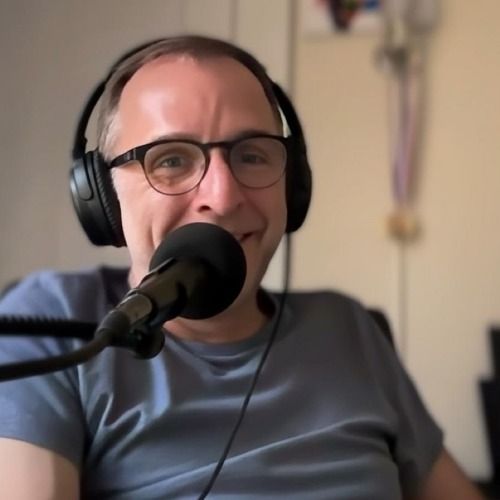
Jason Wachtelhausen has lived one of the most unconventional lives of anyone I've interviewed. As I've been living in Mexico this year, I found myself thinking about his years in Guatemala and hearing this conversation a little differently. We talk heroin addiction, punk rock, butchery, religion, travel, and a life that refuses to fit into a box.
(This episode was originally released on 6/17/2025.)
Follow Jason on Instagram at https://www.instagram.com/dogmuseum_
Please show some support for the podcast and get access to some extra content by subscribing to the Patreon page: http://www.patreon.com/onefjef
Instagram: @onefjefpod
Facebook: https://www.facebook.com/onefjefpod
TikTok: @onefjefpodcast
YouTube: https://www.youtube.com/@onefjef
Email: onefjefpod@gmail.com
You can also call the podcast and leave a voicemail at 1-669-241-5882 and I will probably play it on the air.
Thank you for listening, please do it again, and then re-listen.
Onefjef is produced, edited & hosted by Jef Taylor.
Transcript
Well, hello my friends.
Speaker:How are you doing?
Speaker:I hope you're thriving.
Speaker:Very exciting day today.
Speaker:This is the first ever re-released episode of onefjef.
Speaker:It's a big step for a podcast, a big moment when you finally have
Speaker:enough episodes in the can to justify re-releasing any of them, number one.
Speaker:Number two, when the host/editor/producer/promoter/et
Speaker:cetera gets a little bit overwhelmed and tired of making these episodes
Speaker:every single week and decides to do some re-released episodes.
Speaker:That's also a big moment.
Speaker:Not as big as the first, but you get it
Speaker:And what a re-released episode we have.
Speaker:I believe this is episode number three with Jason Wachtelhausen, who
Speaker:I honestly barely knew at the time.
Speaker:I think it was the first time we'd actually sat down and talked.
Speaker:I talk about how we met in the podcast, so I won't go through that again.
Speaker:But since I recorded this episode, me and Jason have become good friends.
Speaker:We hung out quite a bit when I was in Columbus.
Speaker:He even came to my going away party, like five months ago or whenever that was.
Speaker:I actually saw him briefly when I was in Columbus a couple weeks ago.
Speaker:So he's a great guy, and since this episode was recorded
Speaker:and aired, Jason got married.
Speaker:So congratulations to Jason and his wife.
Speaker:Another thing that happened since this episode aired is that I got
Speaker:a Patreon page for this podcast.
Speaker:So patreon.com/onefjef.
Speaker:Please sign up.
Speaker:As little as five dollars a month, or twenty-five dollars a month,
Speaker:or nine hundred and fifty dollars a month, whatever you choose.
Speaker:Help support the podcast.
Speaker:It's a one-man show here, and every little bit helps, to be honest.
Speaker:Um, helps a lot.
Speaker:And it makes me feel good as well.
Speaker:So please go to patreon.com/onefjef and sign up, and thank you in advance.
Speaker:And to all my continuing Patreon subscribers, thank you so much.
Speaker:I love you very much, and I really appreciate your
Speaker:continued support of onefjef.
Speaker:And for everyone, Patreon subscribers and non-Patreon subscribers, I
Speaker:hope you all really enjoy this, the first re-released episode of onefjef
Speaker:This is the third episode of onefjef.
Speaker:The number three is the first odd prime number.
Speaker:Many cultures consider it a symbol of harmony and balance.
Speaker:It also appears frequently in nature, such as in the structure of triangles.
Speaker:About a month or two ago, I was hanging out at a local bar right
Speaker:down the street from me here in Columbus, Ohio, called Dick's Den.
Speaker:Dick's Den is this iconic little dive bar in Columbus that's known
Speaker:for its live jazz and bluegrass.
Speaker:It's got a really cozy wood-paneled interior and a great selection of drinks.
Speaker:There's a neon sign in the window of Dick's Den that
Speaker:says, "Why not?" I love that.
Speaker:Today's guest is Jason Wachtelhausen.
Speaker:I was standing out on the patio talking to a friend of mine when I
Speaker:turned around and saw this guy dressed like a rock star smoking a cigarette.
Speaker:So I said, "Where'd you come from?" And he's like, "From work, man.
Speaker:I'm a butcher." And I was like, "Oh, my uncle was a butcher." So we got to
Speaker:talking, and I quickly realized that I'd stumbled upon one of the more
Speaker:interesting humans here in Columbus, Ohio.
Speaker:Jason Wachtelhausen is a writer and artist based in Columbus, Ohio.
Speaker:He's contributed to magazines like Wired and Ready Made.
Speaker:He's a whole animal butcher, and he's also a musician.
Speaker:I feel like I could do four or five podcasts with Jason, and
Speaker:he'd still have more to tell.
Speaker:But I'm grateful that he was willing to sit down and share some
Speaker:of his story with me and with you.
Speaker:Again, I hope that you enjoy listening to this as much as I've enjoyed making it.
Speaker:Thank you for listening.
Speaker:Thank you for being here.
Speaker:Here's Jason.
Speaker:How was that concert last night?
Speaker:Was it good?
Speaker:It was great.
Speaker:Yeah?
Speaker:It was, uh, yeah, it was definitely a good show.
Speaker:Are they, like, old punk rockers?
Speaker:They're up there with the very oldest.
Speaker:Yeah.
Speaker:They are, you know, s- icons, uh, you know, originators of the punk sound.
Speaker:How old are they now?
Speaker:Uh, older than me.
Speaker:And I'm not young, so.
Speaker:So, um, Jason, what, what's your last name?
Speaker:I don't even know your last name.
Speaker:My full name is Jason Norvain Wachtelhausen.
Speaker:My father was from Germany.
Speaker:Right.
Speaker:And, um, my mom's from Jamaica.
Speaker:Oh, interesting.
Speaker:Mm-hmm.
Speaker:My, my father grew up here, you know, since he was a baby in the United States,
Speaker:uh, and, um, he loved Black culture.
Speaker:Okay.
Speaker:You know, he was very interested in it and impressed by it or something like that.
Speaker:And, um, my mom was just, like, a Jamaican hippie chick, and So they
Speaker:got together, and now everyone thinks I'm Dominican when they look at me
Speaker:I didn't think you were Dominican.
Speaker:I had no idea.
Speaker:Well, in New York everyone does.
Speaker:In New York for sure.
Speaker:Yeah, I could see that.
Speaker:Uh, so you were born in New York?
Speaker:No, I was born in Philadelphia.
Speaker:Brothers or sisters?
Speaker:Yes.
Speaker:I had five foster brothers and sisters.
Speaker:Okay.
Speaker:Wow.
Speaker:And, uh, my brother, brother- Your real brother … and I. Yeah.
Speaker:My father ended up in the, uh, Navy, and, uh, during Vietnam.
Speaker:Okay.
Speaker:A bunch of weird shit there I won't get into.
Speaker:But, um, there was some bar that when they were in port or whatever you call it, and
Speaker:my mom was like a bar chick around there, and played pool and- Okay … drank beers.
Speaker:Right, right.
Speaker:Cussed and stuff.
Speaker:Right.
Speaker:And, um, I remember when sh- her telling me the story, and she said, uh, "Jason,
Speaker:you know, that first night when I met him, it was the most magical night of my life.
Speaker:It was so wonderful, and then I felt like I wrecked everything 'cause I fucked him.
Speaker:I knew I shouldn't- … have done that, a- uh, 'cause guys, you know,
Speaker:they're never gonna come back." And then the next time he came back
Speaker:around, he did come back, and, uh, they, they ended up being in love.
Speaker:Right.
Speaker:Right, right.
Speaker:How long were they married?
Speaker:Were they married forever?
Speaker:Yes.
Speaker:They, they're still married now?
Speaker:Yeah, until my father died.
Speaker:Oh, your father.
Speaker:Okay.
Speaker:They both wanted to have kids, and they tried for forever to have
Speaker:children, and it just wasn't working.
Speaker:Okay.
Speaker:And, uh, went to doctors several times, and the doctors said, "You
Speaker:know, you, uh, there's nothing wrong with you, well, with either of you."
Speaker:Yeah.
Speaker:"It's just, you know, not happening." Sure.
Speaker:Whatever.
Speaker:"So just keep trying." And, but eventually they, uh, took in some
Speaker:foster kids and raised, were raising them as their children, and they
Speaker:act- they wanted to adopt those kids.
Speaker:But the father wouldn't allow them to be adopted, 'cause he didn't want
Speaker:his kids being raised by a white guy.
Speaker:Oh, interesting.
Speaker:Yeah.
Speaker:Different times.
Speaker:Different times.
Speaker:Yeah.
Speaker:So then all of a sudden out of the blue, my mom gets pregnant with me, and,
Speaker:uh, one year and six months to the day later, she gives birth to my brother.
Speaker:This June 16th and December 16th.
Speaker:Okay.
Speaker:So with the five foster kids and the two of us- Mm-hmm … uh, it had been a really
Speaker:long time since they'd been on a date.
Speaker:One night Ray Charles was playing at this dinner theater.
Speaker:Okay.
Speaker:And they both loved Ray Charles.
Speaker:Sure.
Speaker:Who doesn't?
Speaker:Right.
Speaker:So they said, "Fuck it. We're gonna get a babysitter to watch the
Speaker:kids, and we're gonna go." Mm-hmm.
Speaker:It's this girl who's babysat at, sat us before.
Speaker:Mm-hmm.
Speaker:And, um, she, uh, she was incredibly mean.
Speaker:And, um, as soon as they leave, she starts putting on makeup, and is like, "You kids
Speaker:better be good. I'll be back in about five hours," or something like that.
Speaker:Mm-hmm.
Speaker:As she's walking out, her older brother They lived, uh, right in the house
Speaker:next door Yeah, yeah, yeah … is, like, coming out and confronts her
Speaker:about it, and she's adamant, and she leaves, and he, um, decides he's
Speaker:gonna take over for her and stay.
Speaker:Anyway, that night, uh, the twins were playing with matches, and they were
Speaker:burning little pieces of paper, and they were hiding the paper inside this cracker
Speaker:box that they'd eaten the whole thing of.
Speaker:And, uh, we were pretty fucking poor at the time-
Speaker:Right … so that was a big deal.
Speaker:And, um, they hid all the evidence under my parents' bed,
Speaker:and the box started to burn.
Speaker:Right.
Speaker:And anyway, the house caught on fire.
Speaker:The fi- and the fire was, like, uh You know, like caught the next two row houses-
Speaker:Jesus Christ … on fire as well, and it, it was, we lost everything, everything.
Speaker:I, I remember this so clearly.
Speaker:I re- like remember the dream I was having.
Speaker:I was asleep on the couch downstairs right by the front door.
Speaker:And this, sort of looked like an alien or something like that, but it
Speaker:was a fireman, picked me up off the couch and took me outside, set me on
Speaker:the sidewalk, and ran back inside.
Speaker:And I was like, I don't know if you remember Time Bandits.
Speaker:Yeah, yeah.
Speaker:Okay, so that in the end of, the very end of the film when the
Speaker:guy's kid's parents blow up and all the firetrucks are going by- Sure
Speaker:it's just, it feels so much like exactly like how I felt.
Speaker:I was in my footy pajamas and everything like that.
Speaker:And, um, I had no idea what was going on.
Speaker:And I saw, we had this white Toyota hatchback, and it like skidded
Speaker:around the corner and like, you know, you could hear it and everything,
Speaker:like a show on TV I felt like.
Speaker:And it like screeched to a halt, and before it was even totally stopped,
Speaker:my mom's door opened and she like jumped out of the car and boom,
Speaker:just like straight landed on the concrete, completely passed out.
Speaker:Jesus.
Speaker:My dad jumped out of the car and ran straight towards the door,
Speaker:and almost got like in a physical altercation with this fireman that was
Speaker:there trying to get into the house.
Speaker:Right.
Speaker:And as that was going on, the dude, babysitter, came out of the
Speaker:house and literally his sweater, his hair, stuff was smoking.
Speaker:And he had my little brother- Jesus Christ … who was like, you
Speaker:know, no years old at the time.
Speaker:Right, right, right.
Speaker:And, uh, I always think about if that girl had stayed.
Speaker:Was this in Philly?
Speaker:Yeah.
Speaker:Wow.
Speaker:So what'd your parents do?
Speaker:Your dad was in the war.
Speaker:Yeah.
Speaker:He continued to work for the government- Okay … for the rest of his life.
Speaker:All right.
Speaker:And your mom?
Speaker:She ran a daycare out of the house, um- Sounds like she loved kids … for
Speaker:years … right, right, right.
Speaker:She was amazing with kids.
Speaker:Right.
Speaker:Really amazing with kids.
Speaker:Yeah, and she spanked one of them on the legs 'cause she pulled a knife on someone
Speaker:on the school bus and- The kid did?
Speaker:The kid did.
Speaker:Right.
Speaker:Yeah, and The kid called the cops Mm-hmm.
Speaker:Can't do that.
Speaker:And so my mom's not allowed, allowed around kids anymore, basically.
Speaker:So do you guys get along?
Speaker:You get along with your parents?
Speaker:My dad was the best friend I ever had in my life.
Speaker:No kidding.
Speaker:Uh, I mean- Oh, I love that … ever.
Speaker:Yeah, yeah.
Speaker:Hands down.
Speaker:Like, it was weird.
Speaker:Like, my mom and my little brother are just exactly the same.
Speaker:Like, the exact same type of people.
Speaker:They're both, like, explosive tempers, and, like, full of love, and just fat.
Speaker:And, like, wonder if a big- Fat
Speaker:balloon can float you up.
Speaker:Like, they're, they have a lot of weird- Fat … weird stuff.
Speaker:Do you get along with them or not, not so much?
Speaker:Oh, we get along famously.
Speaker:I mean, like- Okay … we, I mean, it's that sort of,
Speaker:like, opposites attract thing.
Speaker:Right, right.
Speaker:You know, I can totally understand, like, why my dad loved my mom, and why, I
Speaker:understand why I love my brother so much.
Speaker:I mean, he's like the total flip side- Uh-huh … of what I would be.
Speaker:Where's your brother now?
Speaker:Is he, or is he around here, or is he…?
Speaker:He's in Vermont.
Speaker:Vermont, all right.
Speaker:Yeah.
Speaker:All right.
Speaker:When you were a kid, what'd you think you were gonna do when you got older?
Speaker:Did you have any idea?
Speaker:Go to MIT.
Speaker:Oh, really?
Speaker:Yeah.
Speaker:Oh.
Speaker:That was, that was, since I was a little kid, that was what I wanted to do.
Speaker:To do what?
Speaker:And do, did you have a goal after that?
Speaker:Or was it just I wanna go to MIT?
Speaker:Yeah, particle physics is what- No shit … I was really interested in.
Speaker:Huh.
Speaker:Like, the idea of CERN, like, that that was, like, actually gonna happen, and they
Speaker:were deciding where it was gonna be built and everything like that, that was in,
Speaker:like, '84- Yeah, yeah, yeah, yeah, yeah
Speaker:or something like that.
Speaker:And, like, I was so, like, up to date on all- Oh, no shit … that news and stuff.
Speaker:D- and then I, uh, went to Canada and went to school there.
Speaker:Okay.
Speaker:School in Canada was like something, like, in that summer, it's like at,
Speaker:by the end of the summer you just couldn't wait for school to start again.
Speaker:No shit.
Speaker:It was so perfectly administered, and so many sensible decisions
Speaker:that you don't see here.
Speaker:Uh-huh.
Speaker:It was amazing.
Speaker:It was one of the best chapters of my entire life.
Speaker:And, um, I moved back to United States, uh, ended up going to four
Speaker:different high schools, um, dropped out when I was in 11th grade.
Speaker:I've never been so hurt and dis…
Speaker:Like, when I lived in Canada- Yeah … like everyone else in the
Speaker:entire world until recently, I thought like, "Oh my God, I'm going back to
Speaker:America, the coolest country in the world where everything's perfect."
Speaker:"Imagine how good school is gonna be there." And it was the biggest letdown-
Speaker:Right … I've ever experienced.
Speaker:I, I wish that I would've stuck it out and knew obviously what I know now, that
Speaker:you do that shit for the piece of paper.
Speaker:Mm-hmm.
Speaker:And, um, but learning, you know, and your own personal knowledge is something
Speaker:you take on yourself as a pastime or whatever the hell you wanna call it.
Speaker:And- Right, perspective's tricky, yeah.
Speaker:So you drop out of high school, and then what do you, what do you end up doing?
Speaker:What do you end up doing after you drop out?
Speaker:Yeah.
Speaker:Well, I was trying to figure that out.
Speaker:I moved into, um- A Krishna temple in Berkeley No shit Yeah, for about
Speaker:half a year or something like that All right And I've always been interested
Speaker:in religion Okay And, um, uh, I, I'm not interested in following one.
Speaker:I don't, I don't beli- I do believe in God.
Speaker:I do not believe in the idea of religion Right.
Speaker:Spirituality, not religion Sure.
Speaker:Yeah, yeah.
Speaker:And, um But I find that, uh, like television commercials, religion
Speaker:is like something that just by studying it, it gives me a lot of
Speaker:insight into human beings in general.
Speaker:Right.
Speaker:And so I've always been really interested in it for that reason.
Speaker:And, uh, I went there, and the guy who ran the place was called Hari Bolas.
Speaker:Awesome guy.
Speaker:I told him that was, you know, I'm not, uh, planning on becoming a devotee of
Speaker:this religion or anything like that, but I'd love to live here and I'll,
Speaker:you know, take it seriously- Mm-hmm
Speaker:and work with you guys and just see what you, you know-
Speaker:Sure, sure, sure … whatever.
Speaker:Yeah.
Speaker:And, um, he was super open to it, and so it was a wonderful, uh, experience.
Speaker:This is in the '90s, right?
Speaker:Early '90s, mid-'90s?
Speaker:This was in the early '90s.
Speaker:Okay.
Speaker:Yeah.
Speaker:But I, I tell you, it was in California.
Speaker:Sure.
Speaker:And I was surprised to find that even within kind of like a religious context
Speaker:or whatever, these people were still…
Speaker:It was more important to them what other people thought of them than what they
Speaker:were actually doing with their- And you think this is a California-specific thing?
Speaker:Eh, I mean- I feel like that happens everywhere.
Speaker:It happens everywhere, but man, I tell you, it's, I've experienced more of
Speaker:it in California than anywhere else.
Speaker:Interesting.
Speaker:Yeah.
Speaker:Interesting.
Speaker:Did you become a follower, or did you just kind of like, uh, how did that-
Speaker:You know, we'd wake up, um, sometime, I don't know, between like 3:30 and 5:00
Speaker:in the morning and do a bathing ritual.
Speaker:And people always tried to get there on time because the later you were,
Speaker:the colder the water was for your-
Speaker:5:00 AM bathing ritual.
Speaker:And then- What's a bathing ritual?
Speaker:Is it just you take a bath or…?
Speaker:So I think, like a lot of religions, there's a lot of
Speaker:ritualistic shit that happens here.
Speaker:There's not much to it other than getting cleaned up.
Speaker:But are you bathing yourself or other people are?
Speaker:But if you're doing it with the intent of, you know, like whatever,
Speaker:then it's- Like a mindful bathing.
Speaker:Yes.
Speaker:Okay.
Speaker:That's a good way of putting it.
Speaker:Fair, right?
Speaker:Mon- mindful bathing, yeah.
Speaker:But we would make prasadum, which was dinner.
Speaker:Okay.
Speaker:But again, there's like this whole- Got a fancy word for it, right … ritual.
Speaker:Right.
Speaker:But it's not just the word.
Speaker:This, you know, basically this, you put your full intent into making it, uh,
Speaker:whatever, as closely divine as possible.
Speaker:And if you offer the food to a god, they'll eat it.
Speaker:But because they're on a different plane, the food remains, but now it's blessed,
Speaker:and it's become prasadum, not dinner.
Speaker:Krishnas throughout the world aren't all what most people expect here, and
Speaker:the ones in the West Coast, for the most part, aren't the same as what
Speaker:you guys have experienced out here.
Speaker:I mean, yeah, I mean, that's the thing with religion.
Speaker:Every single, uh, even Christianity has got 18,000 different kinds,
Speaker:and everybody's like, "My kind's the right kind, and your kind's the
Speaker:dumb fucking kind, heathen." Right?
Speaker:Um, so it's funny that that actually happens with the Krishnas as well,
Speaker:although they're probably not calling each other heathens, right?
Speaker:I don't know.
Speaker:They're calling each other, whatever it is, it's just their word for heathen.
Speaker:Yeah, yeah, yeah.
Speaker:You know?
Speaker:And so all the same.
Speaker:Yeah.
Speaker:I remember when I was in college, the, the Krishnas You can go get
Speaker:the vegan, free vegan dinner.
Speaker:Yeah.
Speaker:That was the big thing, yeah.
Speaker:Yeah.
Speaker:Yeah.
Speaker:Yeah, we, we used to go and, uh, feed the bums in People's Park and before we ate.
Speaker:Okay.
Speaker:It was cool.
Speaker:That's- And that's, that's, that's where I learned to love cooking too.
Speaker:Oh, that's cool.
Speaker:Yeah.
Speaker:Yeah, yeah.
Speaker:So you leave the Krishna thing.
Speaker:Um, any particular reason?
Speaker:You just got tired of it?
Speaker:Yeah, I mean, I was young.
Speaker:I was 16, 17 at the time.
Speaker:Right, right.
Speaker:I was just itching to move on- Sure … to some place.
Speaker:I get that.
Speaker:And fuck, I don't know exactly where I went from there.
Speaker:I went up to Sacramento for a while.
Speaker:Oh, and then up to Santa Rosa- Okay … a city like Northern California.
Speaker:Right, right, right.
Speaker:And spent a lot of time drinking on a railroad track up there
Speaker:with some- … wonderful people.
Speaker:Like you were, where you run the rails or just drinking on the tracks?
Speaker:Just drinking on the tracks.
Speaker:On the tracks.
Speaker:And the train comes, you get off the tracks, of course, then
Speaker:you can- Yeah … get on it.
Speaker:Why on the tracks?
Speaker:Was that just a place people drank?
Speaker:It's a classic place to drink.
Speaker:All right.
Speaker:I mean, uh- I've never drank on the railroad tracks.
Speaker:I feel like I should try this.
Speaker:Have you ever walked over to the tracks?
Speaker:I've walked on the tracks.
Speaker:I've just never drank on them.
Speaker:No groups of people there drinking?
Speaker:Uh, not that I've ever seen, no.
Speaker:But, you know, maybe that's a different time.
Speaker:Maybe.
Speaker:Yeah.
Speaker:Could be.
Speaker:There's a lot of YouTube videos now of like people y- that you
Speaker:can learn how to actually ride the rails and like s- like- Mm-hmm
Speaker:sneak onto a train and ride all the way to- Yeah … yeah,
Speaker:like, like a legit hobo.
Speaker:I've done, I've done some hoboing- Oh, no shit … before.
Speaker:Oh, we'll get to that.
Speaker:Anyway, I eventually ended up back in Ohio.
Speaker:I came back to Columbus.
Speaker:Okay, but you had family here still?
Speaker:Yes.
Speaker:Okay.
Speaker:My mom and my brother were still here.
Speaker:Okay.
Speaker:So you were in Ohio before?
Speaker:After Toronto, we moved to Marion while we were having a house built
Speaker:in the fancy new suburb of Gahanna.
Speaker:We had one of like the first eight houses, so I lived in this like fully
Speaker:developed devel- development- Right, right, right, right … with no
Speaker:one else in it- Right, right, right
Speaker:for a while.
Speaker:And my mom was… Uh, she went crazy after my dad died.
Speaker:Really?
Speaker:I mean, they were really s- really in love.
Speaker:Right, right.
Speaker:And, um- What'd your dad die of?
Speaker:Eh, mysterious circumstances What do you think?
Speaker:I think I don't think about it that much All right, fair enough … that much.
Speaker:Yeah.
Speaker:But I, I will say this, I did, uh, have an offer from a married couple that
Speaker:had put out this UFO magazine since, like, the '60s or something like that.
Speaker:Okay.
Speaker:And, uh, they said that they would pay for me to go and do some
Speaker:research into how my dad died.
Speaker:Oh, really?
Speaker:So I'll tell you that.
Speaker:They think that he might have been abducted by an alien.
Speaker:I don't know.
Speaker:That's awesome.
Speaker:He's- Well, I mean, maybe he's in a better place … he gets some
Speaker:weird shit … maybe he's up there.
Speaker:Maybe he's flying around the- Yeah, who knows?
Speaker:You know, who the fuck knows, man?
Speaker:Yeah.
Speaker:Your mom might find him yet.
Speaker:Yeah.
Speaker:Yeah.
Speaker:Oh, I imagine they'll bump into each other again in some way.
Speaker:Yeah, I think everybody does, right?
Speaker:I, I don't know.
Speaker:I hope not everybody.
Speaker:Well, I mean, I think, yeah.
Speaker:Anyway, so you're back in Ohio.
Speaker:Uh, between going to New York every other, you know, month and, and
Speaker:living in Columbus, and it being the '90s, and being in a band that played
Speaker:at Stashes all the time- Oh, okay.
Speaker:I didn't know.
Speaker:How'd you get in the band?
Speaker:I don't know.
Speaker:I've been, I've basically been kind of a punk rocker my whole life and- Okay.
Speaker:Yeah … anyway, between all that stuff, I became got on heroin.
Speaker:Okay.
Speaker:And, uh, I was a heroin addict for a few years.
Speaker:How old were you when you got introduced to, to the heroin?
Speaker:No, 19, 20 19 and 20?
Speaker:No, yeah, no, okay, maybe 18, 19 Do you remember who introduced you to it, or?
Speaker:Yeah, William Burroughs I mean, but so I had sought it out.
Speaker:Right, right.
Speaker:Nobody was like, "Hey, you gotta try it." Oh, so you were reading
Speaker:Burroughs books and you're like, "I wanna try some of this shit"?
Speaker:Yeah.
Speaker:Dude, everyone I idolized was a fucking heroin addict.
Speaker:Sure, sure.
Speaker:It is.
Speaker:That's how I got into weed.
Speaker:But yeah, yeah.
Speaker:Oof.
Speaker:Um, yeah, I just didn't take the further step.
Speaker:Yeah.
Speaker:So you found somebody, you could just find somebody who would, was,
Speaker:was- At that time, yeah … okay.
Speaker:Yeah In that rock and roll scene in Columbus, Ohio, it was pretty easy.
Speaker:And did you do it by yourself, or did you do it with- All the time.
Speaker:I've, I've always- No, but the first time we're talking about, like the
Speaker:first time you get it from somebody.
Speaker:Do you remember, like- Yeah, the very f- okay, let's see, the
Speaker:very first time I ever did it.
Speaker:I think the very first time I did it, I was probably by myself, and then usually
Speaker:after that I was with my girlfriend, who'd eventually become my first wife.
Speaker:Okay.
Speaker:So you get this heroin, it's what, black tar or was it like powder or-
Speaker:So okay, that's what I was gonna say.
Speaker:Yeah.
Speaker:The first time I really remember coming alive from the experience and- Okay
Speaker:… having that first like- And being like, "Oh, I see it" … "Man, I am gonna be
Speaker:a heroin addict." Feeling was- Say it like, say it, okay … I was visiting
Speaker:some friends, uh, in San Francisco, my ex-wife and I, and, um, they got this
Speaker:black tar stuff and used an eyedropper method where you heat it up and put it in
Speaker:a eyedropper and drop that in your nose.
Speaker:Right And, uh, pretty fucking fun.
Speaker:I mean, better than shooting it up, needles, like, yeah.
Speaker:No.
Speaker:Yeah.
Speaker:Not, no, it's, it's not in terms of fun, but- Well, I mean, better
Speaker:in, in my, in my mind, 'cause I'm terrified of needles, but yeah, yeah.
Speaker:Yeah.
Speaker:Yeah.
Speaker:I can understand that.
Speaker:Right.
Speaker:It's all, any way you're doing it, it's… Uh, you know what?
Speaker:I've n- I have friends to this day who are people that every once in a while, three,
Speaker:four times a year, they'll do heroin.
Speaker:Sure.
Speaker:They'll shoot up.
Speaker:Most of them sniff it if they're gonna do it now.
Speaker:But if you can be that kind of person, I highly recommend heroin.
Speaker:Sure, sure.
Speaker:If you can be that- It's super fun … if you can be that kind
Speaker:of person is the thing, right?
Speaker:But, uh, yeah.
Speaker:Right And I've been, I, I've quit smoking ci- I've quit everything
Speaker:in my life, including heroin- Sure.
Speaker:Yeah … without ever going to any kind of program or anything like that.
Speaker:Right, right, right.
Speaker:I've quit everything, but heroin's the only one that ever, I'm still scared of.
Speaker:That causes- A little bit
Speaker:yeah, yeah, yeah.
Speaker:And like, yeah.
Speaker:Yeah.
Speaker:Like, oh, I would still like love to fucking get high- Yeah … on heroin
Speaker:again, and I, I would if I knew I could do it without any repercu- repercussions.
Speaker:Sure, sure.
Speaker:I don't feel that way about PCP.
Speaker:Oh.
Speaker:You know what I mean?
Speaker:Like Well, there's another one we can dig into.
Speaker:So what does that look like?
Speaker:Like, is it you're good for a while, like you're using it and you're, you think
Speaker:you're, you're kind of okay, and then you realize at a certain point it's using
Speaker:you or something to this effect, right?
Speaker:Yeah.
Speaker:Whatever, you can slap whatever kind of cliche in there you want.
Speaker:Right, right, right.
Speaker:It's gonna be basically true.
Speaker:Thanks for calling me out on that, yeah.
Speaker:No, I mean- No, yeah, I, I- … but it's gonna be true.
Speaker:I mean, they're all, that's really is, uh- That's all there is to it.
Speaker:You know?
Speaker:Right.
Speaker:It's nothing… You know, eventually the lights all go out.
Speaker:Eventually you take something from a friend that you know you shouldn't
Speaker:have, and I've never, ever in my life been a thief on any level.
Speaker:Sure.
Speaker:And that's something that, uh, you know, I, I never outright stole somebody's
Speaker:guitar and sold it or something like that.
Speaker:Yeah.
Speaker:But I certainly did things where I know I was taking advantage- Mm-hmm … that,
Speaker:um, I'll never forgive myself for.
Speaker:Just to get the drug.
Speaker:Yeah.
Speaker:Yeah, yeah.
Speaker:Yeah.
Speaker:Yeah.
Speaker:Yeah.
Speaker:How often were you using when you were, like, in the throe?
Speaker:How much, how much did you use?
Speaker:Three times a day.
Speaker:Huh.
Speaker:How'd you get off the heroin?
Speaker:You were on a couple years, you said?
Speaker:Yeah.
Speaker:So, uh, this one friend I- Was there, was there a moment
Speaker:that… Yes, there was a moment.
Speaker:Yeah, yeah.
Speaker:Of course, there's always a moment, yeah.
Speaker:There was… Well, things were getting bad generally.
Speaker:Okay.
Speaker:You know?
Speaker:Uh, in a lot of ways, and I wasn't very fun, cool person anymore.
Speaker:Sure.
Speaker:Uh, just a lot of my friends were hurt and upset.
Speaker:Eventually the drug ends up controlling you.
Speaker:It's- Yeah.
Speaker:Another cliche phrase But it's f- it's true.
Speaker:Yeah.
Speaker:That's what happens.
Speaker:Right.
Speaker:This guy, who was one of my best friends growing up, who went l-
Speaker:his father went crazy and when we, we were young, and the same thing
Speaker:happened to, to John, my friend.
Speaker:Uh- What, what happened?
Speaker:He, uh, went fucking crazy.
Speaker:Went crazy, yeah.
Speaker:I mean crazy like stopped using electricity, didn't believe in
Speaker:money anymore and- Yeah … his landlord wasn't super cool with
Speaker:either one of those things.
Speaker:Well, the money one I think is probably the one that's the
Speaker:difficult one for the landlord.
Speaker:That's the one that got him- Landlord could do whatever,
Speaker:but the landlord's gonna- Yeah.
Speaker:Right.
Speaker:He moved back in with his mom, started making his own chocolate bars.
Speaker:Yeah.
Speaker:Well, gotta have a hobby, right?
Speaker:Yeah.
Speaker:The last time I, uh, heard anything about him, his sister, who was never super
Speaker:fond of me, gave me a call to let me know that he had stolen his mom's car in
Speaker:Florida, and the last thing they heard was he was driving to New York to kill me.
Speaker:Wow.
Speaker:Yeah.
Speaker:So this guy- Right … before he went crazy and wanted to kill
Speaker:me, called my mom and my brother, who had relocated to Missouri.
Speaker:'Cause he was, like, worried about you?
Speaker:Yeah.
Speaker:All right.
Speaker:He was like, "Dude, he's fucked up.
Speaker:It's like, I just-" 'Cause he wasn't on the drugs … "tell
Speaker:him it's not him anymore." Right.
Speaker:Right.
Speaker:"And you gotta…" Which is ironic 'cause he l- ended up going crazy
Speaker:himself and trying to kill you.
Speaker:Yeah.
Speaker:So, I mean- Life's a long road.
Speaker:Yeah, but, uh- I mean … the moral of that one's obvious: do drugs.
Speaker:Is that the moral?
Speaker:Uh, let me think about that.
Speaker:We'll leave that to the listeners to decide what the moral of that one is.
Speaker:My mom and my brother- The brother … did exactly what
Speaker:my mom and my brother would do.
Speaker:They didn't say anything, and they drove from Missouri to my house 10 minutes
Speaker:after they got off the phone with John.
Speaker:'Cause they had no idea.
Speaker:Nah.
Speaker:Right.
Speaker:They showed up, and my brother came in with a, like, blackjack or whatever,
Speaker:ready to knock me out if he had to.
Speaker:Geez.
Speaker:They didn't know if I'd be crazed, like trying to bite him.
Speaker:Right.
Speaker:Right, right.
Speaker:And I was like, "Yeah, you guys are right.
Speaker:I, I gotta do it.
Speaker:I, I gotta do it.
Speaker:I probably would've done it myself if I had the cash.
Speaker:I need about 200 bucks.
Speaker:That'll get me enough heroin to, for, to get us to Missouri, and then I
Speaker:won't have any when we get there."
Speaker:Okay.
Speaker:"So let's do it." So just left everything in the house.
Speaker:My mom got me some heroin- Aw … and he said, "Good mom." Aw.
Speaker:And- I'm a little, tearing up a little bit actually.
Speaker:We drove out there, and I didn't sleep for like 11 days.
Speaker:It was, it was- Bad.
Speaker:Yeah … everything is- I've seen the movies.
Speaker:Yeah, yeah.
Speaker:Ugh.
Speaker:But there's, there's really no explanation for it.
Speaker:I mean, you cannot describe it to someone who hasn't gone through it.
Speaker:It's, it's a weird kind of hell.
Speaker:But on the 11th day, I was laying on the floor And I was reading this book.
Speaker:It was like some old hard-boiled detective novel- Right, right … kind of novel.
Speaker:And all of a sudden, I noticed the book was on my chest, and I was like,
Speaker:"Oh my God, I just fell asleep."
Speaker:And I looked at the clock, and I'd been asleep for like 45 minutes, and
Speaker:I have never been so happy in my life.
Speaker:I was like, "That meant, like, I'm beating it. This is, like, really
Speaker:happening now." Right, like you're- Like, I'm not gonna feel like that forever.
Speaker:You're actually, yeah, sleeping.
Speaker:And I was really, like, overflowing with a kind of joy, and the phone
Speaker:rang l- at that exact minute.
Speaker:Uh-huh.
Speaker:And I picked it up, and, uh, it was my friend Jasper.
Speaker:And I was like, "Oh my God, Jasper, you're not gonna believe it.
Speaker:I just fell asleep, man.
Speaker:This is the greatest day of my life." And Jasper was like, "Uh, yeah, Mike
Speaker:Dean killed Jay Hitt last night." And that was the guy I was- Right,
Speaker:right … I was talking about earlier.
Speaker:Yeah.
Speaker:So you quit the heroin.
Speaker:Good job.
Speaker:You're in Missouri, um- Forever.
Speaker:For how long were you in Missouri?
Speaker:Oh, no.
Speaker:I mean, I quit the heroin forever.
Speaker:Forever.
Speaker:Yeah, yeah, yeah.
Speaker:I, like, and I literally at one point tried it again to make sure
Speaker:I was, like, not addicted to it.
Speaker:Wow, that's a ballsy move.
Speaker:That really was- That's a ballsy move
Speaker:the reason.
Speaker:Yeah.
Speaker:And I just sniffed it.
Speaker:But, um, I, and I had a blast.
Speaker:And I, uh, fucking the next day I didn't feel like any,
Speaker:like, going back or whatever.
Speaker:Sure.
Speaker:But I knew if I did, it's, I was like that, that one time will be enough.
Speaker:Yeah, yeah, yeah.
Speaker:And that's it.
Speaker:That's, uh, that's all I've done since.
Speaker:Oh, oh, good for you.
Speaker:Missouri did change my life.
Speaker:It, not just getting off heroin, uh, but I got a job in a chicken factory.
Speaker:Okay.
Speaker:Okay.
Speaker:And the first chicken factory I ever worked in was called Petit Jean.
Speaker:Like a butcher kind of.
Speaker:Yeah.
Speaker:Like a, what do they call it?
Speaker:Slaughterhouse.
Speaker:It's, a- as, as an actual butcher now, I realize how far that is, but
Speaker:yes, it deals with- Slaughterhouse
Speaker:yeah- Right … slaughtering and breaking down meat, basically.
Speaker:Right.
Speaker:But, um- Yeah, I got a job, uh, at a chicken plant peeling tenders.
Speaker:My thumbnails turned black and fell off.
Speaker:Ugh.
Speaker:And, uh, the work was fucking insane, and I felt like I deserved
Speaker:it or something like that, kind of.
Speaker:And, uh- How old are you?
Speaker:Uh, 19, I think.
Speaker:Right, right.
Speaker:Okay.
Speaker:And at some point there, I can't remember if it was before this or after that,
Speaker:but s- at some point in California, I married my girlfriend, Laura.
Speaker:Oh, all right.
Speaker:So, and she was there.
Speaker:You know, she had gotten off heroin too.
Speaker:She came with you to get off the heroin with you.
Speaker:Yeah.
Speaker:Oh, okay.
Speaker:That's an interesting part.
Speaker:She did.
Speaker:She was on, she go- she, did you get her on heroin?
Speaker:It kind of just happened organically.
Speaker:Okay.
Speaker:Right.
Speaker:I was, I was never like, "Hey, you wanna try some heroin?" I mean, you are married.
Speaker:If you are married, you kinda gotta do this, you know?
Speaker:I mean.
Speaker:Yeah, I don't know.
Speaker:We did, it, yeah.
Speaker:Those couples where one does heroin.
Speaker:She was, she was, she was just a heroin addict type of person regardless.
Speaker:Right, right.
Speaker:She ended up staying on it and doing a lot of fucked up things, but, uh, whatever.
Speaker:Right.
Speaker:Um, but the chicken factory, man, that, that's was amazing.
Speaker:Amazing, and it's amazing to me that I could handle it.
Speaker:But I moved on from there to a larger chicken factory in Buffalo, Missouri.
Speaker:Okay.
Speaker:And then I moved on to the granddaddy turkey factory- Oh,
Speaker:oh, oh, oh … in Springfield.
Speaker:Your career's,
Speaker:uh, taking off.
Speaker:Yeah.
Speaker:Yeah, yeah.
Speaker:And by, at that point I was drinking two bottles of gin a day- Oh,
Speaker:right … to, to, to fit in, I guess.
Speaker:There was a lot of drinking going on at the chicken factory.
Speaker:Yeah, there was.
Speaker:Yeah.
Speaker:Missouri also is like, uh, I've been a lot of places, and I, and I never
Speaker:really thought you could actually hate a place, especially one as so
Speaker:beautiful as Missouri, but there's something wrong with it there.
Speaker:It's like it makes people into weird, bitter, pinched-up husks of people.
Speaker:Interesting.
Speaker:Ugh, God.
Speaker:I never heard that.
Speaker:It, well- I mean, I know a few people from Missouri.
Speaker:They don't, I mean, I'm sure there's exceptions, but yeah.
Speaker:If you stay, I guess.
Speaker:These people left.
Speaker:No, there are people in St. Louis and stuff like that.
Speaker:Yeah, yeah.
Speaker:But it really, I guess what I'm talking about is the Ozarks and that southern-
Speaker:Right, right, right, right, right
Speaker:you know, part of it.
Speaker:I've never seen, like, this level of, like, willful ignorance and just You know,
Speaker:like, girls had, like, genital warts down to their ankles- … until you explained
Speaker:to them that, like, you could just go to the doctor, and they just never knew.
Speaker:Sure.
Speaker:Sure.
Speaker:Sure.
Speaker:It, it's fucking- Sure … it's seriously sad.
Speaker:Right.
Speaker:Right.
Speaker:Right.
Speaker:That's truly… Little bit of, little bit of, like, sex education
Speaker:or something's really good.
Speaker:Yeah.
Speaker:Explaining.
Speaker:Down to your ankles, though, that's gotta be a long Like, this was- I've
Speaker:never heard of that shit before.
Speaker:The specific girl I'm thinking of, uh, was one of the smartest
Speaker:people I met in Missouri.
Speaker:Like- And she's the one who has the genital warts down to the ankles?
Speaker:That she had had them.
Speaker:You know, she… They… That had happened to her, and, uh,
Speaker:t- because she just didn't know.
Speaker:Huh.
Speaker:Like, she, she said that, "I had no idea that was a-" So smart in some
Speaker:ways, not smart in other ways, right?
Speaker:Well, ignorant, you know what I mean?
Speaker:Yeah, yeah.
Speaker:Smart, but ignorant, you know?
Speaker:You can't put the facts together, I guess, if you don't have the
Speaker:facts, no matter how smart you are.
Speaker:I mean, I'd be like, "Why the fuck are there warts all
Speaker:over my pussy?" But- She was.
Speaker:Yeah.
Speaker:She just thought, like everyone else there does, that there's something
Speaker:wrong with her specifically.
Speaker:Oh, there's a lot of genital warts in Missouri, then.
Speaker:Yeah.
Speaker:Yeah.
Speaker:Like, it's like, of course, duh.
Speaker:Yeah, yeah.
Speaker:They used to have on the license plate the genital wart state, I think.
Speaker:You know, they also, right around the corner from where we lived was Max Creek.
Speaker:Awesome softball team.
Speaker:All right.
Speaker:But the highest, um, incest rate-
Speaker:in the country.
Speaker:Wow.
Speaker:Dead seriously.
Speaker:Basically, the town is a family, and they got busted, uh, because there's a police
Speaker:station there or something like that.
Speaker:They changed a federal law- Mm … because these guys, like, 98% of the income for
Speaker:the entire town was coming from this speed trap that they set up- Right.
Speaker:Right … and just giving people tickets.
Speaker:There's a lot of these in Ohio, too, yeah.
Speaker:Yeah.
Speaker:Well, this was… I don't know exactly how- Right … that scam
Speaker:works- Sure … or whatever.
Speaker:Sure.
Speaker:But it was the entire town, and they were all related.
Speaker:Huh.
Speaker:And they had a great softball team, so.
Speaker:This episode's sponsored by the State of Missouri.
Speaker:Go for the incest, stay for the genital warts.
Speaker:A- a- anyway, the whole thing that happened there was I started working
Speaker:on Saturdays doing that job where I'd hook the freshly dead turkeys, and
Speaker:they'd- Right … spray out, uh, yes, shit onto my neck or chin usually.
Speaker:But I was doing that because this guy had a white Blazer, uh, that
Speaker:he would sell me pretty cheap, and my wife's birthday was coming up.
Speaker:Okay.
Speaker:And, uh, I was like, "Oh, this is so cool. It'll be perfect," you know?
Speaker:Mm-hmm.
Speaker:And, uh, I did it, you know, worked through the whole summer or whatever
Speaker:the hell it was, and, uh, got the car and everything, and brought
Speaker:it home on her birthday, and, uh, drove it home from work or whatever.
Speaker:Yeah.
Speaker:And, um- She walked out of the house, and I was like, handed her the keys,
Speaker:and she was like, "Oh my God, this is so perfect because I'm leaving
Speaker:you," and literally left that night.
Speaker:Took, took the car?
Speaker:Took the car.
Speaker:Jesus.
Speaker:Took my dog.
Speaker:Jesus Christ, dude.
Speaker:I would… Like, did you ever think, "You can't have it if you're
Speaker:leaving me. This is not, like…" It's not something I would think.
Speaker:Right.
Speaker:Yeah.
Speaker:I, I mean, I love things, like, I like having shit around, but I
Speaker:don't really care about things.
Speaker:When s- something like that happens, I was- Yeah, right.
Speaker:Fair enough.
Speaker:Yeah.
Speaker:But, uh, pissed off about it now.
Speaker:Yeah.
Speaker:Yeah, yeah, yeah, yeah.
Speaker:It's like, it's hindsight.
Speaker:Hindsight.
Speaker:Yeah, yeah.
Speaker:Yeah.
Speaker:So as a result of that, I decided that- Missouri just had too many
Speaker:bad memories for me … for me.
Speaker:Sure.
Speaker:Like, all of them.
Speaker:The John awards and the broken leg.
Speaker:Yeah.
Speaker:Right.
Speaker:Time to go.
Speaker:Moved from Missouri to Minneapolis, moved in with a couple of old
Speaker:friends, uh, from here, from Columbus.
Speaker:Okay.
Speaker:I continued, uh, working in meat, and I ended up managing a Whole Foods meat
Speaker:department for a while, and then I moved on to this place called The Wedge
Speaker:that was, like, uh, the biggest food co-op in the United States until, you
Speaker:know, s- 2000 or something like that.
Speaker:Okay.
Speaker:From the '60s it had been there consistently.
Speaker:Super famous place.
Speaker:We had, like, uh, Prince's wife shopped there all the time.
Speaker:Tiny Tim, uh, in his last days- Mm-hmm … was, like, one of my
Speaker:main kind of clients or whatever.
Speaker:No shit.
Speaker:We, yeah, discussed his diet a lot.
Speaker:And, and his wife continued, uh- Huh coming in after he died
Speaker:and everything That's crazy.
Speaker:Laura Dern would come in.
Speaker:Uh, I remember Fugazi came in one time.
Speaker:That was pretty awesome.
Speaker:So yeah, people like… It was a pretty famous place- It was a
Speaker:scene … in Minnesota or whatever.
Speaker:I got a girlfriend who worked there- Okay … named Sarah, and, um, she
Speaker:had studied Spanish stuff, culture and language her entire life, and
Speaker:she wanted to go to Guatemala, and we decided, "Okay, let's do that."
Speaker:So we saved up for- Why not?
Speaker:… whatever.
Speaker:Yeah … a while, and we put away maybe 10 grand or something like that.
Speaker:Okay.
Speaker:So we flew… It was the first time I'd had money again in a while,
Speaker:and, uh, we flew my mom out to Isla Mujeres, which is a little island
Speaker:off the coast of- Okay … Cancun.
Speaker:Right.
Speaker:You just fly into Cancun.
Speaker:It's not a Cancun-type place.
Speaker:It's… It used to be wonderful.
Speaker:I don't know what it's like now.
Speaker:Right.
Speaker:We partied there with her for an unforgettable week, and, uh, then
Speaker:from there we just started, Sarah and I just started traveling south, and
Speaker:ended up going through, um, you know, the rest of Mexico, through Belize.
Speaker:Mm-hmm.
Speaker:And, uh, then from Punta Gorda, Belize, we took a boat, uh, to Livingston, Guatemala.
Speaker:Okay.
Speaker:It's probably where, like, 90% of the Black population of Guatemala lives.
Speaker:Okay.
Speaker:And, uh, spent about six months there, and then from there we moved to
Speaker:Guatemala City for a while, and then from there we went to Todos Santos.
Speaker:And Todos Santos is, uh, on the west coast of Guatemala, way up
Speaker:in the mountains, 9,200 feet, and, uh, lived there for about a year.
Speaker:Okay.
Speaker:And it was, it was like living in Indiana Jones.
Speaker:I, I don't even know where you would begin there.
Speaker:There's, there's a thing they have there called the Caja Real, which
Speaker:is this box of papers and stuff like that that allegedly came over with the
Speaker:conquistadors, but there's, like, stuff written on skin and all this, like-
Speaker:weird stuff, and it's very, very selective about who gets to see it,
Speaker:that people have tried to steal it back to the United States a bunch of times.
Speaker:The Smithsonian allegedly has had people there basically trying to take this thing.
Speaker:Wow.
Speaker:I got to see that, which was a real honor.
Speaker:Yeah, that's cool.
Speaker:Amazing.
Speaker:And, like, all of these m- meetings and stuff like that would happen in, like,
Speaker:a dirt floor wooden shack with a fire in it, you know- Huh … on a chilly
Speaker:night drinking aguardiente and p- venado or- Yeah … whatever with these guys.
Speaker:It was super magical living there.
Speaker:There's a famous horse race that happens there every year- Huh
Speaker:that, um, basically all the men go to the coast.
Speaker:I have no idea what they do.
Speaker:I never made it to the coast.
Speaker:But they go to the coast and work.
Speaker:That's what everyone says.
Speaker:Okay.
Speaker:You know, "My husband's at the coast working." Mm-hmm.
Speaker:"Come in." But, um, they, uh- come back in November for the
Speaker:Day of the Dead celebration.
Speaker:Mm-hmm.
Speaker:And that's their huge holiday.
Speaker:Right.
Speaker:And so there's like three celebrations right in a row, and
Speaker:one of them is this horse race.
Speaker:And the horse race is, uh, 100 yards or something like that.
Speaker:Uh-huh But it's back and forth, and each time you get to the finish line, you
Speaker:have to drink a shot of Quetzalteca, and you go back and do the same thing.
Speaker:The year I was there was the first time no one died- … during the race, but
Speaker:there were some serious, serious injuries.
Speaker:So they're on the horse drinking while they're on the horse, or?
Speaker:They, they go, cross the finish line, drink, turn around, go
Speaker:back, cross the finish line.
Speaker:But they sit on the horse the whole time.
Speaker:Yeah, they never get off the horse.
Speaker:Okay.
Speaker:Right.
Speaker:In fact, most of them tie themselves to the horse.
Speaker:Jesus Christ.
Speaker:And, uh, which is one of the things that's resulted in a lot- That would do it,
Speaker:yeah … the deaths and stuff like that.
Speaker:They, uh, use a rooster for their riding crop.
Speaker:They tie the rooster's legs to their wrist, so the rooster, it's tied to them,
Speaker:a live rooster, and that's what they use.
Speaker:Jesus Christ.
Speaker:And they spend all the money that they've made at the coast-
Speaker:Uh-huh … or doing whatever.
Speaker:Every family buys a cow.
Speaker:That's, like, mandatory, and, uh, that's parted up and whatever for feasts of-
Speaker:Right … over the course of that week.
Speaker:And then the guys all have, the tailors there are famous.
Speaker:They're, they're most famous for the fabric that they make there.
Speaker:The guys have these insanely elaborate sort of conquistador disco outfits made.
Speaker:Sure.
Speaker:Okay.
Speaker:And that's it, then they're, everyone's broke again, and all
Speaker:the men go back to the coast.
Speaker:Huh, and that's life.
Speaker:They do it all again, yeah.
Speaker:Huh.
Speaker:Wow.
Speaker:Yeah.
Speaker:I was a coordinator for a school they had up there called El Proyecto Linguistico de
Speaker:Espanol y Mam.
Speaker:Si.
Speaker:They've never had a written language.
Speaker:Their Mam is the name of the language.
Speaker:They've never had a- Oh, right … a written language.
Speaker:So it's like tribal people sp- They're indigenous people.
Speaker:Right, indigenous, yeah.
Speaker:You know, none of the existing alphabets work for some of the
Speaker:intricacies of the language.
Speaker:Sure.
Speaker:It, it is, it's a weird one.
Speaker:I remember ътскънсич means may I have a cigarette.
Speaker:Oh.
Speaker:Well, you got that one down.
Speaker:Yeah.
Speaker:Yeah.
Speaker:And they accepted you as if, like, you, you were accepted in their
Speaker:friend groups and whatever, or?
Speaker:I, I'm just not an idiot, and I understand how people work.
Speaker:Right.
Speaker:So yeah, they accepted me really well.
Speaker:But there was an incident very shortly after I left, within a month after
Speaker:I left, where a couple of Japanese tourists were killed, like, 10
Speaker:minutes after getting off the bus.
Speaker:They had gotten, they had made so many mistakes that they had, there was, like,
Speaker:a mob riot, and they killed this- Jesus Christ … uh, woman and her, her husband.
Speaker:And, uh, basically the whole thing started because the woman got off the
Speaker:bus and immediately saw, like, some little kid walking around, was like,
Speaker:"Oh, he's so cute," and picked him up.
Speaker:And the biggest fear they have of Americans especially, but anyone
Speaker:foreign- Right … is that you're there to steal their children's organs.
Speaker:Oh sh- So I don't know where that came from.
Speaker:Sure, sure.
Speaker:But they, they believe it totally, and this, like, foreign-looking
Speaker:person jumped off and grabbed a kid immediately, and it just exploded.
Speaker:Jesus.
Speaker:They both ended up dead.
Speaker:Wow.
Speaker:Yeah.
Speaker:Oy.
Speaker:Yeah.
Speaker:Yeah.
Speaker:Are you still with the woman at this time?
Speaker:Oh, no, she met some guy, and I remember the guy had a moped too.
Speaker:It was pretty cool.
Speaker:Sweet.
Speaker:And, uh, yeah, he scooted her out of town and, uh- Scooted her out of town.
Speaker:I left the school, met a kind of a big group of people.
Speaker:We traveled around to the rest of, uh, Central America- Mm-hmm … mostly,
Speaker:and had some amazing adventures.
Speaker:Good times.
Speaker:Yeah, yeah.
Speaker:Lots, lots of fun, man.
Speaker:Right.
Speaker:Lots of fun.
Speaker:Then, uh, along the way I acquired this dog that was a, um, a Dogo Argentino,
Speaker:which is… I don't know if you know them or not, but they're big dogs.
Speaker:Okay.
Speaker:They're like all white, super short hair.
Speaker:People always mix them up with pit bulls.
Speaker:I was in the Huehuetenango, this town.
Speaker:I walked by a pet shop and they had a litter, and there was this one that
Speaker:was like, looked like a little rat, like laying all splayed out- Uh-huh
Speaker:by himself.
Speaker:Uh-huh.
Speaker:And I was like, "Oh, what's gonna happen to that one?" And the guy was like,
Speaker:"Eh, I'll probably drown him." Mm-hmm.
Speaker:And I was like, "Oh, I'll take him then." And he was like, "All right, 7,000
Speaker:quetzales." Which was $13 or whatever.
Speaker:Right, right, right, right.
Speaker:And I was like, "Fuck it, okay." Right.
Speaker:So I bought him, and uh, he was so little.
Speaker:We used to, I used to carry him in a bag.
Speaker:For a long time he would fit in that bag.
Speaker:And um, we started hitchhiking, and we hitchhiked from San José,
Speaker:Costa Rica to Phoenix, Arizona.
Speaker:Wow.
Speaker:Yeah.
Speaker:It was pretty awesome.
Speaker:With the dog?
Speaker:Yeah.
Speaker:What was the dog's name?
Speaker:Clavo.
Speaker:Clavo.
Speaker:And everyone always made a joke about that because they use a lot
Speaker:of diminutives and demonstratives in the way they speak there.
Speaker:Right, right, right.
Speaker:And so everyone always said, "Oh, right now he's a clavito,"
Speaker:like just a little Clavo.
Speaker:But Clavo means nail.
Speaker:Okay.
Speaker:But it's also slang for problem.
Speaker:Oh.
Speaker:And they were like, "You know, eventually he's gonna become a Clav-
Speaker:Clavo- That's a good name … and then a clavón," like a huge problem.
Speaker:Right, right, right, right.
Speaker:And it happened.
Speaker:Right.
Speaker:Well, it's a good name in that case.
Speaker:Yeah.
Speaker:Right.
Speaker:Yeah, he was a great dog.
Speaker:So you get to Phoenix.
Speaker:Get to Phoenix, go to California.
Speaker:Right.
Speaker:You know, my grandmother dies in Ohio.
Speaker:Mm-hmm.
Speaker:I marry in Ohio.
Speaker:Okay.
Speaker:And, um, drive back for that funeral, stay here for about six months, go
Speaker:to New York Really at this point, like it's very culture shock being
Speaker:back in the United States at all.
Speaker:Sure.
Speaker:Yeah.
Speaker:And, um- You were gone for what?
Speaker:Two, three years?
Speaker:Yeah.
Speaker:Okay.
Speaker:And New York was just overload.
Speaker:And I went from there, I texted a friend or called a friend who, um, had crashed on
Speaker:my couch in Minneapolis for about a year.
Speaker:Mm-hmm.
Speaker:I was like, "I gotta get out of New York." My friend lived in Vermont.
Speaker:I went up there, uh, to stay with him, and if there- if you're ever coming
Speaker:back from Guatemala and feel- Vermont
Speaker:culture shocked, Vermont is really, you know- I think Vermont's good for
Speaker:a lot of different kind of things.
Speaker:I think it's just- It is … a chill place to, yeah.
Speaker:They, there's some, uh, soul-killingly awful things about it, I think, as
Speaker:well, but it's mostly just really- You can say that about almost anywhere.
Speaker:Yeah.
Speaker:Yeah.
Speaker:Sure.
Speaker:Yeah.
Speaker:Um, yeah, stayed in Vermont for a while, opened up a record store.
Speaker:My little brother flew out to help me run it, fell in love with Vermont.
Speaker:He still lives there now.
Speaker:Mm-hmm.
Speaker:And met this girl.
Speaker:Mmm, had a real textbook affair.
Speaker:Her husband was like a super rich dude and stuff like that.
Speaker:Oh, I see.
Speaker:And, um, eventually she left him and we got married.
Speaker:How long did it take for like, so she's cheating on her husband for a while, but
Speaker:how long did it take from the beginning of the affair to the leaving the guy?
Speaker:Well, when we started, I think we, we kind of like, we think like, if
Speaker:this is still going on in two years, we gotta get together, and then
Speaker:it, it became a year and a half.
Speaker:Then- Mm-hmm … a year.
Speaker:I think it was about eight months after- And the husband
Speaker:never knew … we got together.
Speaker:Never knew until I drove her up to Montreal, um, 'cause he was at
Speaker:their Montreal house at the time, and, uh, or he was coming back
Speaker:there from some overseas trip.
Speaker:Right.
Speaker:So she, we went back to Montreal the day before.
Speaker:I helped her pack all her shit up, and then I went and sat in a bar while
Speaker:she waited for him to come home, and she was like, "I'm leaving you." Huh.
Speaker:Came down, met me at the bar, and threw all her shit in the car and left.
Speaker:Wow.
Speaker:And stayed together for 22 years, something like that.
Speaker:Wow.
Speaker:No shit.
Speaker:No, no, no.
Speaker:Sorry.
Speaker:Longer than that.
Speaker:Longer than that, 'cause my daughter's 22 now, so.
Speaker:Wow.
Speaker:And, uh, when she got pregnant, I didn't want my kid to be raised in
Speaker:Vermont, and I did want- Right … my kid to be raised in New York.
Speaker:Yeah.
Speaker:We ended up in Washington Heights, which is probably about as tough
Speaker:as you're gonna get in- New York, Manhattan anyway Back then.
Speaker:Yeah, yeah Still, still Yeah, it's cleaned up quite a bit Oh, yeah.
Speaker:I mean, before I got there, it was really… That's the they
Speaker:shoot cops up there era Mm-hmm.
Speaker:Even Harlem's, like, cleaned up quite a bit.
Speaker:Oh, yeah.
Speaker:Harlem's, uh- Yeah … right before I left New York, I was in, uh, Harlem,
Speaker:right on 110th and 2nd Avenue.
Speaker:Oh, I was right…
Speaker:We- I think we talked about this.
Speaker:I was right near there.
Speaker:I was on- Oh … in East Harlem at, uh, what was it?
Speaker:116th between 2nd and- Yeah … 1st and 2nd.
Speaker:10th.
Speaker:That's right.
Speaker:Yeah, yeah.
Speaker:Yeah, I remember.
Speaker:They were calling it Spaha.
Speaker:They were trying to rebrand East- Spanish Harlem into Spaha back then.
Speaker:Oh my God.
Speaker:It didn't take.
Speaker:It didn't take.
Speaker:Didn't catch on.
Speaker:No, no.
Speaker:There was a Spaha cafe near us, which was just like- … what are you doing?
Speaker:What are you doing?
Speaker:Spaha.
Speaker:Yeah.
Speaker:So you're raising the kid in, uh, in, uh, Washington Heights?
Speaker:Yeah, and I, you know, I got rid of the record store.
Speaker:My wife is a medical professional.
Speaker:She, uh, you know, she- her career was really moving forward.
Speaker:Okay.
Speaker:I sold the record store, and I spent… I said, "I'm gonna spend the first
Speaker:two years of our daughter's life with her every single day." Okay.
Speaker:And I did.
Speaker:Sure.
Speaker:For two years, man, we would, every single day, like while she was
Speaker:learning how to talk and everything, we'd just walk around New York City.
Speaker:We'd go to Central Park every day.
Speaker:We'd go to, you know, took her to see the Met and Ev- like, all that-
Speaker:That's awesome … kind of stuff.
Speaker:Yeah.
Speaker:And she's a very sophisticated young woman with a great palate.
Speaker:She, uh, loves to eat, and she loves to cook.
Speaker:It's tons of fun.
Speaker:She's still in New York?
Speaker:Yeah.
Speaker:Right on.
Speaker:I continued butchering, uh, uh, during this whole time, getting
Speaker:better and better and better.
Speaker:Mm-hmm.
Speaker:And, uh, in New York, I ended up working at a place called Harlem Shambles- Mm
Speaker:… which at the time was arguably one of the three best butcher shops in the country.
Speaker:Okay.
Speaker:And, uh, you know, we had a lot of press and stuff like that.
Speaker:Sure.
Speaker:Did a lot of interviews, and I used to speak at, you know, school events
Speaker:all the time, things like that.
Speaker:It was- Mm. It was wonderful, like to- That's pretty cool … finally, like,
Speaker:dealing… I mean, we bought cows.
Speaker:That was it.
Speaker:That's how the shop worked.
Speaker:Right.
Speaker:We bought cows.
Speaker:We took 'em apart.
Speaker:We aged everything.
Speaker:It was, uh, to- one of the greatest honors of my life.
Speaker:It's also cool that, like, this thing that kinda started as a
Speaker:fluke in a way in Minneapolis- Yeah
Speaker:kind of came full circle in the… Yeah, yeah.
Speaker:Well, I just became so obsessed with the anatomy of the animal and
Speaker:learning it and just how, um… The insights you can get, you know, like
Speaker:your muscles are exactly the same as a cow's except for your collarbone.
Speaker:Sure.
Speaker:A whale's the same.
Speaker:You know, I can take apart any mammal now, and I understand the way, uh, you
Speaker:know, that all of it functions together, and it's just fascinating to me.
Speaker:Right.
Speaker:And, um, anyway, and I was good at it, and I really, really enjoyed it.
Speaker:Interesting that your, your, your ex-wife's also in, like, the medical
Speaker:field, which is kind of a weird connection- Yeah … in a way, yeah.
Speaker:I always refer to myself now, when I'm in pain, I'm always thinking, oh, my eyebrow
Speaker:hurts- … or my flat iron's killing me.
Speaker:Right, right.
Speaker:Like, you start seeing all those cuts and everything.
Speaker:My, my, my rump roast is, is sore today.
Speaker:Yeah.
Speaker:How long were you there for?
Speaker:10 years, 15 years?
Speaker:We moved there when Lyla was less than one.
Speaker:Uh-huh.
Speaker:And I moved away seven months ago or whatever.
Speaker:Oh, seven months ago.
Speaker:All right.
Speaker:Yeah, so we were there- Wow
Speaker:for 20, I think 21 years total.
Speaker:Wow.
Speaker:A lot of changes in those 21 years.
Speaker:Yeah.
Speaker:Yeah.
Speaker:And obviously, I mean, I've w- worked with the gallery during
Speaker:the time that I was there.
Speaker:I was in a great band called Ass Falcon while I was there, and got to
Speaker:do, you know, a million amazing shows.
Speaker:And one of the other things I always wanted to do was, uh, I
Speaker:went and learned kosher butchering in Crown Heights- Oh, no shit
Speaker:like, in a totally Hasidic, you know- Oh, no shit … neighborhood.
Speaker:And, um, it was an amazing experience.
Speaker:I definitely came away from it feeling that, uh, you know, kosher
Speaker:meat is basically exactly as dumb and wasteful as I thought it was.
Speaker:But the process is still fascinating.
Speaker:And the one thing that I respect them for being able to do more than anything
Speaker:else, because almost no one else can do this anymore, like, they hone their knives
Speaker:to a sharpness that is something that you've never experienced in your life.
Speaker:Uh-huh.
Speaker:Because if the cow flinches, and you have to kill it by cutting its throat.
Speaker:Okay.
Speaker:And if the cow flinches at all, if the cow knows it's dying, you throw it away.
Speaker:Wow.
Speaker:They throw it away.
Speaker:That's just it.
Speaker:Just you don't touch it.
Speaker:And do they throw away a lot of cows?
Speaker:Yeah.
Speaker:And you know what I would do?
Speaker:Buy them for $1-
Speaker:as long as I could transport them.
Speaker:For sure.
Speaker:Yeah, yeah, yeah.
Speaker:They'd sell them to me for $1, and I'd take them to another shop and either give
Speaker:it to all the guys or, like, use it for lessons or, um, you know- That's fucking-
Speaker:… whatever … it makes me a little angry.
Speaker:You know, do your kosher thing, but you're just wasting life really.
Speaker:You're just tossing away.
Speaker:Well, it's not like there's a shitload of food to go around- Right … for
Speaker:everybody on the planet either.
Speaker:For sure, no.
Speaker:Yeah.
Speaker:And every cow that they, that they touch, they throw away all of the good part.
Speaker:No shit.
Speaker:There's no tenderloin.
Speaker:There's no, you know, all that stuff from the back- What do they,
Speaker:what do they- Over the back half
Speaker:what do they even eat?
Speaker:The shoulder.
Speaker:That's it?
Speaker:Yeah.
Speaker:Interesting.
Speaker:Uh, well, more than anything, it was just an amazing experience to, like,
Speaker:be with all these guys that were big- Like- … members of the community.
Speaker:Right.
Speaker:To see how the community functioned in general was fascinating.
Speaker:The whole thing is set up to keep people and money completely within the community.
Speaker:Right.
Speaker:And it works.
Speaker:I mean, it really works.
Speaker:Is it, uh, like, was it, is this a Hasidic community or- Yeah, yeah, yeah.
Speaker:Okay.
Speaker:Yeah, yeah.
Speaker:The giant hats and- Right … the ropes and all that- Right … everything.
Speaker:I mean, they also, like, use more social services than almost
Speaker:any population in the city.
Speaker:Like, there's a good and a bad side to the whole thing, but, like, uh, the
Speaker:stories that I hear about the drain on social services and so forth and, and
Speaker:welfare, I mean, there's a lot of- It fall more into the bad category for me
Speaker:because as well as a lot of it works, it's so non-inclusive or whatever.
Speaker:Yeah.
Speaker:You know what I mean?
Speaker:Ins- insular.
Speaker:Yeah, yeah, yeah.
Speaker:It's, and it's, um- Yeah, it just turns it into something that's kinda ugly.
Speaker:Yeah.
Speaker:But it is a thing that if the world thought like that, things would be--
Speaker:Like, if the world thought like that in terms of being a community the way
Speaker:they view themselves as a community, it, you know, it would be amazing.
Speaker:It could work.
Speaker:Yeah.
Speaker:Yeah.
Speaker:'Cause it's not really based on just taking advantage of
Speaker:people or anything like that.
Speaker:It's, uh, they certainly take advantage of a good deal.
Speaker:And you can't really leave.
Speaker:I mean, there's a lot of downsides to that community, but certainly I hear
Speaker:you on the community, community part.
Speaker:Your drunken brother always has a job there.
Speaker:Doesn't matter.
Speaker:Right.
Speaker:And they know that they just gonna bounce him from this person to this
Speaker:person, and he's gonna end up stealing something from there, and they're
Speaker:gonna bounce him to this person.
Speaker:But guaranteed.
Speaker:Always gonna have a place.
Speaker:Always have a- Yeah
Speaker:always have a place to go.
Speaker:And it just kind of works out mathematically as long
Speaker:as you keep that happening.
Speaker:Well, they also, they also, like, reproduce at a higher rate than
Speaker:almost any population in the country.
Speaker:Like, that's, like, their whole thing- Yeah … is to, just to keep having
Speaker:babies and- And not vaccinating is like- Well, I mean, they've gone-- I mean,
Speaker:I've heard stories of them, like, going out of New York and going to cities,
Speaker:like, upstate and, like, reproducing to a degree, and then eventually just
Speaker:taking over the whole town- Mm-hmm
Speaker:of the city council and stuff.
Speaker:Like, that's the thing.
Speaker:It's a complicated, it's a complicated- Yeah, it seems like a lot of people are,
Speaker:like, catching on to the have a bunch of babies idea and use them to take over.
Speaker:Yeah.
Speaker:Yeah, yeah.
Speaker:Little sims- Well, they're doing it real well … to a weird degree.
Speaker:They're doing it real well.
Speaker:Yeah.
Speaker:Yeah.
Speaker:Yeah.
Speaker:But I was there for the beef, and it was, uh, uh, that experience was cool.
Speaker:Is there a, a story or a, or a, or a memory, like, that was, like, the most
Speaker:fucked up or whatever story that you, that you, in the time, your time in New York?
Speaker:One of the crazier ones that just comes to mind, and that's, and this probably
Speaker:isn't anywhere near the craziest, but My wife, she, uh, is incredible at her
Speaker:job, and for some reason, like, she really cared about working with, um,
Speaker:gay populations, poor people- Mm-hmm
Speaker:immigrants, things like that, and re- really has dedicated her life
Speaker:to it and just done amazing work.
Speaker:But, um, our house in Washington Heights for about 10 years was the
Speaker:hospital for people that were gonna get deported if they went to the hospital.
Speaker:Jesus.
Speaker:And we had a chick die there one night, and literally Jessina revived her.
Speaker:She'd gotten coke and heroin mixed up or something like that.
Speaker:And, um, she left in the morning, like, still didn't even know where
Speaker:she was- Yeah, yeah … or whatever.
Speaker:But finally we felt comfortable saying, "Take her the fuck out of here." And,
Speaker:uh, two days later, I came home from work, and there's this black box sitting
Speaker:in front of the door, and it was a big, giant tiramisu with a note on it
Speaker:saying, "Thanks for saving my life."
Speaker:Oh, the- I mean, I guess, I guess tiramisu's as good a, as good, as good
Speaker:a prize for that as anything, right?
Speaker:Why not?
Speaker:That was the best gift.
Speaker:I wonder if she thought about it and was like, "Well, what's the, what's a
Speaker:good gift for somebody- Yeah … who actually saved my life?" Yeah.
Speaker:Wow, how long was she, how was she- Nah, I mean, she was like, just her
Speaker:heart stopped or something like that.
Speaker:Right, right, right.
Speaker:But it was, um- Wow, that's nuts … it was scary.
Speaker:I mean, 'cause it was the one that we almost were like, "We, we gotta call
Speaker:the ambulance- Right … at this point." But then she would've been deported.
Speaker:Yeah.
Speaker:Of course, they had a, a scam where when, uh, this used to mean
Speaker:something, I don't know if it means anything in the government anymore,
Speaker:but where they would marry people.
Speaker:Like, they had the whole thing where, like, marrying people to gain citizenship-
Speaker:Yeah, yeah, yeah, yeah, yeah … or to start the process of- Yeah … whatever.
Speaker:And like, you know, Caroline's been married to three or four
Speaker:people, you know, along the lines.
Speaker:Right, right, right.
Speaker:'Cause you gotta stay married for a few years.
Speaker:Right.
Speaker:Oh, right.
Speaker:So- And they come and check and everything.
Speaker:There was a whole Gérard Depardieu movie about that called- Oh … Green Card.
Speaker:It was awful.
Speaker:Yeah, but anyway, yeah.
Speaker:That's my film reference, throwing it in there for you.
Speaker:That re- just reminded me of something.
Speaker:Actually That chick Sarah that I went to Guatemala with- Yeah
Speaker:super smart.
Speaker:Sure.
Speaker:But if she didn't remember something, she would always come up with,
Speaker:like, the most ridiculous cliches.
Speaker:And we were, when we were living in Guatemala City, we went to the
Speaker:movies almost every single day.
Speaker:It was 25 cents.
Speaker:Sweet.
Speaker:It's another good way of trying to learn Spanish.
Speaker:Absolutely.
Speaker:And we were trying to remember Gérard Depardieu's name.
Speaker:And I've never forgotten her saying, like, "I know it. Something like Jean Paul
Speaker:Bordeaux." Like, just- Jean Paul Bordeaux.
Speaker:Well, I mean, the French part's in there.
Speaker:Yeah.
Speaker:You know?
Speaker:Right.
Speaker:Yeah, I think he got canceled too 'cause he sexually something with… Yeah.
Speaker:Yeah.
Speaker:People are fucking weird, man.
Speaker:I mean, you dig d- you dig enough into anybody's thing, I think
Speaker:you can find some darkness.
Speaker:Um, but yeah.
Speaker:Yeah.
Speaker:I suppose that's true.
Speaker:Yeah.
Speaker:You know, everybody's got dirt in their past.
Speaker:Although, but people are pretty fucking weird, man.
Speaker:There's a- Oh, people are- … lot of stuff that people do that-
Speaker:No, I mean- … I'm like, "What?
Speaker:That's how you got in trouble?
Speaker:Ew," or, "Weird." But I mean, existing on its own is pretty weird.
Speaker:And the older I get, the more the existence part of the whole
Speaker:thing, that we're even here, becomes more of a trip to me.
Speaker:Like, the more I re- realize what actually is happening, I'm more
Speaker:blown away by the fact that it's happening at all, if that makes sense.
Speaker:Certainly.
Speaker:Right?
Speaker:Like how strange- I, I understand
Speaker:it is to be anything at all in this entire weird universe that we've ended up.
Speaker:Not to get too esoteric, but, like- Do you ever listen to Neutral Milk Hotel?
Speaker:Dude, that's where I came, that's the lines from there, yeah.
Speaker:Yeah, the lines from there.
Speaker:Yeah.
Speaker:Big fan.
Speaker:So there's a book about them.
Speaker:Mm-hmm.
Speaker:I'm in it.
Speaker:No shit.
Speaker:Yeah.
Speaker:Yeah, I've got a copy with it that has- The thing, 33 1/3 book?
Speaker:It's, yeah, it's that one.
Speaker:Yeah, yeah, yeah.
Speaker:Yeah.
Speaker:'Cause we, uh, we spent a lot of time together.
Speaker:No shit.
Speaker:Yeah.
Speaker:Yeah, for a while.
Speaker:They w- uh, just talk about interesting guys, man.
Speaker:Yeah, I saw Jeff Magnum at Bam years ago.
Speaker:I cried.
Speaker:I cried.
Speaker:Um, yeah.
Speaker:Dude.
Speaker:Love their shit.
Speaker:Yeah, yeah, those, they're, they're great stuff.
Speaker:Yeah, I remember when I first heard that album, a friend of mine played
Speaker:it for me, and I was like, "What the fuck is this fucking n- nonsense
Speaker:noise?" And then I listened to it again, and I was like, "All right.
Speaker:There's something more." It took a while to get it, and then once you
Speaker:get it, I was like, "Oh, all right.
Speaker:I see what's happening here." Yeah.
Speaker:There's, there's magic and joy within that.
Speaker:It's magic.
Speaker:That's it.
Speaker:And, and, and just joy.
Speaker:So what went wrong in, in New York?
Speaker:So you, with the wife for 20, 22 years, 20 years, whatever it is, and,
Speaker:uh, is that why you left New York?
Speaker:Jess and my, I, my wife had been talking about it for a while.
Speaker:I mean, she's certainly not a very faithful person, and,
Speaker:uh- Ah, okay … you know.
Speaker:Well, whatever.
Speaker:We both love fucking or- Sure … since, you know.
Speaker:Who doesn't?
Speaker:We felt like, you know- Lila was grown up Mm-hmm … our daughter,
Speaker:and we did a fucking rad job.
Speaker:You know what I mean?
Speaker:We raised a, like, an amazing kid.
Speaker:Yeah.
Speaker:And, um, are both in some ways contributing to the world in a way that
Speaker:we both feel, you know, happy with.
Speaker:Right.
Speaker:And, um, realize, you know, we're just still young enough to just have
Speaker:a whole nother life, and we're still great, great friends, you know?
Speaker:And, uh, I can't imagine there ever being a time that we
Speaker:don't spend some time together.
Speaker:Um- So just like a mutual- Yeah … thing.
Speaker:Yeah.
Speaker:Yeah.
Speaker:Let's just go and have- That's kind of beautiful, actually, yeah
Speaker:different, uh, yeah, adventures.
Speaker:And, uh- And that's why you left New York, or?
Speaker:Well, no, that was… Okay, so that was about a few years before I left, actually.
Speaker:We'd- we were separated in the city together for s- yeah, I guess
Speaker:three years or something like that.
Speaker:And we still-- There are certain parties that we do every year, um,
Speaker:that we continued getting together to do the parties and stuff- Okay
Speaker:like that.
Speaker:Then got together with the woman I'm with now, Frankie.
Speaker:She's amazing, t- tons of fun, very- Mm-hmm … the exact opposite of Jess.
Speaker:Right.
Speaker:And, um, we were trying to decide if we wanted to sign another lease, and
Speaker:we'd been thinking about going to Vegas and, um, eventually I was like, "You
Speaker:know, she's never seen America at all."
Speaker:She's like s- in Russia till she was 10 or something.
Speaker:Oh, she's Russian?
Speaker:Yeah.
Speaker:Okay.
Speaker:And, uh, I was like, "You know, it's kinda sucks a lot, but, um, if there's
Speaker:any place where it's kinda cool, it's Columbus, Ohio." And I think it'd
Speaker:be super awesome- Interesting … to go there and see what's going on
Speaker:after- Yeah, yeah … 30 years away.
Speaker:Yeah.
Speaker:And then we got, um, the very first apartment I ever had in my life when
Speaker:I was 16 years old, we moved back in.
Speaker:Back into it, right.
Speaker:And so when that happened, it felt like, uh, I don't know, circle of
Speaker:life or- Right … this is really supposed to be happening or something.
Speaker:Yeah, yeah.
Speaker:Mm-hmm.
Speaker:And how's it been?
Speaker:Uh, it's wonderful, I'd say.
Speaker:I mean, I, I've really enjoyed it.
Speaker:I've been to some cool shows.
Speaker:I've bumped into a lot of old people.
Speaker:Sure.
Speaker:Bumped into some kids that, like, knew me, like, in a legendary way.
Speaker:Like, they were in sixth grade when I was in high school kinda- Oh, wow.
Speaker:That's right … kinda thing.
Speaker:And they're like- Yeah, yeah … 40-year-old men like, "Whoa.
Speaker:Oh, my God, you did whatever stupid thing we did." Do you think you'll
Speaker:be in Columbus for a while, or what are you, what are you thinking?
Speaker:You don't know?
Speaker:Yeah, I could imagine being here for- Yeah … five years.
Speaker:Yeah.
Speaker:I've been here six years.
Speaker:I'm starting to get a little stir crazy.
Speaker:Yeah.
Speaker:I'd never imagined I'd come back to Ohio, and it just kinda happened.
Speaker:And, uh, yeah, I'm getting a little bit Antsy Sure.
Speaker:Nothing is, um, a crisis here No, no Everything is a crisis in New York Right.
Speaker:No, I get that- Everything … for sure.
Speaker:And I, and I kind of miss, part of me misses the crisis thing a little bit.
Speaker:Yeah.
Speaker:Life is very easy here, and I feel like my neuroses, I, is just, it,
Speaker:it, it kind of thrives a little bit with a little bit of chaos.
Speaker:Yeah, you know what I mean?
Speaker:Yeah, I, 100% I know what you mean.
Speaker:Yeah.
Speaker:I, I'm missing it.
Speaker:Yeah.
Speaker:The reason why I say five years is I can't imagine myself being away from
Speaker:New York for more than five years.
Speaker:Oh, you wanna go back to New York?
Speaker:It's, it's the greatest city in, on Earth.
Speaker:Just, if you live there nonstop and never, ever leave, it's- Well, you turn
Speaker:into a fucking psychopath in a way Yeah.
Speaker:It's just not, it's not a good- Yeah … thing.
Speaker:And there, the city is … Well, I always feel like if you're not going
Speaker:to the museums, you're not taking advantage of all the amazing things
Speaker:that the city has to offer, then why in the fuck are you paying the rent?
Speaker:That's the thing, I couldn't afford to go to the, take advan- I mean, when I was
Speaker:living there, I realized towards the end, I was there for 10 years, I realized,
Speaker:like, I can't really even afford to do most of the things that New York offers,
Speaker:'cause it was too fucking expensive.
Speaker:Like, I wasn't making that money.
Speaker:But that's the thing about New York.
Speaker:I fucking, for 10, 12 years, I never paid for a show.
Speaker:I never paid for a drink.
Speaker:And New York works like that in a way that, like, this, people are totally
Speaker:foreign to the idea of, like, "I work in a photocopier place, so I can get
Speaker:you cheap photocopies- Right, right
Speaker:if you can give me a deal on beef or whatever." That's, that's how
Speaker:everything is done in New York.
Speaker:Yeah.
Speaker:I never got, I was working in the editing industry, and I never really
Speaker:felt that there was a, there was never a s- you know, uh, not that I didn't
Speaker:get, you know, jobs from friends and so forth and so on, but it was always
Speaker:just kind of a feast or famine thing.
Speaker:And, uh, and yeah, it just got exhausting.
Speaker:But, uh, so, um, before we go, I have one last question.
Speaker:What do you think happens after we die- Oh … when this is all over?
Speaker:That question, to have that question is the most obvious thing in the world- It is
Speaker:… for people- For sure … uh, in general.
Speaker:You understand why that question has always been here.
Speaker:And I feel like some of the greatest minds probably that have lived on
Speaker:Earth have devoted a lot of their time into trying to puzzle that out.
Speaker:Mm-hmm.
Speaker:And I think that that is one of the saddest, dumbest wastes of
Speaker:time- … that has ever happened because everyone has the answer.
Speaker:You don't know.
Speaker:You're not allowed to know, you're not gonna know, and you wait and find out.
Speaker:That's it.
Speaker:Sure.
Speaker:But I'm not saying we- there's any knowledge of it.
Speaker:I'm asking for a hypothesis.
Speaker:I don't… Why would I have one?
Speaker:I- that's the whole thing is not knowing.
Speaker:People are so uncomfortable with saying that the answer to something
Speaker:sometimes is, "I don't know." Particularly that question, though.
Speaker:I mean, I think that there's a lot of questions that saying I don't know
Speaker:too is different, but, like, this is why a lot of religions exist because,
Speaker:like, people are uncomfortable with the idea of not knowing what happens.
Speaker:Yeah.
Speaker:So you have to have a story.
Speaker:But that's not all.
Speaker:They're also uncomfortable with themselves in a way that won't allow them to
Speaker:believe- Sure … their own feelings, so they fucking fall for some dumbass
Speaker:religion where you're allowing someone else to dictate what you think about-
Speaker:Sure … heaven and God and everything.
Speaker:Right.
Speaker:That is- And that's how you cut your meat, right?
Speaker:It is just so obvious and childish and ridiculous.
Speaker:It's just like foot-stamping anger to be like, "I wanna know." It's
Speaker:just, I can't wait to find out.
Speaker:So how do you really feel about it?
Speaker:I'm, I'm serious.
Speaker:I'm serious.
Speaker:I'm kidding.
Speaker:I've been thinking about this since I was in, before kindergarten.
Speaker:Right.
Speaker:I cannot wait to die, but I am really also excited to have the chance to be alive.
Speaker:Like, everything that happens is because, for some reason, I got this chance,
Speaker:and hopefully, after I die, I'll find out a little bit more about all that.
Speaker:I really hope so.
Speaker:For sure.
Speaker:And I, in my heart, I believe there's something.
Speaker:No, I, me- I really do.
Speaker:I, I kind of do too … but I don't, I don't know.
Speaker:Yeah.
Speaker:And I, I don't- Consciousness is so complicated and- … allow myself to-
Speaker:Yeah … make a hypothesis about that.
Speaker:Fair enough.
Speaker:Where, where are you though, uh, spiritually?
Speaker:Like, where does your spirituality lie these days?
Speaker:You know, I, I've picked up bits and pieces from everything.
Speaker:You know, I still find mantras are very helpful for me, which
Speaker:is something that's big in Hindu- Mm-hmm … faith and everything like that.
Speaker:But th- those are just little things that, again, that help
Speaker:me kinda get along with living.
Speaker:Where my, my spirituality begins and ends pretty mich with, pretty much with,
Speaker:I, I, I really think there's something.
Speaker:I really believe that.
Speaker:But there's facts and there's beliefs, and, like, so many people get confused
Speaker:and think their beliefs are facts.
Speaker:For sure.
Speaker:And that's when it never works.
Speaker:This is where we ended up we're in the world we're in right now.
Speaker:And the more complex the belief, I think the more problematic it is
Speaker:if you think of it as a, as a fact.
Speaker:So religion obviously has, is very complicated and complex-
Speaker:Mm-hmm … causes a million problems.
Speaker:Yep.
Speaker:And, uh, I feel pretty comfortable with, like, yeah, I
Speaker:think something's gonna happen.
Speaker:I, I'm not sure, but I can't wait to find out, and that's as far as I'll allow
Speaker:myself to even think down those lines.
Speaker:Jason, thanks so much for doing this, man.
Speaker:Yeah, no problem.
Speaker:It was great.
Speaker:Really appreciate you.
Speaker:Yeah, it was nice time.
Speaker:Yeah, dude.
Speaker:Thanks, man.
Speaker:And there you go, a little piece of the fascinating life of Jason Wachtelhausen.
Speaker:You can follow Jason on Instagram at dogmuseum_, that's D-O-G-M-U-S-E-U-M_.
Speaker:You can follow me on Instagram at onefjef, and you can email the
Speaker:podcast at onefjefpod@gmail.com.
Speaker:And I also hope you will like, rate, review, and subscribe on whatever platform
Speaker:you happen to be consuming this on.
Speaker:And again, thank you for listening.
Speaker:I hope you enjoyed it.
Speaker:If you did enjoy it, I hope you'll listen to it again just a little
Speaker:bit louder, perhaps in a different environment, maybe in the car
Speaker:this time, maybe washing dishes.
Speaker:I don't know.
Speaker:You pick
Speaker:If you do listen to it in your car, I recommend you turn it up
Speaker:very loud and roll the windows down just so everybody else can hear.
Speaker:And if somebody says to you, "What are you listening to?" You say, "What?" And then
Speaker:they yell again, "What are you listening to?" And then you say, "What?" And
Speaker:then they say, "Turn it, turn it down."
Speaker:So you pause it, and they say, "What are you listening to?" And you say, "Oh, I'm
Speaker:listening to onefjef." Very good, Jeffrey