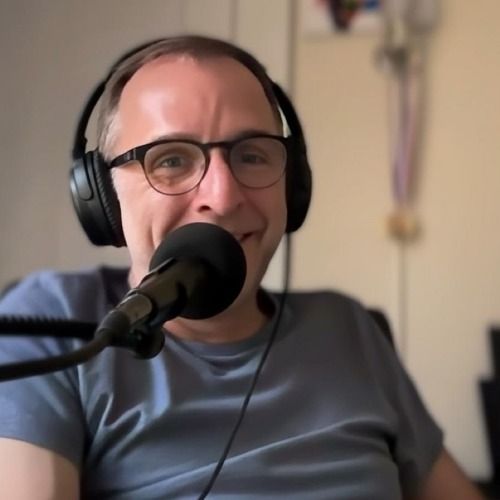
Episode 63
Born American, Raised Mexican
Keo grew up in Mexico City without an easy answer to the question of where he belonged. Born in the United States and raised in Mexico, he spent his life moving between identities, social classes and cultures. He talks about his childhood and abusive father, the friendships and relationships that shaped him, the realities of class in Mexico, and the strange experience of being both deeply connected to Mexico and permanently marked as American.
Please show some support for the podcast and get access to some extra content by subscribing to the Patreon page: http://www.patreon.com/onefjef
Instagram: @onefjefpod
TikTok: @onefjefpodcast
Substack: https://onefjef.substack.com
Facebook: https://www.facebook.com/onefjefpod
YouTube: https://www.youtube.com/@onefjef
Email: onefjefpod@gmail.com
You can also call the podcast and leave a voicemail at 1-669-241-5882 and I will probably play it on the air.
Thank you for listening, please do it again, and then read the label.
Onefjef is produced, edited & hosted by Jef Taylor.
Transcript
I'm here in Mexico basically because my mom had schizophrenia
Speaker:and a trust fund, and my father was a sociopath and child molester.
Speaker:And so we moved here to the States most likely because the situation with…
Speaker:Suddenly my parents packed and said two months before- Right … they packed
Speaker:everything, came and came to Mexico.
Speaker:And they had to go.
Speaker:And yeah, we, we cut off ties with every- every- everyone in, in the States.
Speaker:Este es el episodio sesenta y tres de onefjef.
Speaker:Episode 63.
Speaker:Episode 63.
Speaker:Hello once again, my friends.
Speaker:¿Que tal?
Speaker:Are you thriving?
Speaker:Yes, of course you are.
Speaker:Me too.
Speaker:Can you believe it's October?
Speaker:October used to be the eighth month in the Roman calendar.
Speaker:I just learned this recently.
Speaker:Octo is the Latin word for eight, and Spanish word is ocho, so it's close.
Speaker:The months weren't longer back in the Roman times, but apparently after
Speaker:December there was just, like, a nameless void for, like, two months because
Speaker:it was winter and not a lot happened.
Speaker:Weird, right?
Speaker:I mean, if somebody asked you what month it was, would you be like,
Speaker:"Just the void, day 80," or whatever.
Speaker:You know, everybody talks about how things seem so bleak and everybody thinks
Speaker:politics is bad right now, but at least we have names for the winter months.
Speaker:Count your blessings, my friends.
Speaker:Count your blessings
Speaker:My guest today is Keo, who has asked me to omit his last name for
Speaker:reasons that will become apparent as you listen to the episode.
Speaker:I met Keo in this film meetup group that I've been going to fairly consistently
Speaker:since I moved here to Mexico City.
Speaker:We pick a film, we watch the film on our own, and then once a month
Speaker:we get together and we talk about it and about whatever else comes up.
Speaker:Sometimes there's Domino's.
Speaker:It's an interesting group of humans, and Keo is no exception to that.
Speaker:His story is one of the more incredible and difficult expat/immigrant
Speaker:stories I've heard here.
Speaker:And I don't want to give too much away, but I should preface this by saying that
Speaker:we do talk about childhood sexual abuse.
Speaker:So if this is a subject that is potentially triggering to you, then
Speaker:maybe listen to a different episode.
Speaker:Okay.
Speaker:Also, this conversation was recorded back in my old apartment about six
Speaker:months ago when I was relatively fresh off the boat, as it were.
Speaker:And honestly, it was a little embarrassing listening back to this interview
Speaker:because I sound quite green at times, like an eager beaver, if you will.
Speaker:Also drunk too, as Keo and I knocked down a significant part of a bottle of tequila
Speaker:during the course of this conversation.
Speaker:I tried to edit most of the nonsense out, but there's still
Speaker:a bit in there if you squint.
Speaker:Apologies.
Speaker:Before I get to that though, please take a moment to like, rate, subscribe
Speaker:and review this podcast and then share it with somebody that you know.
Speaker:If there's anything I've learned over the last year and a half of
Speaker:making this podcast, it's that growing a podcast is difficult work.
Speaker:So any help you can provide is very much appreciated.
Speaker:But also, thank you for listening.
Speaker:Thank you for being here.
Speaker:Here's my conversation with Keo from my old apartment in Roma Sur
Speaker:Keo short for anything?
Speaker:Uh, yeah.
Speaker:The I kind of made, I made it up when I was, uh, uh, I think I was
Speaker:13, 14 years old, and, um, my Birth certificate, uh, says Christopher,
Speaker:and Chris is more Christina in Mexico.
Speaker:Ah, okay.
Speaker:So I kinda had an ident- well, my whole life is in big, huge identity crisis.
Speaker:I love it.
Speaker:We'll get to that.
Speaker:But, uh, oh yeah.
Speaker:No, no, no.
Speaker:We can… So okay, how did you end up in Mexico City?
Speaker:Well, um, I have this kind of weird story background because, uh, my parents left.
Speaker:I have a, a sister who's six years older than me, and, uh, so when, when I was
Speaker:three and she was nine, they, uh, suddenly packed and we, we, they were living in
Speaker:Santa Barbara as a- Your whole family?
Speaker:Yeah.
Speaker:Right.
Speaker:I mean, for the four of us, my mother, father, sister, son.
Speaker:I kinda remember a couple of flashes, like I used to, I don't
Speaker:know, I think I had a tricycle that I could- that was in the back.
Speaker:Fair enough … or something like that.
Speaker:Yeah, yeah.
Speaker:I think I… I don't know, just a few flash… So then they moved here, and,
Speaker:uh, my father always come up, uh, w- always had these fantasies and, and tall
Speaker:stories, and my mom, um, had, would- had a m- mental problem and mental disease,
Speaker:and I don't know, sometimes like, uh…
Speaker:My, my mother was quite functional, and she was brightest
Speaker:person I've met in my life.
Speaker:I mean, she's, uh- Right … anybody that met her was, she was
Speaker:just absolutely brilliant.
Speaker:She had an excitable mind and… But she would just agree with everything that
Speaker:my father would say, and just kind of either be quiet or, I mean, not, not, she
Speaker:didn't talk about why we were in Mexico.
Speaker:And my, my father, like, he was, uh, once he would say like, "Oh, it's just
Speaker:that my mother was part of the Communist Party and we were going to Chile." Now,
Speaker:uh, b- apparently Chile was a real thing.
Speaker:I don't know.
Speaker:Yeah, yeah, yeah.
Speaker:I think it was that.
Speaker:But we, we, uh, they drove here to Mexico City- Wow … so in a Jeep.
Speaker:And what year is this?
Speaker:This is 1973.
Speaker:So in 1973, so you guys just kinda packed up and moved to Mexico City, right?
Speaker:Yeah.
Speaker:Okay.
Speaker:With v- very vague and- And you have no idea why.
Speaker:Yeah.
Speaker:Your mom has some mental issues- Yeah … you don't really know.
Speaker:Yeah.
Speaker:Yeah.
Speaker:And your dad has some other, I'm not sure what issues, but we can- Yeah, I
Speaker:mean- … get to if you want to or not.
Speaker:But yeah.
Speaker:Yeah.
Speaker:And so you moved to Mexico City?
Speaker:Yes.
Speaker:My parents, uh, they started teaching English.
Speaker:Okay.
Speaker:I later knew, uh, found out that they only had a tourist visa.
Speaker:We all had just had a tourist visa.
Speaker:So yeah, uh, s- so he just, uh, well, we just stayed here.
Speaker:There was no connection with, uh, w- I, I don't have a…
Speaker:And, uh, so my mom didn't have any, any family.
Speaker:She had some family in, in Wales.
Speaker:Her, her- Hmm … parents were from Wales.
Speaker:And, uh, and my father had a sister.
Speaker:They, they're both, uh, they passed away a few years ago.
Speaker:Okay.
Speaker:When you're younger, are you ever, like, asking your parents, "Why did
Speaker:we move here when we were three?"
Speaker:Yeah.
Speaker:No, I, I, I- No?
Speaker:… don't know.
Speaker:It just was just, I, I mean, I knew it was kinda weird and that I was
Speaker:different and- Yeah I was born here.
Speaker:I, I mean, in the way that, I mean, at least my consciousness
Speaker:was born here . Sure, sure, sure.
Speaker:I mean, my mind was b- born here.
Speaker:Yeah.
Speaker:I, I didn't have much of a mind before that.
Speaker:Yeah, yeah.
Speaker:And the thing is, I, I started telling these stories that my father
Speaker:would say, which then kept changing.
Speaker:And also when I started to be mildly intelligent- Sure … I would say, "No,
Speaker:this doesn't really make sense." Uh-huh.
Speaker:I mean, I don't think there's CIA- … Communist Party-
Speaker:Right … uh, uh, fleeing- Yeah … thing kind of makes sense.
Speaker:Yeah, yeah, yeah.
Speaker:No, I mean, this, this, this is just not… There's no way to know
Speaker:because- Sure … they didn't, they didn't give any explanation of this.
Speaker:They never told you.
Speaker:They di- and then they didn't tell, like, uh, my aunt or their family.
Speaker:Right.
Speaker:Right, right, right.
Speaker:The thing is, we stayed here.
Speaker:I was a, I was a American-Mexican dreamer because- not a Mexican-American.
Speaker:I'm American-Mexican dreamer because I, I, I didn't have my papers, and I- Right.
Speaker:Right, right … this was my, the only country I knew.
Speaker:Right.
Speaker:No?
Speaker:And but, but, uh, my parents didn't get involved with the American
Speaker:community here or anything, although they did teach English, so yeah,
Speaker:they had a few English- A little bit.
Speaker:Yeah … yeah.
Speaker:And, and, and a lot of them were Mexicans, uh, Mexicans that spoke
Speaker:English and gave English classes.
Speaker:Right.
Speaker:Right, right.
Speaker:So I don't know.
Speaker:Uh, they, they were just very, very, very, very weird.
Speaker:And so, so my life was, at home was really a fantasy world.
Speaker:Right.
Speaker:And I didn't feel safe.
Speaker:Uh, I had- In what way did you not feel- Well, uh, I mean, I think
Speaker:my father was a threat to me and- Oh, he was an abusive guy or?
Speaker:Yeah.
Speaker:Yeah.
Speaker:Yeah.
Speaker:Uh, yeah, I mean, he was a child molester.
Speaker:Oh, all right.
Speaker:So, so yeah.
Speaker:Well, there, that explains a little more.
Speaker:So, so he molested me and my brother and- Oh, he molested you too?
Speaker:Yeah.
Speaker:Yeah.
Speaker:Oh, wow.
Speaker:Yeah, yeah.
Speaker:And my b- I had a brother that was born here because he was 15 years… I was
Speaker:15 year, years old when he was born.
Speaker:Uh-huh.
Speaker:And he was born here, and, uh, he was also molested by my father and, but yeah,
Speaker:m- we, I, I had a lot of mental issues.
Speaker:And do you know that because you, do, he told you?
Speaker:Oh, yeah.
Speaker:Yeah.
Speaker:No, no, we talked about it all the time.
Speaker:Yeah.
Speaker:Right.
Speaker:My, my brother and, and me, we talked about it all the time- Yeah,
Speaker:yeah … and how difficult it was to make especially the American's,
Speaker:uh, family to believe us, no?
Speaker:Right.
Speaker:Right.
Speaker:Because we also, I mean, since, since my brother and I, we have
Speaker:problems since we're, we were children because yeah, I mean, that happens.
Speaker:No, we weren't- Sure, sure … very normal and no, no nice and every…
Speaker:No, no, no, I mean, we were weird.
Speaker:And, uh, my brother got into drugs from, I, I think age 12- Okay
Speaker:something like that.
Speaker:Yeah.
Speaker:So yeah, I mean, whenever we, we said that, I mean, my father's a-
Speaker:abusing us and- Uh-huh … and, and takes us with men to be- Abused.
Speaker:I mean, he didn't do it.
Speaker:He, he, he took us with men to do it.
Speaker:And, uh- Uh-huh … but yeah, telling him and say, and giving all the evidence.
Speaker:"No, no, no, but they're such wonderful people."
Speaker:And I, I remember, I mean, right now with all this Jeffrey Epstein thing-
Speaker:Yeah, yeah … I said, "Yeah, yeah, he's s- such a wonderful guy." Of course.
Speaker:Yeah, yeah.
Speaker:I mean, I'm sure he was swell.
Speaker:I mean, I think that Donald Trump was right.
Speaker:No, he, probably Jeffrey Epstein was a swell guy.
Speaker:Yeah, I'm sure he was, yeah.
Speaker:No, I mean- Yeah
Speaker:yeah, I mean, that's, but that's, that's what psychopaths do.
Speaker:Uh, usually they're very charming, right?
Speaker:Yeah.
Speaker:I mean, sociopathy- They, they have to be very, they, yeah, exactly.
Speaker:Yeah.
Speaker:They have to be very charming to hide all the e- Yeah … I mean- Yeah … horrid
Speaker:things and- All the sociopaths- Yeah, yeah … that I've ever met have
Speaker:always been the most charming people I've ever met, because that's- Yeah
Speaker:the thing, right?
Speaker:How long did that go on for with your dad?
Speaker:Guess until, uh, we were 11.
Speaker:Uh, because he, he, they kind of, they, they always have like a- Yeah,
Speaker:those- … perfect age … yeah.
Speaker:So, so it was like, uh, like between seven and nine.
Speaker:So, so I mean, later, later, uh, after he died, I mean, it came
Speaker:out that, yeah, I mean, people…
Speaker:That, that's what really pissed me off- Oh, after he died it all came out?
Speaker:Yeah.
Speaker:I mean, but, but, but that, uh, children that he knew from other like friends
Speaker:of friends- Right … or whatever, I mean, fortunately not from my side.
Speaker:And yeah, my, my, my father was probably the charmest, uh, I, I mean-
Speaker:I'm sure … he was charming as- Yeah
Speaker:fuck, I guess I can say.
Speaker:Charming as fuck, yeah.
Speaker:Well, I'm Canadian.
Speaker:You, you can b- it if you… Sure.
Speaker:Do you think your mom knew what was going on?
Speaker:Oh, I, I mean, I actually told her, but, yeah, she, I mean- She didn't do anything
Speaker:… she said that she didn't know, and then she sa- she said she couldn't do anything
Speaker:about it, which I kinda believe, I mean, in a sense because- Yeah, no, right
Speaker:she was, she was trapped because, uh- Yeah … I mean, she had
Speaker:money, but she was morbidly obese.
Speaker:I mean, but just- Ah, sure … huge, you know?
Speaker:I mean, and- Right … and, uh, she couldn't move, she couldn't th…
Speaker:Uh, which was a li- I mean, it was kind of part of the plan, I guess.
Speaker:Right.
Speaker:No?
Speaker:Right.
Speaker:How did you feel about your dad when you were a kid?
Speaker:Were you scared of him?
Speaker:Were you just- No, I, I, I mean, I actually loved him
Speaker:because you kind of have to.
Speaker:Right.
Speaker:I mean, you get to… You start loving your parents-
Speaker:Right … kind of instinctively.
Speaker:Right.
Speaker:And, uh, but the thing is when, when, when, when I turned seven
Speaker:and eight and the abuse started and that, that's… I, I started, without
Speaker:thinking, you know, just keeping away.
Speaker:I didn't, I didn't… Not that I was- Yeah … since he, he, he, he arranged for
Speaker:other men to do the stuff- Jesus fucking Christ, bro … uh, so with, like, w- if
Speaker:I was h- with him, I wasn't afraid- Right … because I knew that- These other fucking
Speaker:random dudes who he was- Yeah, exactly.
Speaker:So, I mean.
Speaker:Um- Yeah, he, he'd always- But you knew right away it was bad.
Speaker:Well- Like, when it first started, you were like, "This
Speaker:is not right." Well, yeah.
Speaker:I mean, uh, yeah, uh, yeah, it was, it was violent.
Speaker:I mean, he would, he would do violence.
Speaker:I mean- Wow … vi- it was, it was, it was not just molesting in the sense like-
Speaker:Yeah … having sex with the children.
Speaker:No, no, no.
Speaker:Right.
Speaker:It was rape.
Speaker:No, I mean brutal rape.
Speaker:Wow.
Speaker:So, you know, no, obviously this was not g- I mean, I, I, I, I, of
Speaker:course, I was panicked about- Of course … uh, uh, that happening again.
Speaker:Yeah.
Speaker:You know, it just happened about… Uh, to me, it just happened about,
Speaker:I don't know, maybe three, may- uh, three, maybe four times.
Speaker:Okay.
Speaker:But still, that's, yeah.
Speaker:Uh, yeah, something.
Speaker:But, but, but that ti- that, that happened because he, he arranged
Speaker:that the, um, supervise, I mean, the super in the building- Okay
Speaker:you know?
Speaker:Uh, he had a nephew that came to visit- Mm-hmm … and blah, blah, blah,
Speaker:and then the nephew, and so anyway.
Speaker:I, I mean, I… When it happened, I told my dad, and then, and my dad
Speaker:said, "Oh, no, no. Well, I mean, let me see. I'll try to see, fix
Speaker:it," or… I don't, I don't know.
Speaker:It's a we- weird thing.
Speaker:But the thing is there, the, after, after the third or fourth time, I
Speaker:can't remember, a neighbor- From the building, caught him, to, I
Speaker:mean, take him in, into this room-
Speaker:where he did the- Right … deed.
Speaker:It was right there in the building.
Speaker:And, and he told my father.
Speaker:But the thing is- Your father didn't care for other- No, well,
Speaker:he said, "Oh, well, I don't know.
Speaker:I mean," uh, uh, I mean, and he, he was like, "What's, let's go
Speaker:to the police," and all that.
Speaker:Yeah.
Speaker:And that, that's where my father was really smart in that sense because
Speaker:the thing is people would say, "Well, I mean, maybe they're not doing this
Speaker:because that's because they're American."
Speaker:No?
Speaker:Yeah.
Speaker:They're gringos.
Speaker:Yeah.
Speaker:No, that, that's, that's kinda… I think that when, when all these weird
Speaker:things would happen, no, in family- You're separate from the rest of
Speaker:the people … and friends and yeah- It's like, "Oh, they're American."
Speaker:Yeah … like my mom… Yeah, when, when, when people didn't understand what
Speaker:my mom was really trying to say- Right
Speaker:they would say, "Oh, well, I mean, uh…" Yeah.
Speaker:Because she had an accent all her life.
Speaker:Sure.
Speaker:So, so a strong, more or less strong a- accent in Spanish.
Speaker:So, uh, so yeah, I, I guess they just said, "Oh, that,
Speaker:that's just American." Huh.
Speaker:You know, so the American way, no?
Speaker:And so, uh- Do you think that he moved here and you all moved here
Speaker:in part because of like that?
Speaker:Uh, yeah, j- it's the only story that makes sense.
Speaker:Right.
Speaker:No, and after, after it came out that, uh, I mean, because I, I knew
Speaker:about my brother, but, uh, you know, about me and my… I said, "Well,
Speaker:but my brother, that was years ago." But then I saw that he continued.
Speaker:And also he died, and we sold his computers.
Speaker:Mm-hmm.
Speaker:Dun, dun, dun.
Speaker:Mm-hmm.
Speaker:No?
Speaker:And then, uh, okay, and then somebody opened it.
Speaker:Mm-hmm.
Speaker:And so anyway, so, uh- That's rough, dude.
Speaker:I'm sorry.
Speaker:Yeah, well- Yeah … yeah, I know.
Speaker:I mean- I mean, everybody's got childhood trauma, but you got childhood trauma.
Speaker:Yeah.
Speaker:Yeah, yeah.
Speaker:I mean, have the trauma… I mean, like my, my sister didn't have a good
Speaker:time at all either and she- Did she?
Speaker:Did she, did her dad, your dad wasn't into her… Okay.
Speaker:No, but I, but, but, but I mean, she, he, he made her cover up,
Speaker:I mean- Sh- … unconsciously.
Speaker:I mean, she didn't real- Yeah, yeah, yeah, yeah … she didn't
Speaker:tell her all that and all that.
Speaker:Yeah.
Speaker:Yeah, I mean, I told her once, and then, uh, she said, "Oh
Speaker:my God. No, that's horrible."
Speaker:And yeah, she didn't really register it.
Speaker:Sure, I mean, what's she gonna do?
Speaker:And then I confronted my father in front of her.
Speaker:We went to a family therapy when my, uh, my, my brother had big, uh, drug problems-
Speaker:Drug problems, right … and all that.
Speaker:And there I confronted my father in front of my sister and my mom, and I said,
Speaker:"Well, I mean, you did this, this, this.
Speaker:I mean, you, you knew this and all that." And, uh, I didn't say about
Speaker:my brother because he didn't show up.
Speaker:He wasn't there, yeah.
Speaker:So, so I didn't say that.
Speaker:I mean, that was his story to tell.
Speaker:Yeah, that's his story to tell.
Speaker:But, uh, but yeah, I mean, I told it and, and my father ju- uh, but when, I mean,
Speaker:actually he just said, "Well, I mean," as when I, when I told him, I mean,
Speaker:"Why, why wouldn't you stop it, and why would you send me to this guy again?"
Speaker:"Well, it's just that I had much, uh, to, man, just, uh, too much stuff in my mind."
Speaker:Uh, you're thinking about other stuff, no?
Speaker:Yeah, and the therapist just jumped up and said, "What could
Speaker:you have on your mind?" But yeah.
Speaker:Right.
Speaker:So- No, it just says… I mean, he didn't mind.
Speaker:Uh, he didn't care.
Speaker:He didn't give a shit.
Speaker:So it's- So he's just been outed as a child molester to his, to his
Speaker:kid, and he didn't really see…
Speaker:It wasn't, it didn't really phase him.
Speaker:Nope.
Speaker:Wow.
Speaker:And, and for- and his wife Wow.
Speaker:And what did the- And among… Yeah … what did the therapist say?
Speaker:Oh, he, he was just completely shocked.
Speaker:I mean- Of course.
Speaker:Yeah.
Speaker:Yeah.
Speaker:And after that, I mean, l- l- my sister told me that, I mean, she was sorry.
Speaker:I mean, it was… And I, I understand.
Speaker:I mean, I don't blame her.
Speaker:Just that she said, "Well, when you told me, I mean, I kinda believe you,
Speaker:but I kind of, since I hoped that it wasn't true-" Sure, of course.
Speaker:It's gotta be a hard thing to process.
Speaker:Yeah, exactly.
Speaker:But just l- seeing my, I mean, looking at my father just, uh, saying, "Yeah,
Speaker:but sure, happened, but so what?
Speaker:I mean, I was busy." And, and yeah, she, she, she couldn't believe it.
Speaker:B- uh, and I didn't have, I mean, I, I didn't have much family in any way.
Speaker:Yeah, yeah, yeah.
Speaker:I mean, I didn't have any support from other places.
Speaker:Yeah, no.
Speaker:I get it.
Speaker:So it was really hard.
Speaker:Um- Are, are you still close with your sister?
Speaker:Yeah.
Speaker:I mean, w- it's been…
Speaker:I mean, after… I, I guess she kind of, after the years, kind of assumed
Speaker:that maybe my father had lied.
Speaker:Because he would do that.
Speaker:Oh, really?
Speaker:He, he would confess stuff.
Speaker:No?
Speaker:When, when we got c- when he got caught, he would confess, "Oh, yeah, I'm sorry
Speaker:I did this, but I won't do it again," and all that, and blah, blah, blah.
Speaker:And then say, "Oh, I confessed because your brother was pressuring me." And
Speaker:so you think that she believes, like, doesn't think anything happened again?
Speaker:I don't know.
Speaker:I- That's n- I mean, it makes sense … yeah.
Speaker:Like, it's human nature, right?
Speaker:Sure.
Speaker:I mean, you don't wanna believe the worst thing, and it's gotta be- Yeah
Speaker:an impossible thing to even reckon with that.
Speaker:When did you start to… I don't mean to… If you wanna stop
Speaker:talking about this, we can stop.
Speaker:Yeah.
Speaker:No, no, no.
Speaker:But, like, when did you start to reckon with this, like, as- Oh … an adult?
Speaker:Well, the, the, the thing is, when I was, uh, 15, um, I, I had
Speaker:been for a while, I can remember.
Speaker:I mean, first I had this, I invented the kale, no?
Speaker:And I invented… Because- I see … I, I was really, really withdrawn.
Speaker:Mm-hmm.
Speaker:Com- I'm sure.
Speaker:Yeah … pletely.
Speaker:I mean, I, I, I probably had something from childhood, something that fr-
Speaker:because, uh, I was practically non-verbal until I was six, I've been told.
Speaker:I, I am on the spectrum.
Speaker:I'm in the autism spectrum, uh, m- I'm at… But the thing is, uh, bec- I know
Speaker:that because when I was about 15, uh, after a while, I mean, I kinda realized,
Speaker:nope, something's not right with me.
Speaker:I mean, I'm not, I'm not… Uh, this is not just me not- Whatever.
Speaker:I mean, uh, th- this is not- Right … I'm not, I'm not- Right … I'm not okay.
Speaker:No.
Speaker:And- Right … I don't know.
Speaker:I'm, I guess I was smart enough or s- whatever I, I mean, I imagine
Speaker:it's a combination of many things, but- Yeah … like, you know, the,
Speaker:the trauma and, like, who knows what else contributed- Ex- exactly … to
Speaker:other things, but yeah So on top of it- Yeah, yeah, yeah … or whatever.
Speaker:Yeah.
Speaker:Yeah, so.
Speaker:Well, and, and, and, uh, uh, schizophrenia has a p- my mom probably was- Oh,
Speaker:your mom's probably schizophrenic?
Speaker:Yeah … yeah, was probably schizophrenic.
Speaker:I mean, she never had a diagnosis, but I'm pretty sure.
Speaker:Yeah.
Speaker:And, uh, so yeah, I mean, I have the genetic things and all that.
Speaker:So- But, uh, so at 15, I, I, I decided I had to go to therapy.
Speaker:Well, of course, was a big no-no for my father.
Speaker:But, like, my mom would have these moments of
Speaker:I, I mean, she, she, she was very … Like, she, if she gave a,
Speaker:gave an order, everybody would do it.
Speaker:No?
Speaker:Sure.
Speaker:She, she, mostly she was just locked up in a room.
Speaker:Right.
Speaker:But then suddenly a scream would come out of the room and- Right
Speaker:… "Bring me food," or da, da, da.
Speaker:Yeah, yeah.
Speaker:And everybody would have to move and st- take it.
Speaker:No?
Speaker:So sometimes she would, she would say, I mean, "Bring me money." No?
Speaker:And then she would have money.
Speaker:Right.
Speaker:So she was g- she would give me money under the, kind of under the table.
Speaker:Well, I mean, she could do it openly- Sure.
Speaker:Sure, sure … because my father would never say anything.
Speaker:But, uh, but it, she didn't tell my father.
Speaker:And so I don't know how many years that went, but about three,
Speaker:four years until my father found out that I was going to therapy.
Speaker:Uh, but I had to, I had to do it behind be- behind his back.
Speaker:I, I also had to do it behind my, my sister's back because she, she
Speaker:also said, "No, no, no," my … It, it, it would be, we would betray
Speaker:my father if we go to therapy.
Speaker:Right, right, right.
Speaker:And I, I told her that- That's crazy town.
Speaker:Yeah.
Speaker:Yeah.
Speaker:Well, I mean, I- God forbid we betray your father.
Speaker:Yeah.
Speaker:Well, I, uh, I mean, I, I don't … It's just- No, I get it.
Speaker:I get it.
Speaker:It's horrible for- It's just, like- Yeah … dysfunction begets dysfunction,
Speaker:and it's just kinda crazy how these- Yeah.
Speaker:… this dysfunction just kind of spreads into this spider web of kind of like,
Speaker:oh, we've gotta, you know- Yeah.
Speaker:Yeah … on, and on, and on.
Speaker:Yeah.
Speaker:So.
Speaker:No, no, no, I mean, I, I, I, I, I mean, my, my, my, my sister's
Speaker:just, uh, also strong as hell.
Speaker:No, I mean to- Yeah … to just live- I'm sure … her life and just
Speaker:to be alive because- Well, I mean, the fact that you're- Our brother,
Speaker:our, our brother is not alive.
Speaker:So I mean, like- Oh, okay … just living, being alive right now after
Speaker:all that is just- I mean, yeah
Speaker:kind of a- For sure, dude … that's a, that's a victory.
Speaker:Just- Yeah.
Speaker:You're still doing it … okay, yeah.
Speaker:You're still living.
Speaker:Exactly.
Speaker:And then, and- And you seem good to me when I, I didn't- Yeah … you know.
Speaker:You- Yeah, no, no, I, I- I mean, I had no idea.
Speaker:Yeah.
Speaker:Yeah, which is g- kinda wasn't- I mean, well done, sir. That's all I'm saying.
Speaker:Yeah.
Speaker:It's like that's trauma that I don't think I could, a lot of people could overcome.
Speaker:Yeah.
Speaker:No.
Speaker:And that's- No.
Speaker:The same, my brother couldn't.
Speaker:No.
Speaker:So- Yeah, no … uh, so yeah.
Speaker:No, no, no.
Speaker:So, so yeah, no, you have to be really tough and, and, uh, mostly because,
Speaker:uh, uh, I guess, uh, I got- The smarts from my mom Right So- Right
Speaker:I, I was very smart, you know, since I was, uh, little.
Speaker:Uh, something that I've learned to say out loud because it was, it's, it's-
Speaker:Absolutely … it ta- took, took me- Own it, bro … a lot of time Own it Yeah.
Speaker:But also I, I, I… Since I didn't understand what was going
Speaker:on either in the house and the, in the school because I r- Right
Speaker:I do remember people talking to me in this strange language, and I couldn't
Speaker:be… Nobody spoke English at the school.
Speaker:Uh-huh.
Speaker:So, uh, I don't know, just try to figure out things and seeing the patterns.
Speaker:I was terribly bullied and, uh… But, like, for, to avoid being
Speaker:bullied when it was, uh, the recess, now I would run into the library.
Speaker:Me too.
Speaker:And, uh, so I, so I read the whole library.
Speaker:No, I mean over the- Yeah, yeah, yeah Yeah.
Speaker:I didn't read the whole library, but I would- No … I would hide in the library.
Speaker:I'm just- Yeah, yeah.
Speaker:Yeah.
Speaker:Anyway, KO, uh, we can stop talking about the family stuff, but
Speaker:again- Yeah … I'm really sorry.
Speaker:I appreciate you talking about it, but, like- No, no, no
Speaker:I'm so sorry.
Speaker:That's, that's gotta be hard.
Speaker:Like- Yeah … do you feel like you've… Like, where are you now with it?
Speaker:Oh, uh, uh, I mean, I… S- since I've been in therapy since I was 15,
Speaker:and I'll probably- Yeah … stay in therapy- Good job … since I was- Of
Speaker:course … since- Everybody should be in therapy- Well, I- … all the time
Speaker:again, my history, I mean, it's… And, and also, I mean, I, I, I, I
Speaker:have been, uh, on medication since- Sure … s- Yeah … uh, late 20s now.
Speaker:I mean- I mean- Yeah … thank God these things exist.
Speaker:Oh, yeah.
Speaker:Because how do we- No, no, no.
Speaker:I mean, I, I, I, uh, it took me some time to accept that I had to take
Speaker:medication because- Yeah … uh, the side effects are not- No
Speaker:no, they're no fun.
Speaker:Yeah.
Speaker:So, so yeah, I mean, I, I, I take that.
Speaker:And so being in, in, in therapy, I kind of dealed with it and, uh, and, and all that.
Speaker:And I think what, one thing that surprises a lot of people is that
Speaker:whe- uh, in 2009 my, uh, when my, when my father got sick and all
Speaker:that, so he lost, uh, half his lung.
Speaker:Oh, wow.
Speaker:And- Did he smoke?
Speaker:… he also had… Yeah, he was smoking.
Speaker:Right.
Speaker:But he, uh, he had an infection in his liver that kind of
Speaker:grown- Was he a drinker?
Speaker:No.
Speaker:Oh, no.
Speaker:No, actually he didn't drink.
Speaker:Just like Trump.
Speaker:No, no, no.
Speaker:I mean, no.
Speaker:That's not a wonderful thing to compare your father to Trump,
Speaker:but it's all right, yeah, yeah.
Speaker:Yeah.
Speaker:Uh, it's a, it's a thing about control.
Speaker:They don't, they don't wanna lose control.
Speaker:Right.
Speaker:Right.
Speaker:So, so that- That's, that's an interesting point.
Speaker:Yeah … so, so he doesn't, he didn't take any drugs- Yeah … or
Speaker:anything because, because he d- he, he'd like to be in control.
Speaker:Right.
Speaker:Right, right.
Speaker:So, uh … Well, that's my explanation, but, uh
Speaker:So when he, he, he got sick, so he's really bad and all that.
Speaker:So, I don't know, a few years ago, I, I mean, my mothe- my mom died.
Speaker:Uh, my, well, my brother passed away, and then, then my mom passed away.
Speaker:And so my father was alone in a big house that had two, f- uh, stories.
Speaker:See.
Speaker:And, um, uh, it was a big, nice house.
Speaker:Sure.
Speaker:And, uh, so I kinda decided- In Mexico City?
Speaker:Mexico City.
Speaker:Okay.
Speaker:Yeah, in the so- in south of Mexico City.
Speaker:So I, I, I, I, I had to move and, uh, I don't know, I didn't know a place,
Speaker:and my father w- I mean, he was alone.
Speaker:So I s- I just said, "Oh, okay. Well, well, I'll just grab, I'll,
Speaker:I'll, I'll remodel." I mean, the house was a little bit torn down.
Speaker:Yeah.
Speaker:And I said, "Well, I'll remodel it and make a duplex. No- Uh-huh … just
Speaker:two houses- Yeah, yeah, yeah … and then we'll do all that, and then I
Speaker:can live in the upstairs, he can live downstairs- Yeah. Yeah, yeah … until
Speaker:he leaves, and then when he dies, then we can move," blah, blah, blah.
Speaker:I mean, I'm impressed.
Speaker:Like, did you forgive him?
Speaker:Well, no.
Speaker:In your brain.
Speaker:I mean, I, I think, I think I got to a place where it's like,
Speaker:well, what he did is unforgivable.
Speaker:But, like, acceptance.
Speaker:But acceptance, yes.
Speaker:Because the thing is, when I moved in t- with him, I mean, on the f- top r- I,
Speaker:I … Well, it, it was to take care of him, and, and, and I, I try to m- make him
Speaker:live like a human being because, uh, w- I, I had a, a therapist, uh, that, that
Speaker:I, I've been through several- Yeah, me too
Speaker:over the years.
Speaker:Yeah.
Speaker:But, uh, he, he said something that really, really kind of, uh, made a point.
Speaker:They said, "Well, I mean-" Don't pay abandonment and abuse with
Speaker:more abandonment and abuse Yes.
Speaker:Absolutely So I said, "Oh, okay." So I try to started taking, taking care
Speaker:of him so that he would live like, like, uh, in a, in like, uh, in a
Speaker:dignified way as a human being- No, that's- And, uh, to whatever I could.
Speaker:So, but just to show a, a little bit like, like, like, like-
Speaker:Honestly, yeah … in your face.
Speaker:No, I'm a better man than you No, not even that.
Speaker:Wow.
Speaker:I mean, it's just, it's, it's like this… Honestly, it's the best response
Speaker:you could give to that situation.
Speaker:Like, that's the adult response is like- Yeah … number one, you accept,
Speaker:okay, we're all doing the best we can.
Speaker:Yeah.
Speaker:Some people's best is pretty fucking terrible, right?
Speaker:But like we've all just gotta accept it.
Speaker:This is the best that they can do.
Speaker:Yeah.
Speaker:And like you responding to that, like most people I think would respond to that
Speaker:with like, "Fuck you. I'm never talking to you again. You fucking…" You know?
Speaker:But like I mean kudos, bro.
Speaker:Like- Yeah … way to step up into the pl- I mean, you stepped up to the plate
Speaker:and that's like it- Yeah … it, it touches me in a way that I can't… Yeah.
Speaker:Yeah.
Speaker:Well done.
Speaker:Yeah.
Speaker:Thank, no, thank you.
Speaker:Thank you.
Speaker:You did the right thing.
Speaker:Yeah.
Speaker:No.
Speaker:You did the right thing.
Speaker:I, I, I, uh, I always, I always say that, I mean, I have this problem of
Speaker:identity, so it's really difficult to say like what, what do I want to be?
Speaker:W- I never knew what I wanted to be in life, so I've been everything,
Speaker:a little bit of everything- Yep … and do this and that.
Speaker:Uh, but uh, but the only thing I think I n- I kind of can say is
Speaker:that on my, on my epitaph, no?
Speaker:I, I, in my s- my headstone, I could- Yeah … I want, I want it to say, "No,
Speaker:here lies a good guy." Oh, f- absolutely.
Speaker:That's it.
Speaker:Yeah.
Speaker:No, I, I don't, I don't, I, I, uh … And, and it's kind of weird but I, I mean
Speaker:kind of, uh, some people might say, I mean, maybe my daughter would say,
Speaker:"Well, not in … I mean, don't you want it to say good bye father?" But I
Speaker:mean, she, she, she's, she's old enough.
Speaker:But uh, it's, yeah, she, she, she- Right, right, right
Speaker:her birthday is, she's gonna have her 20 and 29th birthday tomorrow.
Speaker:Well, birthday party.
Speaker:Uh.
Speaker:She's- Wow … tomorrow, so, so no, I mean … But no, we, we, we talk
Speaker:a lot about- Yeah, yeah, yeah … I mean, I, I wasn't, I mean, I, I, the
Speaker:only thing I've tried to say is that I was the best father I could be.
Speaker:Of course.
Speaker:And I think, I think, I think she believes, I think she knows that.
Speaker:Yeah.
Speaker:I mean, but, uh, but no, I mean, but yeah, I mean, there was a lot
Speaker:of, uh- A inconsistency and- Of course … yeah Everybody's doing the
Speaker:best they can No, no, no, but I, yeah.
Speaker:So, so I did my best and, uh… But yeah, I mean, uh, she, she had a tough time
Speaker:growing up Well, I mean, you, given the template that you were given as- Yeah
Speaker:what a father is, it's an, a, a, yeah, yeah.
Speaker:Yeah.
Speaker:So when did you leave Mexico City and go back to the States?
Speaker:Oh, I, I, I, I never re- I, I mean, I, i- in high school when, uh, w- because,
Speaker:um, when I got into high school, they, they, for, for mid- middle school,
Speaker:they didn't ask, secundaria, they didn't, they didn't ask for papers.
Speaker:Okay Because it was by, uh, it was f- I don't know, the law, whatever.
Speaker:Whatever.
Speaker:But, uh, but yeah.
Speaker:And so for high school, they did ask for, uh, for papers, and that's when
Speaker:I found out that I didn't have them.
Speaker:I didn't know that we, I didn't have any- Oh, you were on tou- you didn't know you
Speaker:were on a tourist visa the whole time
Speaker:yeah, exactly.
Speaker:Yeah.
Speaker:So, so, so finally, I mean, I, I walk into the high school.
Speaker:I had, uh, which the high school was, was, I had gone through
Speaker:middle school in the same school, so it was just kind of next year.
Speaker:Okay, now, so, so middle school then became high school, but
Speaker:exactly the same school, teachers.
Speaker:So were you going on visa runs, though?
Speaker:No.
Speaker:No, no, no, no, no, no, no, no, no.
Speaker:I never, I never went to the States.
Speaker:After, after we came here, I, I- So they were illegally
Speaker:living here- Yes … basically.
Speaker:Okay.
Speaker:That's- Yeah … I am somewhat American in a sense,
Speaker:yeah … American-Mexican dreamer.
Speaker:Right.
Speaker:All right.
Speaker:Yeah I get it.
Speaker:Completely illegal.
Speaker:Okay.
Speaker:Now I, now I get it No papers.
Speaker:Now I get it.
Speaker:No papers whatsoever.
Speaker:So we, we ne- I never went to the States- So they over, your parents
Speaker:basically overstayed your tourist visa.
Speaker:Yeah.
Speaker:Yeah.
Speaker:Exactly.
Speaker:For- Many, many years … 50 Yeah, yeah, yeah … or for about 13 years.
Speaker:And, uh, so then after that, we, we ne- we had to get papers.
Speaker:Yep And, uh, and also it coincided that a few months later, you know, uh, the
Speaker:migra, you know, the immigration- Okay
Speaker:showed up at our house and- Oh, well that's a good sign … and so,
Speaker:so that kind of… So then, yeah, we had to take a bus to El Paso-
Speaker:Uh-huh … which is the closest.
Speaker:Right.
Speaker:Uh, yeah, go there.
Speaker:We just- It's a long bus ride … yeah.
Speaker:Well, well, it was to Brownsville, actually.
Speaker:It was Matamoros- Beautiful … yeah … beautiful this time of year.
Speaker:Yeah, Brownsville.
Speaker:Well, and- I'm kidding … we just cross, I don't know.
Speaker:Yeah.
Speaker:We just cross the border and cross back.
Speaker:Okay And, uh, just cross the border, went to the consulate and- Oh, they
Speaker:went to the consulate in Brownsville … took out another visa and come back.
Speaker:Yeah, yeah, yeah … yeah … run back And, uh, but so yeah, when, when I started
Speaker:going to the, to the States, it's was, uh, yeah, I mean, to me it was really weird.
Speaker:I mean, I, like at that time, um, in Mexico, I think in Mexico
Speaker:City, there was probably like three escalators in the city.
Speaker:And I remember that was just- How many elevators were there?
Speaker:Oh, but elevators are well known … elevators were f- before-
Speaker:Yeah, no, escalators … they were before escalators, yeah.
Speaker:Yeah, yeah Escalators, yeah Those were from the 19th century Which makes sense
Speaker:because you're just, like, pushing…
Speaker:Yeah, yeah.
Speaker:Yeah, yeah, 19th century.
Speaker:And so yeah, they're more complicated, yeah.
Speaker:It's like matches came after lighters.
Speaker:Yeah.
Speaker:Oh.
Speaker:Yeah.
Speaker:Yeah.
Speaker:It's an interesting, yeah.
Speaker:That, that I didn't know.
Speaker:It's true story.
Speaker:Yeah.
Speaker:Yeah.
Speaker:Um, but, uh, so yeah, l- just… I mean, to me, the United
Speaker:States was Disneyland all over.
Speaker:Um- Oh, right, right, right
Speaker:I mean, it's, everything was- Yeah … wonderful and polished- Yes, yes,
Speaker:yes … and happy and- Yes … whatever.
Speaker:Like- Of course, yes … well, and, uh, yeah, I mean, the, the Americans actually,
Speaker:they, they, they make a point of making it nice now and, and- What do you mean?
Speaker:Well, I, well, especially because I, I, I, I went to, like, San Francisco, but
Speaker:I'm talking about- Oh, San Francisco
Speaker:decades ago Great town.
Speaker:Yeah, deca- Yeah … decades ago.
Speaker:But yeah, I mean, you, you look at the San F- the Victorian houses in San Francisco-
Speaker:Uh-huh … yeah, it looks like, in a way it looks, like, a little bit like Disney.
Speaker:I mean- No, it's true … uh, yeah.
Speaker:Well, the simul- yeah, the word- Yeah … simulacra comes to mind, right?
Speaker:Yeah.
Speaker:Right, right, right.
Speaker:Exactly.
Speaker:Yeah.
Speaker:So I, I… And we did go to Disneyland the first time I w- I, I went there Right.
Speaker:I've never been to- So- I've been to Disney World, but not Disneyland.
Speaker:Yeah.
Speaker:Yeah.
Speaker:But actually I haven't been to Disney World, so.
Speaker:I think they're about the same, basically.
Speaker:Yeah, and pro- and probably, uh, in Florida it's, uh, the, it's less
Speaker:sunny and less hot because- Uh-
Speaker:Anaheim is awful … it's pretty, it's pretty horrible in Florida.
Speaker:I don't know if you've spent too much time- Yeah … in Florida, but they
Speaker:get- No, I, I, well, I have been, uh- Like, 95 and humid, uh, every day in
Speaker:the summer Yeah … it's horrible.
Speaker:Yeah.
Speaker:Pretty horrible.
Speaker:Well, yeah, I, I've only been twice into Miami, uh, for, but just for conventions.
Speaker:Yeah.
Speaker:Not scientific, but- It's muggy there … conventions.
Speaker:And, uh, the second time we, we got hit by a hurricane, so.
Speaker:Well, then it was windy too, and muggy.
Speaker:Yeah, it was, it was windy and wet and… Yeah.
Speaker:Yeah.
Speaker:So, uh, well, it was, it was an interesting experience because- Yeah
Speaker:… whatever Oh, I love extreme weather.
Speaker:I'm a big fan.
Speaker:Yeah.
Speaker:Yeah.
Speaker:I, I, I, I, I, I, I learned to live my life without r- really fearing
Speaker:all this stuff because it was- Right, because of your childhood.
Speaker:Yeah, yeah.
Speaker:Yeah.
Speaker:And, and, and, and, uh, I mean, one, uh, the, the one thing it,
Speaker:it, it did to me is, uh, made me hypervigil- vigilant, you know?
Speaker:That, that- Okay … that's a very common thing with trauma.
Speaker:Yeah, yeah, yeah.
Speaker:You know?
Speaker:I mean- Yeah … hypervigilant.
Speaker:Like, like, I, uh, I mean, I walk into a room and I already know
Speaker:where the exits are and whatever.
Speaker:I, I, I- … but I'm not over, uh, when you said, you know, you send me a
Speaker:message, I don't know what we were talking about, but on, on, on the WhatsApp, you
Speaker:said, "Don't overthink it," you know?
Speaker:Yeah, yeah, yeah.
Speaker:And I said, "Oh, no, no, no. Forget about it." I mean, that's what I do.
Speaker:I mean- Oh, no, I do too … because knowing stuff actually makes me calm.
Speaker:So, like, to give context, I only started- Meeting with Americans, with gringos- Yeah
Speaker:… no, uh, because since I haven't found a job for more than two years now- Oh, okay
Speaker:I might have to move to the States.
Speaker:Right.
Speaker:So I never sought Americans because I didn't really feel… I, I don't know.
Speaker:I mean, the why?
Speaker:I mean, no, I, I, I mean- You feel like a Mexican.
Speaker:Yeah.
Speaker:Okay.
Speaker:I, I, I, as I say, I mean, my whole life is a id- identity crisis, so I don't
Speaker:know if I, I, I, I can observe myself.
Speaker:I, I, I really like your, your analogy, like, if you're, when you're in the
Speaker:bottle, you can't see the label.
Speaker:When you're inside the- Yeah, inside the- You can't see the
Speaker:label when you're inside the jar.
Speaker:Yeah, exactly.
Speaker:Yeah.
Speaker:That, that one.
Speaker:Yeah, I really love that.
Speaker:It's not mine.
Speaker:It's somebody else's.
Speaker:Well, I know- I stole it, yeah … but, but that you s- you mentioned.
Speaker:No, it's a good one.
Speaker:I- It's a good one … it's the first time I've heard it, so, so.
Speaker:No, it's a good one.
Speaker:Yeah.
Speaker:So anyway, uh, but, but I, I really like it because I say that's kind of a thing.
Speaker:I mean, I'm, I'm just, I don't know, floating around here pickled, no,
Speaker:and, and trying to figure out stuff.
Speaker:But, but, but there's a label outside that people see that I don't, that I
Speaker:can't see, and I, all my life, I've been trying to figure out what it says.
Speaker:And the problem is that a lot of people tell me so many different things.
Speaker:I mean, they say, "Oh, you're a gringo.
Speaker:You're a Mexican.
Speaker:You're this.
Speaker:You're that." Yeah. "You're a scientist.
Speaker:You're a, a, you're an artist.
Speaker:You're a philosopher." Yeah, yeah, yeah. "You're an intellectual."
Speaker:Yeah. "You're a teacher.
Speaker:You're a this.
Speaker:You're a that." And the thing is nothing… I mean, I, I wouldn't mind,
Speaker:I don't mind trying to, if I, if I, I, I mean, I'd really like to kind of hang on
Speaker:to something and, and just say, "Okay, this is what my label says, so I'll work
Speaker:with that." But that's gonna change.
Speaker:I mean, your labels- Well- … can be anything.
Speaker:I mean, it's not- Yeah
Speaker:that's the thing is like the label i- that, that should be another part of
Speaker:the whole saying is like it, it's hard to see the label when you're inside
Speaker:the jar, but, like, everybody's gonna read a different label on you, right?
Speaker:Yeah.
Speaker:Something like that.
Speaker:Uh, and that's okay, right?
Speaker:It's so interesting, though, like the…
Speaker:I mean, if we really wanna get into the, the you you and
Speaker:the you that they are you-ing.
Speaker:Yeah.
Speaker:You know what I mean?
Speaker:I had to do a self-portrait when I was in film school.
Speaker:Oh.
Speaker:And I had no idea what to do, and so what I ended up doing is I ended up
Speaker:calling all of these friends and family that I'd known for many years and
Speaker:saying, "Leave me a voicemail message."
Speaker:This was in, uh, 2006, 2000 whatever, yeah.
Speaker:So I said, "Leave me a voicemail message just talking about something
Speaker:about me that you remember. Tell me a memory about me." And, and I was
Speaker:like, oh, I'm gonna do a self-portrait based on what others see me as, right?
Speaker:Because I think that's a big part of what our identity is in some
Speaker:ways for a lot of people, right?
Speaker:Yeah.
Speaker:It's like the, the thing, the way that people see me and the way that I see
Speaker:myself is, it, it intermingles, right?
Speaker:Yeah.
Speaker:Not to get too esoteric here, but- No … uh- Mm … it's an interesting
Speaker:angle, um, especially when we're talking about the label ins- the, the label on
Speaker:the jar thing because to me, it's mostly about perspective and just saying- Like
Speaker:having been here for, what, seven or eight weeks now, it's not easy, right?
Speaker:It's fucking hard.
Speaker:It's fucking hard.
Speaker:It's great and hard, and then it gets hard, and then it's great.
Speaker:But, like, I'm by myself so much that it's very hard for me to have
Speaker:perspective on the fact that, like, I'm fucking… I fucking d- l- sold
Speaker:all my shit and moved to Mexico.
Speaker:Like- … you, you do remember that, Jef.
Speaker:You did that.
Speaker:Yeah.
Speaker:And this is gonna be hard.
Speaker:You remember.
Speaker:Yeah.
Speaker:Anyway.
Speaker:So did you ever live in the States?
Speaker:Nope.
Speaker:No, the, the long- Oh, I didn't know that.
Speaker:I thought you lived in the States, yeah.
Speaker:The longest stints that I've had is, uh, two months with, uh, my aunt when she
Speaker:was in Houston after, uh, in high school.
Speaker:Yeah.
Speaker:I, I mean, when, when we started- Yeah, yeah, yeah
Speaker:be a- to be able to travel to the States.
Speaker:Right.
Speaker:Yeah, we, my parents went, and I kinda went with some.
Speaker:Yeah.
Speaker:And I stayed two months in San Francisco but, uh, working.
Speaker:I was in San Francisco General- Eh … uh, working as a scientist.
Speaker:And, uh, but other than that, just like, uh, one week meeting
Speaker:stuff or whatever Yeah, so maybe you should move to the States for
Speaker:like a year, just see how it is.
Speaker:I'm not saying it's- Yeah … you're gonna enjoy it, 'cause you probably won't.
Speaker:You're probably gonna be like, "It's too expensive. It's … People
Speaker:are…" Yeah, but- Yeah.
Speaker:I, I, I mean, I … The most likely place that I would go, I mean, the, the one
Speaker:place I kind of planned to go was, uh, LA.
Speaker:Yeah.
Speaker:Koreatown- Okay … which is, uh, uh, which is kind of in
Speaker:the middle of Mexican- Mm-hmm
Speaker:place because- Yeah … I, I … And, and because the, when I've, when I've
Speaker:stayed in, in, in the States for a week or two, whatever, I mean, when I start
Speaker:mingling, no, in the States- Yeah, yeah … um, I always end up with the Mexicans.
Speaker:Yeah.
Speaker:Yeah.
Speaker:Of course.
Speaker:Of course.
Speaker:Right.
Speaker:I mean, so, yeah.
Speaker:So, so I sort of- You got your comfort zone.
Speaker:You gotta go.
Speaker:Yeah.
Speaker:Yeah, yeah.
Speaker:Yeah, I mean, because, yeah, I, I, that's … Yeah, the, the, those are my people.
Speaker:No, I mean, it's just, just, just this feeling that I, that I, that … And
Speaker:it, it, it is, it's kinda, it's kinda nice when I, when I, when I mingle
Speaker:with Mexicans in, in the States because here in Mexico I'm a gringo.
Speaker:Of course.
Speaker:And it is real- it doesn't matter how much paperwork you do.
Speaker:It doesn't matter- Yeah … how many- Yeah … 50 years or- No, you're always gonna
Speaker:be- … 50 odd years- You're always gonna be … Yeah … and whatever, all that.
Speaker:I mean, I've never s- I, I don't know what the American anthem sounds like.
Speaker:I mean, uh- Oh, do you want me to sing it for you?
Speaker:Well, uh, yeah, I mean, I, I know there's, uh- … Jose, can you see?
Speaker:No.
Speaker:Yeah, no.
Speaker:Yeah, whatever, yeah.
Speaker:So, so but, but just something like that.
Speaker:No, I don't know.
Speaker:But I, but I mean, I did have to sing the Mexican national anthem-
Speaker:Oh, Cielito Lindo … every Monday.
Speaker:I don't, I don't, I don't know that one.
Speaker:No, I mean, I, uh, but I have to sing it every Monday on, in school.
Speaker:Oh.
Speaker:How does it go?
Speaker:Mexicanos al grito de guerra.
Speaker:What are the, what are the … So what does that mean?
Speaker:Um, Mexicans- I got that part … at, at the sound of war take arms.
Speaker:Uh, no, it's a very belli- It's a- Oh, yeah … patriotic.
Speaker:Yeah, yeah.
Speaker:No, no, it's one of the most- Take arms.
Speaker:Yeah … Oh, yeah.
Speaker:No, no, no.
Speaker:And, uh- Kill the, uh, kill the, kill the bad people.
Speaker:Yeah.
Speaker:No.
Speaker:Yeah, yeah.
Speaker:It's, it's really … Yeah.
Speaker:No.
Speaker:That checks out.
Speaker:Well, I mean, it's a, it's a state, it's a country that has dealt
Speaker:with more, uh … It's, it's a conquered country- Yeah … really.
Speaker:And that's one of the most interesting things that I've found
Speaker:since I've been here, is to think about this whole America's the
Speaker:country of the conquerors- Yeah
Speaker:and Mexico's very much the country of the conquered in many ways.
Speaker:Yeah.
Speaker:And I think that's why Mexico and Spanish has more words for
Speaker:love than, than America does.
Speaker:I think that there's a- Yeah … direct connection there
Speaker:I think it's all very interesting.
Speaker:So you married a Mexican woman?
Speaker:Yeah, yeah.
Speaker:So I marry, I married and I was, um- And you were how old?
Speaker:27. 27. Yeah.
Speaker:And we'd been living together for about three years.
Speaker:Okay.
Speaker:And I, I was a little bit worried about… I, I, I didn't know if
Speaker:I wanted to have, uh, children.
Speaker:I mean- Sure, nobody does … because- Right … yeah, yeah … because of
Speaker:all the things, especially with that.
Speaker:Yeah.
Speaker:Yeah.
Speaker:So, um, but everybody kept saying that I would be a great dad.
Speaker:I mean- Well, I'm sure that that's what everybody either hears, like- So… Yeah
Speaker:… and it seems like you'd be a great dad.
Speaker:You seem like a dad- Yeah … kind of guy.
Speaker:Yeah.
Speaker:Well, I mean, I think the decision was hard because I
Speaker:knew what it- Yeah … involved.
Speaker:Yeah.
Speaker:Now, since, I mean, my… I was 15 when, when, when my brother was born,
Speaker:so, um, and I also have a, a niece, uh, that's, uh, also, yeah, younger.
Speaker:So, but like, uh, I, I… and I don't know, people that I've grew up with
Speaker:always had kids, and so- Mm-hmm … so I kinda knew what kids were about.
Speaker:Of course.
Speaker:I think about, um, my- They're the, they're the people that are
Speaker:younger than us that are smaller.
Speaker:Yeah.
Speaker:That's what kids are about.
Speaker:Yeah, yeah, yeah.
Speaker:Yeah, no, but it's a, it's a big- And they need things all the time
Speaker:responsibility.
Speaker:Yeah, they ne- yeah, yeah.
Speaker:There are just so many needs.
Speaker:Why?
Speaker:Oh, oh, oh.
Speaker:Just oh, blah, blah.
Speaker:Yeah, no, and they stink.
Speaker:Yeah, yeah, yeah.
Speaker:They sure do.
Speaker:Well, I know sometimes they smell nice, but then they, then they-
Speaker:Yeah, yeah, yeah, yeah, yeah.
Speaker:I don't know.
Speaker:So, so yeah, I mean, the whole thing.
Speaker:And then, well, and then they get sick and you're, you're, uh- Yeah.
Speaker:And then everybody gets sick- Oh, my God … and then you're like, "Oh,
Speaker:you got it." And yeah, no, and you're, you're, you're… I don't know.
Speaker:I was a very sick child.
Speaker:So, so no, I mean, I was, I, I was very worried about deciding to do it
Speaker:because I said, "Well, if I'm gonna do it, I'm gonna do it right." Huh?
Speaker:Sure.
Speaker:Yeah.
Speaker:You gotta.
Speaker:I mean, that's what everybody would hope to think.
Speaker:So, uh, but, yeah, so, so I did it.
Speaker:I mean, so, uh, b- but that's, that's where I am Mexican.
Speaker:No, I mean, because, like, not having a child was, would be something
Speaker:that my, my ex, uh, would, um, w- w- was a little bit inconceivable, no?
Speaker:I mean- Right.
Speaker:I get it … because she's, she's a Mexican woman.
Speaker:Well, it's like America was- Yeah … 40 years ago, right?
Speaker:Yeah.
Speaker:How long were you married?
Speaker:Uh, 10 years.
Speaker:Oh, wow.
Speaker:That's a decent amount of time.
Speaker:Yeah.
Speaker:Yeah.
Speaker:My, my daughter was six when we- Mostly good?
Speaker:Yeah.
Speaker:I mean, uh, we- we're still friends and all.
Speaker:And, and it's kind of this, uh- I, uh, at the end it was j- a
Speaker:little like, I mean, we don't stand each other, what are we gonna do?
Speaker:No, it was- Right … I, I mean, we don't stand each other,
Speaker:but that's, that's a problem.
Speaker:I mean, it's not that- Of, I mean, yeah.
Speaker:I mean, that's the whole difficulty- Yeah … of, of relationships
Speaker:in general is it- Yeah … just becomes, eventually it becomes work.
Speaker:Yeah.
Speaker:Yeah.
Speaker:So, so, so, so, so we kind of, I, as am- amicable as, as, as
Speaker:possible we- No, that's good.
Speaker:Yeah.
Speaker:Yeah.
Speaker:So, so we're still more or less close.
Speaker:I mean, we- All right … uh, I mean, mostly, yeah, we, we, we
Speaker:see each other, I, I don't know.
Speaker:I mean, we, we have no problem.
Speaker:We- Yeah … talk to each other, we see each other.
Speaker:I mean, we have a daughter in common, so.
Speaker:Right, right, right, right.
Speaker:So- Right … so, uh, no, no, no, the, it's all okay.
Speaker:So, uh- And your daughter still lives here?
Speaker:Yeah.
Speaker:Okay.
Speaker:She lives in the east of the… She, uh- Right … she, she lives
Speaker:on the other side of the city, so.
Speaker:Right.
Speaker:I, I can, I, I, I, I live on a, in a hill now.
Speaker:It's, um- Yeah, on the side of the mountain.
Speaker:Yeah, yeah … yeah, the Chicuahuacan, and she lives in Lomas
Speaker:de Tarango, which is another hill.
Speaker:And, but it's on the other side of the city.
Speaker:And- Oh, wow.
Speaker:That's a hike … so, so, yeah.
Speaker:Yeah.
Speaker:I can see the, the, the, the hill there.
Speaker:So, so I, this picture of the hill and the- But you can literally
Speaker:kind of see- … horizon now.
Speaker:And then, yeah, that's why I have to go there to … But yeah, it's like a
Speaker:two and a half hour commute- I'm sure
Speaker:if you don't have much traffic, so.
Speaker:Okay.
Speaker:So I'm just gonna say on the, from an outsider, here's,
Speaker:here's me looking at your label.
Speaker:Yeah, yeah.
Speaker:What an interesting story.
Speaker:You're born in the United States in Santa Barbara.
Speaker:You are just moved to Mexico when you're- Yeah … three years old,
Speaker:and end up basically being a Mexican.
Speaker:Yep.
Speaker:In spite of… You're Mexican blood, though, yeah?
Speaker:No.
Speaker:Not at all.
Speaker:No Mexican blood at all?
Speaker:No, not at all.
Speaker:Oh, yeah.
Speaker:My sister did a 23andMe and, uh, no, no, no, I mean, we're,
Speaker:we're, we're, we're white.
Speaker:Really, I mean, a little bit, uh, like, like a mixture of C- C- Celtic and Saxon.
Speaker:But see, you look a little Mexican, though.
Speaker:You looks like, what's his name, the director?
Speaker:We talked about that.
Speaker:Yeah.
Speaker:Uh, uh, Guillermo del Toro.
Speaker:Yeah, a little bit.
Speaker:Yeah.
Speaker:Yeah.
Speaker:Okay.
Speaker:No, no, I mean, e- every time I, like, like, when I take an Uber or
Speaker:a taxi, whatever- Si … and they ask, "Oh," I mean, "where are, where
Speaker:are you visiting us from?" No, I mean, "De dónde nos visita, no?"
Speaker:Ah, so then you tell them- So I, I always answer Tacubaya, no?
Speaker:Which is this barrio, no, I mean, this neighborhood which is… Well, I mean,
Speaker:it's just a working class neighborhood.
Speaker:I mean- Yeah, yeah, yeah … a working class neighborhood.
Speaker:I mean, yeah, j- just kind of… Uh, no, no, no, but, but- But what?
Speaker:I live here … I mean, because I, be- because I, I also speak perfect Spanish.
Speaker:No, I mean- Si … actually I'm, my Spanish is much better than my English.
Speaker:I'm sure.
Speaker:But, uh, especially w- w- written Spanish because I never… I mean, all
Speaker:my classes, I, I always went to Mexican schools and- Right, of course … so,
Speaker:so yeah, I mean- Yeah … I'll, I, I, I don't, I don't know how to conjugate
Speaker:verbs and whatever, no- Right.
Speaker:So, uh, uh, language acquisition- I mean, I naturally do it, but yeah … yeah.
Speaker:What's your favorite thing about living in Mexico City?
Speaker:It's, it's kind of hard because I don't have- You don't know, you don't know the
Speaker:other things- Yeah, exactly … yeah, yeah I mean, what- Nothing to compare it to.
Speaker:Yeah … as compared to what?
Speaker:No, I mean- Yeah, yeah, yeah … I mean, all these trips that I've been in, in the
Speaker:States, um, like I've, I've, uh, a few times I've stayed with friends, you know?
Speaker:Yeah, yeah, yeah.
Speaker:And I, so I kind of know- You get the gist … and I talk with- Yeah.
Speaker:Yeah, and I, I've become friends with, uh, several people
Speaker:from, that live in the States.
Speaker:The States.
Speaker:Mostly Portuguese and Spaniards and- Of course.
Speaker:Of course … uh, so, so yeah.
Speaker:But, but some Americans.
Speaker:And, uh, so yeah, like, like I- I- I'll, I'll … I under- I've talked about
Speaker:what, what's life, and they've come to Mexico- Same … and they, they give me
Speaker:that, their opinion of the differences.
Speaker:So, so I mean, the de- definitely the whole phenomenologic, I
Speaker:mean, the whole experience- Yeah
Speaker:subjective experience of- Yeah, yeah, yeah … being in w- there and living and
Speaker:doing- Right … supermarket and whatever.
Speaker:Porque I lived, I was here- Yeah … for, like, I don't know, a month and a
Speaker:half or last year, and then another week, and I've met people here, but
Speaker:then living here, it's a different- Yeah … the, the whole experience- Yeah
Speaker:is different … no, no, I, I, definitely.
Speaker:'Cause you have to make this world yours, and you have to break- Yeah … down
Speaker:the walls and actually … Yeah, yeah.
Speaker:Yeah, so- And less like a fucking idiot gringo and- Yeah … yeah, yeah.
Speaker:Yeah, so I don't … Yeah.
Speaker:I mean, I, I think I, I would like to do it on my own terms.
Speaker:No, and I- Yeah, of course
Speaker:and, uh, the problem is right now- Whose terms would you do it on?
Speaker:Oh, I mean, just the choice.
Speaker:Oh, right.
Speaker:The thing is right now I would like to have a job in Mexico that pays
Speaker:enough or, like, become a digital hunter-gatherer- … and a whatever.
Speaker:Yeah.
Speaker:And, uh, and yeah, I mean, m- m- 'cause, okay, so, so I can do this in
Speaker:Mexico or I can do this in whatever.
Speaker:Yeah.
Speaker:And just go to that whatever and, and, and, and do it, you know?
Speaker:But, uh, but right now, I mean, I'm, I'm just … I, like many, many
Speaker:Mexicans just saying, "I don't want to leave my country. I have to go because
Speaker:I don't have any resources." Yeah.
Speaker:"And I have to go get, go to the States to get a job." Yeah.
Speaker:So would you- So, so- Yeah.
Speaker:Yeah, that's not really fun.
Speaker:Would you be an immigrant then or a expat?
Speaker:There In America?
Speaker:Yeah.
Speaker:Oh I think, you know, I mean, this is the biggest conversation Ooh, ooh.
Speaker:That's a, that's a, that's a- Because- That's, that's a big question … because
Speaker:as I've said, it's like immigrant is, by… to many people, I don't know how
Speaker:I feel about it, but immigrant to many people is a elitist perspective, and
Speaker:it's basically saying poor people who have to go to another country to exist.
Speaker:And immigrants usually integrate with the other culture- Yeah … and basically
Speaker:are like, "I'm staying here because," and send money back to the people that
Speaker:they came- Yeah … from the country they… Whereas expats are from wealthier
Speaker:countries, generally gentrifying- Yeah … countries that they can come in.
Speaker:Which I think is gonna be the story of the 21st century, really, is
Speaker:international gentrification as opposed to local gentrification.
Speaker:Yeah.
Speaker:Because that's gonna be the… I mean, it's inevitable.
Speaker:I mean, you can't… You can see the writing on the wall at this point.
Speaker:I mean, people can complain about gringos and so forth coming to
Speaker:Mexico City and raising rate prices, but it's not going to stop it.
Speaker:Yeah.
Speaker:Um, and you're gonna see this… I mean, you already are seeing
Speaker:this in Portugal, all these other countries that are- Mm-hmm.
Speaker:But I think that there's a double-edged sword, because I think
Speaker:in some senses it's good, right?
Speaker:'Cause there's businesses that are doing great.
Speaker:Yeah.
Speaker:There's, you know, blah, blah, blah, tax money, so forth and so on.
Speaker:But also, it's a very easy cudgel for Mexicans to blame for all the
Speaker:problems- Yeah … that they're having.
Speaker:Whereas there's also a problem with not enough low-income housing, which we have
Speaker:in the United States as well, everywhere.
Speaker:Yeah, yeah, everywhere.
Speaker:And yeah, so it's complicated.
Speaker:Yeah.
Speaker:Um, how do you feel about it?
Speaker:How do you feel about the whole… 'Cause after 2020, there
Speaker:was a huge gringo expansion.
Speaker:Yeah.
Speaker:There was.
Speaker:Uh, I mean, that's when it seems like Americans discovered Mexico City and
Speaker:were like, "Oh, we should…" Yeah.
Speaker:Yeah.
Speaker:Well, I think that you've hit right at the place.
Speaker:I mean, I feel Mexican 99% of the time.
Speaker:Si, si, si, si.
Speaker:And that 1% is, uh, that I, I don't think that it, it's
Speaker:necessarily because I'm American.
Speaker:Yeah.
Speaker:But it's just because I'm more- I don't know.
Speaker:Uh, I, the, the only word that's coming to mind, but I don't wanna
Speaker:sound pretentious, but the only word that comes out is cosmopolitan.
Speaker:Oh, for sure.
Speaker:Yeah.
Speaker:So, so, so I have a lot of, um… I, I have a lot of self-awareness of who I
Speaker:am, like an individual, and who I am as a Mexican, and who I am as an American.
Speaker:So, so when, when, when you say, I mean, what, what do you think
Speaker:about Americans coming here?
Speaker:I mean, you probably haven't noticed it in your neighborhood as much, but still,
Speaker:it's a thing- Yeah … that's going on.
Speaker:Like, there's anti- Yeah … gringo protests happening.
Speaker:Yeah.
Speaker:So it's like… Yeah.
Speaker:Yeah.
Speaker:No, no, no, exactly.
Speaker:I mean, that's, that, that, that's the thing.
Speaker:I mean- And I've seen the prices go up- Yeah … in one year.
Speaker:Exactly.
Speaker:Right.
Speaker:No, no, no.
Speaker:I mean, i- i- it is real.
Speaker:No, gentrification is real.
Speaker:But the, like, uh, I, I mean, I, I'm r- really weary… That, that's kind of the
Speaker:point, because I'm really weary be- 'cause I look… I'm, I- I'm a white American.
Speaker:I mean, for people listening.
Speaker:You're grin- gr- like gringita, gringis, gring- gring- gringa, gringo-ish.
Speaker:Gr- yeah, I mean, actually.
Speaker:Gringo-ish.
Speaker:That should be a new term for you.
Speaker:Yeah, but people see me as gringo point.
Speaker:I mean, they- Right, I get it.
Speaker:I get it.
Speaker:Yeah … and, and, and, I mean, you, you might see something different.
Speaker:Not me, though.
Speaker:Yeah, no.
Speaker:Okay.
Speaker:Because I, I'm very self-aware of what it means to be a Mexican and what it
Speaker:means to be more or less American.
Speaker:Right, I get it.
Speaker:But at least I know what I am not a, an American-
Speaker:Right … more or less, all that.
Speaker:Right.
Speaker:But n- this self-consciousness about… No, I mean, because cla-
Speaker:the, the, the class distance in, in Mexico is, is, is almost like- I
Speaker:mean, just in Si- just in this city in particular, it's crazy … like the,
Speaker:like the caste system- Caste system.
Speaker:Yeah, yeah, yeah, yeah … uh, the caste system and, and, and- Yeah … I'm sorry.
Speaker:I didn't… I've only read that word.
Speaker:No worry, dude.
Speaker:Shh.
Speaker:But anyway, I, I've had, uh, I've had a lot of problems because since I grew up
Speaker:with the servant class- Uh-huh … you know, uh, I talk… I, I, I, I do it on
Speaker:purpose because I, I can modulate my, my, my accent and I, I, I mean, I can, I can
Speaker:be in polite society and, and all that.
Speaker:Right.
Speaker:Same.
Speaker:But if, if I just let myself go, I'm barrio, you know?
Speaker:I'm, I'm really barrio.
Speaker:Oh, yeah, yeah.
Speaker:And, and, and I, um… So, so I, I, I've had… I, I, I just lost a
Speaker:friendship of 40 years because since I, I became, um, unemployed for two
Speaker:and a half years- Yeah … I've had a lot of money problems, all that- Yeah.
Speaker:No, yeah
Speaker:kind of.
Speaker:At least in their eyes, I'm poor.
Speaker:I understand.
Speaker:And, uh, so, so I had this friend, and I sadly have to say had,
Speaker:40 years since middle school.
Speaker:I've had- And, uh- … many of those, yeah.
Speaker:Yeah.
Speaker:And, and, and, and… But, like, he was gonna do some computer stuff and all
Speaker:that, which I'm more or less an expert.
Speaker:Same.
Speaker:I mean, I kind of have…
Speaker:I am an expert, but, but- No, yeah … I, I don't know.
Speaker:He started treating me- Like I was a servant, you know?
Speaker:Do you think it was because you were unemployed?
Speaker:Yeah.
Speaker:That's- I'm absolu- That's fucking bullshit, man No, no, no.
Speaker:And, and I, I, I'm absolutely sure.
Speaker:I've seen it happen.
Speaker:We … No, it's something that has been discussed in, in academic papers, no?
Speaker:That, that in Mexico- That your identity is ident- This- Is, is tied in with
Speaker:your, your em- Yeah … your, your, your employment And, and especially
Speaker:Mexico, because you have to think in, in Mexico, like, like in, uh, uh, in the
Speaker:States, the, the middle class … I mean, the States is like, I mean, the, the,
Speaker:the, the poor people are not, they're, they're not as much as the middle class.
Speaker:No, I mean, the middle class- No.
Speaker:No, no.
Speaker:There's many poor people … middle, middle class is a big class.
Speaker:No, I mean, that's the largest class.
Speaker:Yeah, I mean, it was.
Speaker:I don't know what it's like now- Yeah … but it's very much, you know, it's shifted
Speaker:a lot with Trump, but- Yeah … you know.
Speaker:But yeah, I mean, going … I, I think that that's one of the things that
Speaker:It's a, I th- I think it's a good thing that like a, uh, advice, no,
Speaker:for, for immigrants and expats, no?
Speaker:To, um, to kind of take into account this conflict, no, that Mexicans has
Speaker:because it could be, uh, you know- What, what's the conflict again?
Speaker:Well, that denying this, um, this middle class, um, the discrimination
Speaker:against, uh, the servant class.
Speaker:The, the, the thing is- Okay.
Speaker:Yeah, yeah … yeah.
Speaker:I mean, even though, uh, because it's not- The looked down upon thing.
Speaker:Yeah … it d- Yeah.
Speaker:It, it, it's not racist because if you have money and you're,
Speaker:you're indigenous- No, it's just judgy … yeah, I mean, ju- you can,
Speaker:you can be … N- but it's, but it's, but it's a real, it's not just judgy.
Speaker:No, it's, it's a whole, it's a very profound thing.
Speaker:Huh.
Speaker:I, I was gonna recommend, uh, to you, and, uh, I, I, I think
Speaker:that you, the, everybody that is planning on being an immigrant, no?
Speaker:Si.
Speaker:If you're planning on- Or an expat if they're- N- well, actually,
Speaker:uh, more for m- immigrants, no?
Speaker:Okay.
Speaker:Because if you, if you kind of want to understand Mexicans
Speaker:and try to, to understand what they're doing and all that- I want
Speaker:I'm an expat, but I wanna understand- Yeah … Mexicans as well as I can.
Speaker:So there, there's a book, uh, from 1985, but anyway, uh, it came out in 19- 1985.
Speaker:I, I was in high school and, and I really liked it.
Speaker:It is called, it's from Alan Riding, and it's, uh, called, uh, Distant Neighbors:
Speaker:A, a, a Portrait of the Mexicans.
Speaker:Mm.
Speaker:So you should look it up.
Speaker:He, he's, um, British and, but he was born in Rio de Janeiro.
Speaker:Si.
Speaker:And he lived in the States, and then, but he was 15 years here being
Speaker:the bureau chief for The New York Times, the core, the- Ah, si, si, si.
Speaker:Yeah … so yeah.
Speaker:He, he wrote it exactly to explain to Americans who were the Mexicans.
Speaker:If you are an American or a British person or whoever, and you're
Speaker:thinking about moving here, do not.
Speaker:It's terrifying.
Speaker:It is dangerous.
Speaker:Uh, my guest right now has a gun pointed at me.
Speaker:So do not move here because it is very dangerous, and it's horrible,
Speaker:and tacos cost $18 apiece.
Speaker:Okay.
Speaker:Okay.
Speaker:Now to your scheduled program.
Speaker:Yeah.
Speaker:Yeah.
Speaker:No, I mean p- people in general… Yeah, I mean, this, this whole,
Speaker:I mean, in, in, in English they say, uh, mi casa es su casa, no?
Speaker:They, they say the same.
Speaker:Sí.
Speaker:Sí.
Speaker:But, but, but it's actually, I mean, one thing that, uh, that… In, in Mexico,
Speaker:uh, at least in Mexico City, they're, they don't, they don't say, uh, we
Speaker:don't say that because I do it also.
Speaker:Hmm.
Speaker:They say, uh, like I would say, "Y ahí tienen su casa,"
Speaker:there's where your house is.
Speaker:Sí.
Speaker:That, but, but it's really funny because su casa… No, no, no.
Speaker:I will not even say that it's my house.
Speaker:No, no, no.
Speaker:We, we have to give everything to you.
Speaker:It's your house.
Speaker:Hmm.
Speaker:No?
Speaker:I mean, not, not, it's not our house, it's my house and it's…
Speaker:But it's, no, it's your house.
Speaker:It's the whole thing.
Speaker:Hmm.
Speaker:So, so yeah, no, this thing that they, they, if, if you're visiting, I mean,
Speaker:sometimes I, I felt really bad because, like, you go to these towns and they,
Speaker:they don't have much and whatever, and they'll serve you most of the food.
Speaker:Yeah.
Speaker:No, and, and, and there's no way to tell them no.
Speaker:Right.
Speaker:And it actually would be really rude.
Speaker:Rude.
Speaker:Yeah, man.
Speaker:No, no, no.
Speaker:You have to take it.
Speaker:The, the, the- No, you have to accept it.
Speaker:No, because it's- … the kindness level is really off the charts.
Speaker:Yeah.
Speaker:No, no, no.
Speaker:The, the, it's really, yeah, it's really amazing, amazing, amazing.
Speaker:Yeah.
Speaker:I just hope that, you know, we, you know, there's a lot of talk about
Speaker:how, you know, Mexico City's kind of like 40 years, 30 years behind
Speaker:the United States in a lot of ways.
Speaker:Yeah.
Speaker:I just hope that Mexico City doesn't catch up to the United States in that way.
Speaker:Yeah.
Speaker:I, I do.
Speaker:In the, in the, in the personal connection, uh, you know, uh, te quiero
Speaker:so- Yeah … so on and so on kind of way.
Speaker:Yeah.
Speaker:The last question that I usually ask people, which is now out of place,
Speaker:and I feel like maybe I should change it because I'm just gonna
Speaker:be interviewing expats from now on.
Speaker:What do you think happens when- When … we die?
Speaker:Well, I w- I, I, I would like to quote a great philosopher called Keanu Reeves.
Speaker:Absolutely.
Speaker:The actor.
Speaker:Bring it.
Speaker:That, that he said, "Well, I think that when we die, the people that love us
Speaker:are v- are gonna be very sad." And, uh, no, that, I mean, that was nice.
Speaker:But mostly I, I, I, I'm of the
Speaker:I, I think that whatever our, our consciousness is just blacks out.
Speaker:Okay.
Speaker:But, uh, but I don't think we're just our consciousness.
Speaker:I mean, that we are also all the stories we've lived all over the place.
Speaker:No?
Speaker:Okay.
Speaker:I mean, we are whatever and … Because our, our conscious is just kind of
Speaker:this, um, thing that consolidates or kind of puts, pulls together all our
Speaker:stories, histories, ideas, and all that.
Speaker:And so whatever we've done in the world just kind of keeps going.
Speaker:It'll be diluted and maybe remembered or not, but, uh, eventually.
Speaker:I mean, eventually we'll just kind of dilute and just become entropy.
Speaker:Do you think that we're still existing in some, uh, consciousness
Speaker:manner once we, quote-unquote- Die … are, are no longer alive?
Speaker:No, not, not, not in any … No, no.
Speaker:I- Traditionally understood way, I mean.
Speaker:Yeah.
Speaker:No, exactly.
Speaker:I mean, the, the thing is for other people we might still be alive in the
Speaker:sense that, I mean, we're, our memories and our ideas, our things, whatever
Speaker:we did- Mm-hmm … is still there.
Speaker:Yeah.
Speaker:For other people we're still alive.
Speaker:But for us, I mean our, our own subjective- Mm-hmm
Speaker:experience, there, I don't think there's any subjective
Speaker:experience- You think this is it?
Speaker:… after.
Speaker:Yeah.
Speaker:This is it.
Speaker:Yeah, this is it.
Speaker:And I've, I'm cool with it.
Speaker:I mean, I don't have any problem with it.
Speaker:I don't know how I feel about that.
Speaker:Yeah.
Speaker:Well.
Speaker:Yeah.
Speaker:Thank you so much for coming on the podcast.
Speaker:Great.
Speaker:No, thank you.
Speaker:Thank you very much.
Speaker:And there you have it thank you once again, Kayo for coming on the podcast and
Speaker:sharing your story with us if you have any questions or comments or concerns
Speaker:for the podcast or just for me you can send them to onefjefpod@gmail.com
Speaker:that's O-N-E-F-J-E-F-P-O-D at gmail.com
Speaker:If you'd like to use your voice to express questions, comments, concerns,
Speaker:anger, a poem, a song, whatever, you can call the podcast and leave a
Speaker:voicemail message at 1-669-241-5882.
Speaker:I was kind of going for, like, a Les Misérables thing there.
Speaker:I think I got, I got it a little bit.
Speaker:That's 1-669-241-5882.
Speaker:Call that number.
Speaker:Talk into the phone.
Speaker:I'll play it on the air, probably, 80% chance.
Speaker:Also, you can follow the podcast on all the social media channels: Instagram,
Speaker:@onefjefpod; TikTok, @onefjefpodcast; Substack, onefjef; Facebook, I forget.
Speaker:Sorry, Facebook, I forget.
Speaker:I'm sorry.
Speaker:You can search for, you can search for it or something.
Speaker:You'll find it.
Speaker:I've been neglecting the Facebook page, um, pretty badly, so… And it's
Speaker:reflected in my attitude towards it.
Speaker:Maybe I shouldn't neglect it because I think people still look at it.
Speaker:But, uh, yeah, if you're in the Facebook group and you've been
Speaker:waiting for updates, I'm so sorry.
Speaker:I am.
Speaker:I'm really sorry.
Speaker:It-- There's so many social media things, and there's so little time.
Speaker:And I try to spread it around, but I don't know.
Speaker:It's hard to know where to spread your seed.
Speaker:Oh, okay.
Speaker:We gotta wrap this one up.
Speaker:Uh, what else to say?
Speaker:Oh, Patreon.
Speaker:Patreon, Patreon.
Speaker:Patrioff?
Speaker:No, Patreon.
Speaker:patreon.com/onefjef.
Speaker:This is a completely independent podcast at the moment.
Speaker:As such, I make it as a labor of love for you, the listener, and for me.
Speaker:I get joy out of it as well, but, you know, it's free content, and
Speaker:it's hopefully free entertainment.
Speaker:And how often do you find that in this world?
Speaker:Well, I mean, honestly, you can find it all over the place, but usually
Speaker:there's advertisements in there, and there aren't any in here except
Speaker:for this one for the Patreon page.
Speaker:So please do go to patreon.com/onefjef and sign up for as little as $5 a month.
Speaker:You can help support the podcast.
Speaker:You can feel good about yourself.
Speaker:You can get access to a bunch of extra content and more to come.
Speaker:You can also sign up for $25 a month, you know, $100 a month.
Speaker:Whatever you want, I will take it, and I will appreciate it,
Speaker:and I will put it to good use.
Speaker:patreon.com/onefjef.
Speaker:And thank you so much to my continuing Patreon subscribers.
Speaker:You make me so very happy.
Speaker:If I could give you all a hug, then I would, but I live in Mexico City,
Speaker:and I don't think any of my Patreon subscribers presently live in Mexico City.
Speaker:But if you are a Patreon subscriber and you come to Mexico
Speaker:City, I shall give you a hug.
Speaker:How about that?
Speaker:That's a reason to sign up right now.
Speaker:patreon.com/onefjef, O-N-E-F-J-E-F.
Speaker:Okay.
Speaker:And I will end this episode, as I do many of my episodes, with a quote from
Speaker:Rumi, the Sufi poet who lived in his parents' basement many, many years ago.
Speaker:"Run from what's comfortable.
Speaker:Forget safety.
Speaker:Live where you fear to live.
Speaker:Destroy your reputation.
Speaker:Be notorious.
Speaker:I have tried prudent planning long enough.
Speaker:From now on, I'll be mad."
Speaker:And I'll see you next week.
Speaker:Very good, Jeffrey