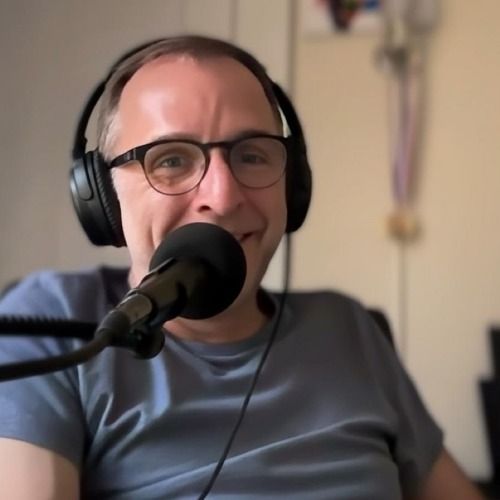
Episode 64
From Hollywood to Mexico City
Growing up in California, Frank Dutro never imagined living outside the States. Then, in the early 1990s, Televisa brought him to Mexico City to teach digital video production, where he met the woman he would eventually marry. The two spent the next two decades going back and forth before moving here for good in 2016. We talk about his years as Hollywood’s computer guy, why he calls this place Tope Town, and what he says when people ask him if Mexico is dangerous.
Please show some support for the podcast and get access to some extra content by subscribing to the Patreon page: http://www.patreon.com/onefjef
Instagram: @onefjefpod
TikTok: @onefjefpodcast
Substack: https://onefjef.substack.com
Facebook: https://www.facebook.com/onefjefpod
YouTube: https://www.youtube.com/@onefjef
Email: onefjefpod@gmail.com
You can also call the podcast and leave a voicemail at 1-669-241-5882 and I will probably play it on the air.
Thank you for listening, please do it again, and then feed people tacos.
Onefjef is produced, edited & hosted by Jef Taylor.
Transcript
Who's the biggest celebrity you think you've met?
Speaker:Take your pick.
Speaker:All of them.
Speaker:Elizabeth Taylor, uh, Tim Robbins, Mel Gibson, Brad Pitt, a- a- any of them.
Speaker:George Clooney.
Speaker:A- all of them.
Speaker:But, you know, it's really impolite to drop names.
Speaker:Uh, Robert De Niro told me that.
Speaker:This is episode 64 of onefjef.
Speaker:Hola mis amigos.
Speaker:Hello, my friends.
Speaker:How are we doing?
Speaker:I know I ask that every week, but I'm genuinely curious
Speaker:to know how you're doing.
Speaker:So if you feel like telling me, onefjefpod@gmail.com or 669-241-5882.
Speaker:I'd love to hear from you.
Speaker:In the last month and a half, this podcast has just about doubled its listenership.
Speaker:I'm not entirely sure what to attribute this to.
Speaker:I mean, I've been upping my marketing game a little bit and doing some
Speaker:better promos and so forth, but I don't attribute all of it to that.
Speaker:I'm just not sure.
Speaker:Maybe consistency is the thing, but I'm happy to have found so many new listeners.
Speaker:And if you are a new listener, welcome.
Speaker:Welcome to onefjef Nation.
Speaker:I'm glad you're here.
Speaker:We all are.
Speaker:We're all happy you're here, and we all hope that you are thriving.
Speaker:It's starting to get cooler here in Mexico City, which is very nice.
Speaker:I will take it.
Speaker:My apartment is on the top floor of my building, and as such, it
Speaker:gets quite warm even when it's not terrifically warm outside.
Speaker:I would prefer to sleep in, like, a, um, a meat freezer if I could.
Speaker:I really like to have it cold when I sleep, and it's been a
Speaker:real adjustment to not be cold when I sleep here in Mexico City.
Speaker:I'm starting to kind of get used to it, but, mm, fifty-two
Speaker:years, it's a lot of adjustment.
Speaker:So I'm very glad that the temperature is starting to moderate down.
Speaker:Keep going.
Speaker:About six months ago, when I was fresh off the boat here in Mexico City, I
Speaker:put a post on Facebook saying that I had a podcast about expats/immigrant
Speaker:things, and I was looking for people who'd like to be on the show.
Speaker:It was the first time that I had done an outreach like this, 'cause
Speaker:all the guests that I've had on the show before have been people that
Speaker:I've kind of known or known well.
Speaker:Like, there was no complete strangers walking into my house
Speaker:in Columbus coming on the podcast.
Speaker:But I didn't know a lot of people in Mexico City, and I needed to find
Speaker:guests, so I put a post on Facebook, and I got quite a few responses.
Speaker:And I ended up having a few of the people over to do some interviews.
Speaker:A lot of them didn't go great.
Speaker:Nothing personal against anybody, but not everybody is good content.
Speaker:But my guest today is good content.
Speaker:He was one of the first people to reach out, and I believe he reached out
Speaker:and said something about how he moved here because of the film industry.
Speaker:He lived in Hollywood and worked in Hollywood for years, and
Speaker:then he moved to Mexico City.
Speaker:I was like, Oh, I work in film and video stuff.
Speaker:This will be interesting.
Speaker:So one day, about five and a half months ago, Frank Dutro, who is my guest
Speaker:today, came over to my apartment in Roma Sur, and, uh, we had a conversation.
Speaker:But before I get to that interview, might I ask you for a favor?
Speaker:Please like, rate, subscribe, and review this podcast on whatever
Speaker:platform you are listening to it on.
Speaker:And after you do that, send it to a friend of yours or a family member, someone
Speaker:you love, even, even someone you hate.
Speaker:Everyone is welcome in onefjef Nation.
Speaker:onefjef Nation has open borders.
Speaker:Come on in.
Speaker:So please do share it.
Speaker:I would really appreciate it.
Speaker:It helps grow this podcast, 'cause it takes a village, or in this
Speaker:case, a nation, onefjef Nation.
Speaker:But above all, thank you for listening.
Speaker:Thank you for being here.
Speaker:Here is my conversation with Frank Dutro from the corner
Speaker:of Tonalá y Aguascalientes.
Speaker:In Los Angeles, I was working with the American Film Institute for what we built
Speaker:there, the AFI Apple Computer Center.
Speaker:Okay.
Speaker:The AFI had certain students that had gone there, graduated, who were
Speaker:from Mexico, who worked at Televisa.
Speaker:Okay.
Speaker:When this center started, this was back in 1990, '91, they said, "Hey,
Speaker:there's new technologies coming for television production, you know,
Speaker:that are gonna impact everything we do. We should go visit AFI." And
Speaker:so a group from Televisa came up.
Speaker:I don't remember all their names.
Speaker:One was a producer, the other was the guy who was the head of all
Speaker:the computer stuff for Televisa.
Speaker:What year is this?
Speaker:Around 92 or late 91- Okay … when they first came up.
Speaker:And so I was there, and we did a full demonstration of everything, explained
Speaker:everything, and they said, "Holy schmoly. We'd like you to come down to, um,
Speaker:Televisa and do a seminar and introduce people to the t- what's going to be the
Speaker:new technology for television production."
Speaker:Was it com- just computers, basically?
Speaker:Most- yeah, digital.
Speaker:Right, digital.
Speaker:D- everything is going digital.
Speaker:Mm-hmm.
Speaker:No more videotape.
Speaker:Right.
Speaker:Right, right.
Speaker:And editing systems and, uh, scriptwriting, everything.
Speaker:Everything changes.
Speaker:And, um, I said, "That'd be great, be happy to help you out." It took
Speaker:a year to, for this all to happen.
Speaker:John Serrano was my main contact there.
Speaker:Mm-hmm.
Speaker:That's who I was just with.
Speaker:Right.
Speaker:So I came down there with my buddy Cody.
Speaker:Cody ended up working at Pixar- Okay … doing animation work for them.
Speaker:But we did a two-week seminar for Televisa, and as the students
Speaker:walked into the room, we would videotape them digi- digitally- Right
Speaker:and capture their images and then create a whole show right on the spot.
Speaker:Hmm.
Speaker:So during the three hours we were there, we would go through
Speaker:the entire production process, budgeting, scheduling, scriptwriting,
Speaker:previsualization, set design, and then all the graphics and everything that
Speaker:Cody would do, so they could see how everything was done on a computer.
Speaker:Right.
Speaker:And then we would edit everything together and create a show, a very
Speaker:short show- Sure … starring them- Hmm … the people in the class.
Speaker:Probably blew their minds.
Speaker:It did.
Speaker:Yeah.
Speaker:It changed… It, and this was for two weeks, so two, two
Speaker:seminars every day for two weeks.
Speaker:Uh-huh.
Speaker:And everything started to shift at Televisa- Hmm
Speaker:and into the, into the world of digital.
Speaker:There, there were other people here already living in Mexico who were digital
Speaker:experts who were gonna guide Televisa down this path over the next several years,
Speaker:new, you know, Avid editing systems- Right, right, right … everything.
Speaker:So you introduced Mexico to digital television production- Yes
Speaker:in a degree.
Speaker:To a very large extent, the same thing me and many and a few other
Speaker:people were doing in Hollywood, to bring technology into Hollywood.
Speaker:As we say, it's a very creative industry.
Speaker:Right.
Speaker:It's also a very technologically intensive industry.
Speaker:For sure, the more every year, yeah.
Speaker:And so we were focused on the tech stuff.
Speaker:People like James Cameron were around, and other people that liked to talk
Speaker:about these things and see what was going on- Right … and figure out what
Speaker:they could possibly use- Right, right, right … for their future projects.
Speaker:So was it, like, the CGI stuff, or was it kind of anything?
Speaker:It was anything.
Speaker:Anything.
Speaker:Just saying, "You can use these thing, these computer things
Speaker:to do your filmmaking stuff.
Speaker:Here's how." Yeah.
Speaker:Right To, to bring, to- bring something good to the whole filmmaking process.
Speaker:Right.
Speaker:The last project I worked on, um, in 1993 was the Addams Family Values project.
Speaker:Oh, right, right, right.
Speaker:Um, and I got to work with Ken Adams, who was an Academy Award winning set designer.
Speaker:Uh-huh.
Speaker:007 and- Oh, right, yeah
Speaker:a whole bunch of other good movies Right And he loved it, 'cause he, 'cause
Speaker:I could print these images out with this, this beautiful color stuff that
Speaker:he gave to all the people building the sets and- Right … painting the sets.
Speaker:And for that movie, that year, he was nominated again for an Academy Award- Huh.
Speaker:Huh
Speaker:for, for that movie.
Speaker:He was so happy with it, with everything.
Speaker:That's nuts.
Speaker:What was your most, like, um, surreal moment in Hollywood, working in Hollywood?
Speaker:Well, as I mentioned earlier, the thing I loved the most was
Speaker:attending the Academy Awards.
Speaker:Oh, right.
Speaker:How was that?
Speaker:How did you end up going?
Speaker:You just… Did you get invited if you work on the- No.
Speaker:I don't get invited.
Speaker:But I had friends who were members of the Academy.
Speaker:Oh, right, and they invited you.
Speaker:And I would say, "Can you help me get a ticket?" "Oh, yeah, sure.
Speaker:We, we… There's plenty of tickets, just, yeah, I have to
Speaker:pay for them, of course." Right.
Speaker:Right, right.
Speaker:And back in the day, before I was married, of course, it was surprisingly easy to
Speaker:get a date to go with you to that- Huh
Speaker:show.
Speaker:I, I don't know.
Speaker:What a surprise.
Speaker:Yeah.
Speaker:Weird.
Speaker:Yeah, weird.
Speaker:Yeah, I imagine that's not the case anymore.
Speaker:Yeah, not, no, not anymore.
Speaker:Nobody wants to go to those Academy Awards anymore.
Speaker:Yeah.
Speaker:So- But it was nice, 'cause I love cinema, that's why I was- Sure … in
Speaker:Hollywood, and it was nice to be around these people who acted in
Speaker:the movies, produced them- Of, yeah
Speaker:directed them- Yeah, yeah, yeah … wrote them- Yeah … and so forth.
Speaker:Yeah.
Speaker:I mean, it'd be amazing.
Speaker:And the music, of course, was just huge for me.
Speaker:Yeah, it'd be amazing to go to the Academy Awards.
Speaker:The music side of things.
Speaker:Are you sitting on, like… Is there, like, a, a upper deck that
Speaker:you're sitting on, or are you sitting on the floor with everybody?
Speaker:I'm sitting on the floor with everybody.
Speaker:I got the good tickets.
Speaker:Wow.
Speaker:Are you sitting at, like, a table?
Speaker:Or on… Oh, no, there's no tables- No, there were no tables … that's
Speaker:the Golden Globes They were just at the- Yeah, yeah, yeah … uh,
Speaker:in the auditorium that's there.
Speaker:So no, we, we had the good- Wow … good tickets.
Speaker:Wow.
Speaker:I paid a little extra for them.
Speaker:Eh, it was probably worth it.
Speaker:It was worth it.
Speaker:Probably worth it.
Speaker:So you met… Was there a lo- I mean, you meet celebrities over there?
Speaker:Oh, I meet a lot of celebrities over there.
Speaker:Yeah.
Speaker:Who's the biggest celebrity you think you've met?
Speaker:Take your pick.
Speaker:All of them.
Speaker:Elizabeth Taylor, uh, Tim Robbins, Mel Gibson- Huh
Speaker:Brad Pitt.
Speaker:A- a- any of them.
Speaker:George Clooney.
Speaker:You got to know- All, all of them … any of them or- It's really … But, you
Speaker:know, it's really impolite to drop names.
Speaker:Uh, Robert De Niro told me that.
Speaker:But, uh, yeah, you meet everybody, 'cause I'm the computer guy.
Speaker:Right.
Speaker:And all these guys are asking me about computers- Right
Speaker:uh, Tom Cruise, take your pick.
Speaker:About what to get, what, how to use it- Yeah, yeah, yeah … different things,
Speaker:or I'd meet, come over to wherever they were living and help them with
Speaker:different things- Oh, wow … or whatever.
Speaker:It's crazy.
Speaker:So it was, it was nice.
Speaker:So you worked in film, and you went, you came, did the seminars here, um,
Speaker:for the, uh, television station here.
Speaker:No, not a television station.
Speaker:At that time, Televisa was the largest production company
Speaker:in the world- Oh, really?
Speaker:… for the Spanish-speaking world.
Speaker:Oh, wow, I didn't know that.
Speaker:Telenovelas and all the stuff that they would produce.
Speaker:Right, right, right.
Speaker:They were the biggest- Wow … by far.
Speaker:Okay.
Speaker:So you came down and- For, for all of the Spanish-speaking world.
Speaker:Right.
Speaker:So you came down and did a demo of all the digital stuff
Speaker:for, uh, this enormous company.
Speaker:Yeah.
Speaker:And, and then you meet your now wife, I mean.
Speaker:Yes.
Speaker:But you never imagined you'd live in Mexico before?
Speaker:No, I'd never been here before.
Speaker:Oh, really?
Speaker:Not to Mexico City, anyway.
Speaker:Right.
Speaker:I mean, I'd been to Tijuana before.
Speaker:Sure, sure, sure.
Speaker:And I was blown away.
Speaker:I had no idea what this place was like.
Speaker:Nor did … I had the same feeling when I came here for the first time.
Speaker:I was like, "Wow, the, the American media does not tell us that this is
Speaker:a beautiful, wonderful country." They tell us it's a terrifying country and
Speaker:everybody should avoid it at all costs.
Speaker:Yeah.
Speaker:They think it looks like one of the old Clint Eastwood movies.
Speaker:No.
Speaker:You know?
Speaker:It's- Fists Full of Dollars or something.
Speaker:Yeah.
Speaker:I just couldn't believe all the beautiful trees and- Yes … I
Speaker:mean, it's just beautiful here.
Speaker:It is.
Speaker:So you meet your wife- Yes … you like her, and you very quickly fa-
Speaker:start a relationship with this woman.
Speaker:Yes.
Speaker:All right.
Speaker:And then, I'm just trying to get to how you ended up in Mexico, basically.
Speaker:Well, ultimately, she worked in television.
Speaker:Okay.
Speaker:She worked in television production.
Speaker:Right.
Speaker:And when we moved to the US, she had, she knew a lot of people in LA.
Speaker:Oh, wow.
Speaker:And she immediately almost went, almost immediately went to work for ABC- Oh, wow
Speaker:for the Academy Awards.
Speaker:I got my best tickets from her.
Speaker:Stick with that one.
Speaker:I got the whole badge and everything.
Speaker:Yeah, that's why you're married.
Speaker:Yeah.
Speaker:And, um, so she was, she was, they, and they liked her.
Speaker:They kept her very busy.
Speaker:Right, right, right.
Speaker:For sure.
Speaker:Until we started having kids, and then she said, "Okay, I'm gonna
Speaker:s- be a stay-at-home mom now."
Speaker:Right.
Speaker:So you got married and moved back to the States?
Speaker:Correct.
Speaker:Okay.
Speaker:But you were still going back and forth quite a bit.
Speaker:With the family stuff and everything, we'd shoot back and forth.
Speaker:It's a quick flight.
Speaker:Did you speak Spanish?
Speaker:Before you came here for the first time, or?
Speaker:J- very bad.
Speaker:Right.
Speaker:Very bad.
Speaker:Right.
Speaker:Including today, I'm not so good, but now- Oh, really?
Speaker:Now we have Google Translate.
Speaker:Wow.
Speaker:Boom.
Speaker:I, it makes me feel a little better.
Speaker:I'm learning.
Speaker:That takes care of things real fast.
Speaker:Yeah, yeah.
Speaker:I'm trying to learn it, uh, you know, as best I can, and I'm, you know, I
Speaker:got a tutor and everything, but it makes me feel a little better that
Speaker:you've been here a long time and you still don't speak it very well.
Speaker:You have a tutor?
Speaker:I have a four-door, so.
Speaker:Anyway.
Speaker:Sorry, that, um- That's, that's a tutor joke … makes sound effects.
Speaker:But, um, the important thing is I can go to restaurants, I can go out in public
Speaker:and be very polite- Sure … with people.
Speaker:They do appreciate- Yeah … politeness- For sure … and so forth.
Speaker:So the basics of those things I can do pretty well.
Speaker:Right, right, right.
Speaker:It's friendlier.
Speaker:Friendlier in many ways.
Speaker:Mm-hmm.
Speaker:Um- And they do have a good sense of humor Yeah … which is fun.
Speaker:What kind of a sense of humor would you say it is?
Speaker:Well, it's good, 'cause I'll walk in in the morning and stagger into
Speaker:Starbucks or whatever coffee shop and say, "Hola. Buenas noches."
Speaker:And they just start cracking up 'cause they know it's a joke.
Speaker:Right.
Speaker:Right, right.
Speaker:You know, which is- They're just like, "Gringo" … things
Speaker:like that they, uh- Gringo.
Speaker:Yeah.
Speaker:Yeah.
Speaker:Yeah.
Speaker:Yeah.
Speaker:I imagine there weren't a lot of gringos here back in the day when
Speaker:like in the, you know, '90s, 2000s, you know, there weren't nearly as
Speaker:many as there are obviously today.
Speaker:Not, not… Especially in Condesa.
Speaker:Yeah.
Speaker:Condesa was just- I remember … another neighborhood.
Speaker:Right.
Speaker:I remember- I had friends who lived there.
Speaker:Yeah.
Speaker:It, it wasn't that populated with much- Yeah, but it's- … of anybody … I've
Speaker:heard this and it's very surprising to me.
Speaker:In Roma Norte, parts of that were like really seedy.
Speaker:I was told, and I'd interviewed a Mexican guy, and he was like, "There were some
Speaker:squares in Roma Norte," I forget the square that was where you- people would
Speaker:buy drugs, and it was really sketchy.
Speaker:Mm-hmm.
Speaker:Like this is, you know, 30, 40 years ago now.
Speaker:Yeah, you have to go to a different neighborhood now for that.
Speaker:And I never go there.
Speaker:I don't even remember the name.
Speaker:Yeah, no, I- But in, in '93, the other thing that I really
Speaker:loved was all the taxis, all the taxis were Volkswagen Beetles.
Speaker:Oh, that explains all the Volkswagens.
Speaker:R- Does that explain, 'cause I noticed- Built, built over in
Speaker:Puebla at the Volkswagen plant.
Speaker:Ah, interesting.
Speaker:Okay, that explains- And all the Volkswagen buses transporting people.
Speaker:Volkswagens, Volkswagens, Volkswagens everywhere.
Speaker:Okay, that explains one of my biggest questions.
Speaker:Uh, not my biggest, but one of my…
Speaker:'Cause I would see, you see Volkswagen Bugs, like vintage Volkswagen Bugs
Speaker:and buses everywhere in Mexico City.
Speaker:Yeah.
Speaker:And I'm like, "I don't see this many in the States." Right.
Speaker:And, but they were building them right over there.
Speaker:Right.
Speaker:Huh.
Speaker:Okay.
Speaker:So that was kind of fun.
Speaker:S- I sort of kind of miss them actually.
Speaker:Yeah, for sure.
Speaker:Yeah, yeah.
Speaker:Now we got the, the Nissan and other- Right … things being used for
Speaker:taxis, but the, the Beetles were fun.
Speaker:Yeah.
Speaker:No, I didn't know that.
Speaker:Were they painted yellow or anything or…?
Speaker:Yes.
Speaker:Oh, that's fun.
Speaker:They were painted, yeah, like they are now, but painted.
Speaker:I'll have to look up a picture of that.
Speaker:Yeah.
Speaker:And the other thing, people were a lot skinnier.
Speaker:But now, but now they drink a lot of… You know, they started putting, uh,
Speaker:high fructose corn syrup in the sodas.
Speaker:They drink too many sodas.
Speaker:Well, Coke just really, really took advantage of the Mexican market
Speaker:in a way that- Junk, junk food and stuff like that, and so now diabetes
Speaker:is through the roof, obesity- Yeah
Speaker:cancer, all kinds, un- unfortunately, all kinds of things, just like the US.
Speaker:So you're going back and forth between Mexico City and LA, but mostly
Speaker:you're in LA, I assume, correct?
Speaker:Correct.
Speaker:Yeah.
Speaker:And then the decision to finally move here was, was when?
Speaker:Well, we were building this house, and it was getting, getting ready to move into.
Speaker:And, um, Leti said, "Let's, let's move." And I said, "Sounds good to
Speaker:me." So we moved everything out.
Speaker:Our kids were able to finish up high school in California.
Speaker:Okay.
Speaker:And after that, then they, they came to, uh- Mexico for university Okay … all the
Speaker:university stuff, which is actually not a bad way to do it if you can pull it off.
Speaker:There's the, the university out by Puebla in Cholula, which
Speaker:is the A- American University.
Speaker:Mm-hmm.
Speaker:They actually have dormitories there and stuff.
Speaker:Hmm.
Speaker:Because you get a lot more bang for your buck, so it's a good idea to
Speaker:do your undergraduate work here, and then go back to the US, or a lot of
Speaker:people go to Europe to do graduate work for their master's and PhDs- Right
Speaker:and so forth.
Speaker:Right.
Speaker:And that works out to be, uh, a great way to get the g- education
Speaker:you want at a decent price.
Speaker:Yeah.
Speaker:Yeah, yeah.
Speaker:Well, I mean, grad school ain't cheap either.
Speaker:Tell me … I can … I mean- … I went to grad school myself, and
Speaker:it was- … uh, very expensive.
Speaker:So you moved here in what year for permanently?
Speaker:2016.
Speaker:2016. And was there any … There was nothing in particular that
Speaker:made you say, "Well, it's time to get out of the States"?
Speaker:It was just like the house was done, time to go?
Speaker:Yeah.
Speaker:Let's … That's- And you were retired at this point, or you were still working?
Speaker:I was pretty retired.
Speaker:I'd- Okay … I'd had a company.
Speaker:I won't get in all the details.
Speaker:W- was it difficult to, in any way, to adapt to living in
Speaker:Mexico City versus living in LA?
Speaker:Not for me.
Speaker:No?
Speaker:I'd been here so much.
Speaker:Right.
Speaker:Right, right.
Speaker:With a family here.
Speaker:Right.
Speaker:I knew where, knew where every place was, every restaurant was, everything.
Speaker:I'd been to every place a million times.
Speaker:What part of town do you live in?
Speaker:Down by … In, in San Ángel.
Speaker:Okay.
Speaker:I don't know it, but- Which is … San Ángel's right next to Coyoacán.
Speaker:Okay.
Speaker:Pedregal is right next to it.
Speaker:Pedregal simply means lava rock.
Speaker:Oh.
Speaker:In around AD 200, a little volcano popped up down i- in the south- South of the
Speaker:city, and just pumped lava for two, for 70 years- Hmm … day in and day out, so
Speaker:that entire area is thick and huge lava.
Speaker:Huh.
Speaker:Our, our home is built into solid lava rock like everything else around it.
Speaker:So it's safer for the earthquakes- So- … I imagine … yeah, it's pretty good
Speaker:in- It's not gonna sink into the ground like a lot of these neighborhoods are.
Speaker:Right.
Speaker:And it's not pumping any more lava, so that's good.
Speaker:That is good for now.
Speaker:Yeah.
Speaker:Yeah, knock on wood.
Speaker:Yeah.
Speaker:Um, you know, there is a lot of talk about the amount of foreign people
Speaker:that are coming in to the country these days, like particularly since
Speaker:2020, 'cause and particularly with housing, you know, there's, I see
Speaker:Gringos Go Home signs a lot, blah, blah, blah, blah, blah, and money, right?
Speaker:And they raise the rent on everything and so forth and so on.
Speaker:Like are there opinions about this?
Speaker:Do they, how do people feel about it?
Speaker:No issue at all.
Speaker:Huh.
Speaker:It's gonna be happening I feel like all over the world f- you know, in the next
Speaker:century, because people are just gonna, from richer countries, are gonna be
Speaker:going to countries where they can, you know, their money goes further and…
Speaker:But I feel like with Mexico City it's more than just the financial part.
Speaker:I think it's because it's a much more relaxing city to live in, you know?
Speaker:There's other options too.
Speaker:A lot of people… Yeah, Mexico City's can potentially be a good option for people.
Speaker:Yeah.
Speaker:A lot of people shoot over to Cuernavaca- Okay
Speaker:which can, actually has some pretty good upside to it as well.
Speaker:Uh, again, the good weather- Yeah … all year round, and, and many other things,
Speaker:so that'd be a good area to kind of… For me, knowing what I know about
Speaker:Cuernavaca, it'd be fine with me if it gets a little more gentrified.
Speaker:It gets a little more invigorated, start kicking out the bad guys, 'cause
Speaker:there's a lot of really good people there, very nice neighborhoods- Right
Speaker:very good neighbor, uh, places to live.
Speaker:So that's another option.
Speaker:There's other areas besides all the beach places . Right.
Speaker:As we say in Mexico City, the only thing missing here is the beach.
Speaker:Yeah.
Speaker:Yeah.
Speaker:Because- I do wish the beach was more easily accessible … we
Speaker:don't have a, the beach here.
Speaker:Yeah.
Speaker:But there's a lot going on here, which is, I mean, I, I mean the reason I
Speaker:moved here is because, I mean, museums everywhere, always something going on.
Speaker:There's museums- I mean, it's- … all the artists of the world- It's
Speaker:incredible … come here to perform.
Speaker:Yeah, yeah.
Speaker:Do you miss anything about the States?
Speaker:Oh, sure.
Speaker:Number one, Trader Joe's.
Speaker:They've never opened a Trader José's here.
Speaker:It'd be nice to have a Trader José's here.
Speaker:It would be.
Speaker:Yeah.
Speaker:It's a very good business model.
Speaker:It is.
Speaker:And, uh, In-N-Out Burger of course- Oh … time to time.
Speaker:We didn't have that in Ohio, but I'd had it once.
Speaker:And, uh, and then the traffic.
Speaker:I hop on a freeway in California, boom, you do 80 miles an
Speaker:hour the, the entire way.
Speaker:I don't go through toll booths.
Speaker:I don't- Right … go through topes- Right … topes, topes.
Speaker:Oh, by the way, I wanted to mention that in this pr- podcast,
Speaker:is topes are speed bumps.
Speaker:Okay.
Speaker:This city is filled- I've seen them … with topes.
Speaker:Yeah.
Speaker:That's why I call Mexico City Tope Town.
Speaker:Everybody thinks that's funny.
Speaker:But at any rate, 'cause y- you're gonna hit topes everywhere-
Speaker:Right … all over the place here.
Speaker:And so it's nice when you can, you know, people obey the laws, that
Speaker:the police enforce the laws- Right
Speaker:in the United States for, for traffic and so forth typically.
Speaker:And it's just more organized.
Speaker:They pave a road.
Speaker:They paint lines down the road for the lanes.
Speaker:Yeah.
Speaker:Not here.
Speaker:Right.
Speaker:Right.
Speaker:Every now and then- Crosswalks … they sort of kind of do- Yeah … maybe, but.
Speaker:I was told there's not even a actual driving test in Mexico
Speaker:City to get a driver's license.
Speaker:Um- Only, only written, and you have to read a document
Speaker:in Spanish- Yeah … to them.
Speaker:And I'm reading this … I, and that's kind of funny 'cause I'm reading
Speaker:the document at the DMV by our house about all the rules and all the
Speaker:things you're supposed to do, and I'm talking, reading it in Spanish,
Speaker:and I ask the guy, I said, "Did anybody else ever actually read this?"
Speaker:'Cause nobody does these things, you know?
Speaker:And he's laughing.
Speaker:He goes, "I know. I hear you." It's crazy to me that there's no- But you gotta
Speaker:read it and- Yeah … get your license.
Speaker:I mean, it's crazy to me that there's no driving test because, like, do
Speaker:you have any evidence that you can drive aside from here's … I'm
Speaker:re- you know, I'm writing it down.
Speaker:I can drive.
Speaker:Like, how do they learn to … Are there driving schools, I wonder, you know?
Speaker:You can.
Speaker:You can take driving lessons.
Speaker:But a lot of people probably don't because it costs money, and they can … Your
Speaker:mom can just teach you how to drive.
Speaker:Possibly, yeah.
Speaker:I mean, I've seen some crazy moves here, I'll be honest.
Speaker:I've seen some moves- Yeah … that I'm like, this is not … You
Speaker:know, you can't cross over three lanes of traffic to turn left.
Speaker:That doesn't seem Yeah, when you're in the right lane- Yeah … and you shoot
Speaker:over without- Seen a lot of that … any warning that you're gonna turn left.
Speaker:Yeah.
Speaker:Seen quite a bit of that.
Speaker:You gotta be really careful- It's like, mm
Speaker:when you're- Yeah … driving.
Speaker:I don't have a car.
Speaker:God bless it.
Speaker:I don't want one.
Speaker:And I do, I do use my turn signal.
Speaker:I admit I'm a bad Mexican driver.
Speaker:Right.
Speaker:You're supposed to not use that turn signal.
Speaker:I, I tell people what I'm gonna do.
Speaker:Yeah, that's ridiculous.
Speaker:Sorry about that.
Speaker:Yeah, you're wasting all your time, and energy, too, 'cause that
Speaker:blinker actually, that's energy.
Speaker:You have to replace that blinker light.
Speaker:How has, how has the city changed since … I mean, you've
Speaker:been here a while on and off.
Speaker:How much have you seen the city change?
Speaker:Well, cert- certainly the air quality, people ask about that all the time.
Speaker:The air quality has improved- Oh, it's improved.
Speaker:That's good … a great deal- Yeah
Speaker:over the last 30 years.
Speaker:Yeah.
Speaker:So they got rid of all the cars that were just burning- Right … fuel, and
Speaker:now they, you know, they're all unleaded and- Right … that kind of thing.
Speaker:We do have a volcano down the street that puffs up every now and then and dumps,
Speaker:you know, the, the smoke into the city.
Speaker:Oh, that's exciting.
Speaker:And that has nothing to do with automobiles or anything.
Speaker:Actually, today, for whatever reason, is a restricted driving day for no good reason.
Speaker:Uh-huh.
Speaker:Certain, certain cars with certain license plates are- Yeah.
Speaker:And, and- … not allowed on the roads … then people just get another car.
Speaker:But a lot of the air quality sometimes is the result of
Speaker:that volcano- Oh, interesting
Speaker:pu- puffing smoke into the city.
Speaker:I would suggest it's also probably a big part of the fact that
Speaker:there's just a lot of cars here.
Speaker:And it's- Six million … and it's quite high up, and I think that there's
Speaker:kind of a bowl that we're sitting in.
Speaker:We sit in a bowl.
Speaker:So- Not a valley … I think the pollution just kind of sits there.
Speaker:It can get- Yeah … yeah, depending on the, the, the climate,
Speaker:it can get locked in and- Yeah.
Speaker:I've been here some days and- Yeah … not this trip, but when I was here before
Speaker:last, uh, last was Ja- February, March, there were a few days where I
Speaker:was, like, noticeably, like … It was like, "The air's not good today." Yeah.
Speaker:Um- Yeah.
Speaker:But generally, it's not … It hasn't been that bad.
Speaker:I haven't noticed it.
Speaker:I mean, I have an air purifier, but- In, in general, it's, it's pretty good.
Speaker:They did move all the factories out of the city, thank goodness- That's a good plan.
Speaker:Yeah … and put them out- Yeah … away from the city.
Speaker:Yeah.
Speaker:And that's, that's been helpful, too.
Speaker:Yeah.
Speaker:It seems like they're developing the city quite a bit.
Speaker:They keep building new subway lines, or planning to anyway, and building
Speaker:new bus lines and stuff, which is They're going vertical What do you mean?
Speaker:They put the sub- the bus line up or- No, I mean, you see the, the
Speaker:h- all the apartment buildings.
Speaker:Yeah These huge apartment buildings- Yeah
Speaker:that are being built.
Speaker:Yeah.
Speaker:Where are they gonna get the water from?
Speaker:Yeah.
Speaker:I don't know.
Speaker:'Cause there is a bit of a water thing here.
Speaker:Has that always been the case, or is it just getting worse?
Speaker:It's been a thing, as f- from what I've read, since the
Speaker:time of the Aztecs till now.
Speaker:Huh.
Speaker:It's been a issue.
Speaker:Strange that they built a city on a lake and still had trouble with water.
Speaker:They did.
Speaker:The lake, the lake water was not consumable.
Speaker:Oh, it wasn't, it wasn't… Yeah.
Speaker:All right.
Speaker:It was too salty.
Speaker:Yeah.
Speaker:Oh, I see.
Speaker:What do they call that?
Speaker:There's a word for that.
Speaker:Brackish.
Speaker:Brackish.
Speaker:Well done.
Speaker:Well done.
Speaker:You get the prize.
Speaker:Yeah.
Speaker:What have been the biggest ways that it's changed in your, in your presence?
Speaker:Well, there's more people living here.
Speaker:You've got, in this general area, about 22 million people, so it's,
Speaker:it's- Yeah … it is overpopulated.
Speaker:There's too many cars on the road, give or take six million per day-
Speaker:Yeah … with one person driving a car.
Speaker:That's a lot of people.
Speaker:It'd be great if they could- That's a, that's a lot of cars It'd be great if they
Speaker:had really good public transportation, not buses, but just rail systems, where people
Speaker:could, could move, easily move around all over the city, hopping on and off rails.
Speaker:Yeah, yeah Would be nice.
Speaker:Yeah.
Speaker:But I mean, where, where do you put them, right?
Speaker:You, you take lanes of highway away for those, you know?
Speaker:It's, that's the difficult part.
Speaker:That's always the decision that they have to make is… I saw somewhere-
Speaker:Oh, sure … they built, they built a bus line that was elevated, and it's
Speaker:just a bus line, but it's elevated, and they did that instead of a subway or
Speaker:a, or like a, you know, a, a light rail because it's significantly cheaper to
Speaker:just have buses running on a- It is.
Speaker:I mean, at least they're trying.
Speaker:Exactly.
Speaker:Have you traveled around Mexico a lot since you've been here?
Speaker:Yes, I have.
Speaker:Where's the… What, what, what are the highlights?
Speaker:Well, of course, I love the Caribbean.
Speaker:I'm not super happy with how things have developed in Cancun,
Speaker:Tulum- Right … Playa del Carmen- Right … places like that.
Speaker:I've heard Tulum's been kinda destroyed by- Yeah.
Speaker:Yeah.
Speaker:My most favorite state to go to, of course, is Oaxaca.
Speaker:I keep hearing this, yeah.
Speaker:And they serve some of the best food in Mexico is there and, and if you
Speaker:want you can shoot over to Puerto Escondido, go over to the beach.
Speaker:Yeah.
Speaker:This is a plan.
Speaker:I've heard Puerto Escon- And, uh-
Speaker:I, those are the two big ones I hear, Puerto Escondido and, and Oaxaca.
Speaker:Yeah.
Speaker:Those- And- That's, that is a awfully nice place to, to go.
Speaker:Um, maybe we should move there.
Speaker:But at any rate- … um, it is, it's, it's such a delight.
Speaker:But v- visiting other states like Chiapas, visiting these
Speaker:ancient Mayan cities- Mm-hmm
Speaker:Palenque.
Speaker:Uh, I c- I can only think of the funny name.
Speaker:Yeah, the other one.
Speaker:The- I know, I know the other one you're talking about, I can't think of it either.
Speaker:Well, we call it chicken pizza, but it's called something else.
Speaker:Oh, Chichen Itza.
Speaker:Chichen Itza.
Speaker:There it is, yeah.
Speaker:And, um, visiting, you know, places like that.
Speaker:Campeche.
Speaker:Mm. Love Campeche.
Speaker:What an incredible city that is to visit when it's cooler.
Speaker:So Christmas time or something, go down to Campeche.
Speaker:Mm. Mm. Mm. Right.
Speaker:It's in the Yucatan, but on the Gulf side of the Yucatan.
Speaker:Oh, nice.
Speaker:I wanna- A place wh- a place where pirates used to come in,
Speaker:Pirates of the Caribbean- Oh
Speaker:would come in to, to rob the place.
Speaker:And so they built huge walls around the city.
Speaker:Oh, that's cool.
Speaker:It's, it is impressive- Yeah … to go visit there, and then visit
Speaker:the Mayan areas around it as well.
Speaker:The, I don't go up in the northern parts of Mexico- Yeah … the, the desert areas.
Speaker:The sketchier areas.
Speaker:I don't need to- Yeah
Speaker:go visit them.
Speaker:I've driven through there, but that was enough to see it.
Speaker:And then, um, plenty of places along the coast to go- Yeah … to go visit.
Speaker:Yeah.
Speaker:I need to beach very soon.
Speaker:The places that people love to surf at are very nice.
Speaker:Yeah.
Speaker:And it's not an expensive flight, which is the nice thing.
Speaker:It's a pretty cheap flight from here to kind of anywhere you wanna go in Mexico.
Speaker:Where… Yeah, why don't you do that?
Speaker:Yeah.
Speaker:Yeah.
Speaker:When you were growing up, did you ever imagine yourself leaving the United States
Speaker:and moving to a place like Mexico City?
Speaker:No It was not like, not even on your radar or anything?
Speaker:No.
Speaker:I d- I do like foreign countries.
Speaker:I remember in high school people would come, they'd be foreign exchange students,
Speaker:and I just loved talking to them.
Speaker:One person was from Spain, very interesting.
Speaker:Another w- Sw- Switzerland, I think.
Speaker:And it was so interesting.
Speaker:Germany, of course.
Speaker:I was like, "Wow, I wanna go visit these places- Right … and
Speaker:see these places." Did you?
Speaker:I've been to Europe- Okay … quite a bit.
Speaker:Yeah.
Speaker:My, my wife Letty had lived there over a two-year period for two years.
Speaker:Oh, right on.
Speaker:So she said, "I'm gonna show you around Paris, Italy, Spain-
Speaker:Uh-huh … everywhere." Nice.
Speaker:And she, she's a good tour guide.
Speaker:Good tour guide.
Speaker:Yeah.
Speaker:Yeah.
Speaker:And- I haven't been to Europe in years.
Speaker:Well, just a couple c- couple quick things about if people live here, a
Speaker:great place to go on the weekends to get away from the city, it's only an
Speaker:hour outside the city, is Tapostlan.
Speaker:Okay.
Speaker:They used to shoot a lot of movies there.
Speaker:Take Your Pick, uh, Butch Cassidy and the Sundance Kid, the 1960 version
Speaker:of, of The Magnificent Seven- Oh, yeah … with Yul Brynner and Steve McQueen.
Speaker:Yeah, yeah, yeah.
Speaker:Um, it's a beautiful, beautiful place.
Speaker:There's a m- many boutique hotels there now, very good restaurants, and a lot
Speaker:of people just shoot out of the city.
Speaker:They mainly just stay at the hotel or in the property or maybe they go down
Speaker:to the main, um, town area just to visit the marketplace and so forth.
Speaker:Right.
Speaker:But it's a very popular place to go hang out on the weekends for people in
Speaker:Mexico City just to get out of the city.
Speaker:Huh, yeah, yeah.
Speaker:It's where I was married in 1993.
Speaker:Oh, there you go.
Speaker:There you go.
Speaker:You know?
Speaker:Yeah.
Speaker:And, uh, it's just close to the city.
Speaker:Mm. So it's easy to shoot out there- Right.
Speaker:Right, right … and then come right back.
Speaker:Right.
Speaker:Right.
Speaker:What are differences, uh, in terms of, like, when you first getting to know
Speaker:your wife and, like, meeting their family, w- were there any noticeable
Speaker:differences between the way that, like, perhaps you relate- laid with
Speaker:your family when you were younger or whatever, your, your, your actual
Speaker:family, as opposed to, like, the way that you've noticed the family unit here?
Speaker:Well, for me, that was a, an incredibly attractive thing, was her family.
Speaker:Mm-hmm.
Speaker:She has five sisters- Hmm … mother, father, and plus all her cousins-
Speaker:Right … aunts, uncles- Big family … all this thing.
Speaker:And it was just so nice, where they care, they care about each other-
Speaker:Mm-hmm … from, from beginning to end.
Speaker:Yeah.
Speaker:They will take care of each other, make sure everything's okay, and do everything.
Speaker:I visit, uh, other families in the US, and I don't see that at all.
Speaker:No, it really- A lot of, like, "Yeah, whatever, big deal," indifference.
Speaker:Yeah, yeah.
Speaker:And I'm, I'm not gonna say that every family in Mexico- Of course … is
Speaker:the same, but with- Generally speaking … with regards to my wife's family-
Speaker:Yeah … it was so nice and so impressive.
Speaker:And I think this is… I think that's a fair generalization to make as well.
Speaker:I think that there's definitely much more of a, um… at least it seems, anyway,
Speaker:to be much more of a focus on the family here, as opposed to United States.
Speaker:Mm-hmm.
Speaker:Um, well, that's nice.
Speaker:It was like a warm, happy place to come to with all these people everywhere.
Speaker:Yeah.
Speaker:Yeah, that's wonderful.
Speaker:And it certainly has forced me to expand, you know, take me out
Speaker:of my comfort zone, if you will.
Speaker:Yeah, well, yeah.
Speaker:I mean, I'm from- Sure … from, from the United States.
Speaker:I grew up in California.
Speaker:It w- things are the way they are.
Speaker:Mm-hmm.
Speaker:And to come here, you know, to learn the language, learn about a different culture.
Speaker:And as we say, you know, in Spain, they h- they were occupied by
Speaker:the, the Arabs for 700 years.
Speaker:Finally, the Arabs left, and then the Spaniards, however they were
Speaker:affected by that, came to this part of the world, to a culture that
Speaker:was very different than theirs, and it's all been blended together.
Speaker:Yeah.
Speaker:This is, by the way, my wife talking, not me.
Speaker:Blended together, what could possibly go wrong?
Speaker:And we're walk- I remember that day she said that.
Speaker:We're walking down the street, and everything was just like,
Speaker:"Whee," just crazy, crazy, crazy.
Speaker:Everywhere, this, the, the way of thinking about things.
Speaker:So there's, there's- Yeah, yeah … that, that here, too.
Speaker:It's very interesting to me.
Speaker:What's the most… Like you said, you got out of your comfort zone,
Speaker:and I, my philosophy is, like, every time I've gotten out of my comfort
Speaker:zone, it's been a great thing, right?
Speaker:It, all, all the fun stuff seems to happen outside of my comfort zone.
Speaker:Mm-hmm.
Speaker:Um, what was the most uncomfortable part of getting out of your
Speaker:comfort zone and moving here?
Speaker:The traffic.
Speaker:Right.
Speaker:Of course.
Speaker:And not only the traffic, just how people think about driving and what they do.
Speaker:You gotta be really careful.
Speaker:Like you mentioned earlier, a guy in the far right lane is gonna
Speaker:suddenly cross over- Right … in front of everybody with no warning-
Speaker:Right … to make a left-hand turn.
Speaker:And whatever else goes on, things like that is- Yeah, yeah
Speaker:is that I have to really be careful of.
Speaker:Yeah.
Speaker:And also just, and this isn't out of my comfort zone, but yet you do
Speaker:have to be polite with people here.
Speaker:Yeah.
Speaker:Otherwise, they're not gonna- I've noticed that … like you too much.
Speaker:Yeah, no, I love that about it actually.
Speaker:I've kind of real- like I was saying earlier, you know, whenever you go
Speaker:into a store anywhere, there's always like, "Buenos dias, buenas noches,"
Speaker:whatever it is, and you, you don't generally have that in the States.
Speaker:People aren't welcoming you every time you come into any
Speaker:kind of a restaurant or anything.
Speaker:Mm-hmm.
Speaker:It w- that's actually a good tip for people coming just to visit
Speaker:even Mexico City, is to just, like, say buenos dias, right?
Speaker:Say, you know, 'cause I feel like a lot of- Yeah … perhaps the anti-gringo
Speaker:sentiment comes from a place of, like, well, they come in here and they're
Speaker:rude and they don't, you know- Yeah
Speaker:they don't even try to speak Spanish or- They're rude, or they don't tip.
Speaker:Right.
Speaker:So when I shop for groceries, there's always somebody bagging my groceries.
Speaker:They don't get paid by the store to work there.
Speaker:Oh, is that true?
Speaker:And I remember I checked out, this is a while ago, and I checked out,
Speaker:there was a American guy checking out.
Speaker:He checked out, the woman bagged all his groceries, and he's walked out the door.
Speaker:Yeah, I didn't… I've done that, 'cause I didn't know.
Speaker:And, and she's like, "He didn't…" And so I said, "I'll, I'll pay you."
Speaker:And I- Oh, that's good to know … I paid it, I paid her for him, and I
Speaker:paid- How much would you ti- … for myself … what kind of a tip?
Speaker:What kind of t- tip do you give?
Speaker:Well, I tend to be pretty generous.
Speaker:Right.
Speaker:Um, so I give them 20 pesos.
Speaker:Oh, yeah, that's n- yeah They're used to getting, like, five pesos.
Speaker:Oh, yeah, I give the garbage people 20 pesos.
Speaker:Well, that's very nice of you.
Speaker:Right.
Speaker:Because they need it.
Speaker:They need to buy food, they need to… And this helps them- Right
Speaker:have a little bit better life, and they're less, they're way less likely to say,
Speaker:"Keep the Americans out." They're gonna say, "No-" For sure … "bring him.
Speaker:Bring a few more." Where else are, should you be ti- should you be
Speaker:tipping and I'm not perhaps tipping?
Speaker:Oh, I … Just restaurants, of course, we eat 15%.
Speaker:15%, all right.
Speaker:Can't say poor Santos- I was told 10, but- 10 … but 15 is fair.
Speaker:No, 15, 15.
Speaker:Oh, all right.
Speaker:Yeah, f- stick with 15.
Speaker:And then just in general, d- I was walking over here, and there was a woman with two
Speaker:little kids selling stuff on the street.
Speaker:Yeah.
Speaker:I just … I handed them 40 pesos.
Speaker:I said- W- right … "I don't want what they're selling."
Speaker:I just said, "Keep the money." Right.
Speaker:Right.
Speaker:I see that a lot over here.
Speaker:So I always carry a pocket full of coins with me, 10 peso coins- Right … just to
Speaker:make sure I have something to give people.
Speaker:Oh, that's a good idea.
Speaker:Yeah.
Speaker:Because by doing that, it creates a better, a much better relationship between
Speaker:us Americans and these people- For sure
Speaker:in Mexico.
Speaker:They're … You know, if somebody comes along and says, "Oh, we're
Speaker:gonna kick out the Americans," or, "This place is being gentrified," or
Speaker:blah blah, they're gonna say, "Uh-uh.
Speaker:Don't touch them," you know?
Speaker:Right.
Speaker:Right.
Speaker:"Keep them, keep them coming." Right.
Speaker:Right.
Speaker:And be decent here.
Speaker:These people struggle, and giving a couple dollars away- Yeah
Speaker:doesn't affect me.
Speaker:And do you think you're gonna be here forever, for the rest of your life?
Speaker:Well, yeah, possibly.
Speaker:I mean, things are going very well.
Speaker:Mm-hmm.
Speaker:And it's been … Financially, it's been good.
Speaker:Right.
Speaker:You left right before Trump got elected, which was good.
Speaker:And, uh, the state of California unfortunately just
Speaker:taxes everybody to death now.
Speaker:Yeah.
Speaker:And that, that wasn't good.
Speaker:Most states do now.
Speaker:Yeah.
Speaker:And, uh, so we can come here and l- live a, a decent life
Speaker:for, at, at a reasonable price.
Speaker:The health … People ask me, "Well, how's the healthcare?" Yeah.
Speaker:Well, it's freaking state-of-the-art- Yeah, I've
Speaker:heard that … is what it's like.
Speaker:Yeah.
Speaker:So you go to Angeles Hospital or the ABC Hospital, it's like
Speaker:walking into a Four Seasons hotel.
Speaker:Hmm.
Speaker:Beautiful places.
Speaker:Not that I ever wanna go to hospitals- Sure … but the family,
Speaker:you know, we go there sometimes.
Speaker:And the doctors are very well-trained, very well-educated.
Speaker:They have state-of-the-art equipment.
Speaker:They have e- anything and everything- Right … for a lot less money
Speaker:than what it would ever cost you in the US for the same thing.
Speaker:What kind of money do you end up pay- I mean, do you have insurance?
Speaker:Yes.
Speaker:Okay.
Speaker:How much is the insurance?
Speaker:I don't know, but I did calculate it.
Speaker:For the amount of money that I pay per year for- … top-of-the-line
Speaker:insurance here- I hate this kind of comparisons, but keep going.
Speaker:Uh- Per year is what it would cost me for only two months in the United States.
Speaker:Yeah, yeah, yeah.
Speaker:So- And then you're still paying your copay … so I pay, I pay about 2,000 a
Speaker:year- … for, for the top-of-the-line insurance with a pretty big deductible.
Speaker:See, I've heard that number quite a bit.
Speaker:Yeah.
Speaker:But so how much are you paying, uh, like for kind of a, whatever, a checkup,
Speaker:if you're going to the doctor for like a yearly checkup of some sort or
Speaker:something, how much does this cost?
Speaker:Well, the doctor I see, I go to the really good doctors.
Speaker:That's gonna run me 200 bucks.
Speaker:Oh.
Speaker:I mean, it, it's, it's better on all fronts, 'cause I was paying, what,
Speaker:two, 650 a month for health insurance before I left, and it would still
Speaker:cost me 50 bucks to go to the doctor.
Speaker:And I'm not spending, whatever, I don't know, 650 times 12, somebody do the math.
Speaker:But not that much money on, you know.
Speaker:It's just in case.
Speaker:It's the just in case.
Speaker:Um, the doctors that I spend time with whenever I see them, which
Speaker:isn't too often- Um, they'll spend well over an hour with me- Oh, see,
Speaker:that's nice … going through stuff.
Speaker:So yeah, that's why I'm paying the $200.
Speaker:Right.
Speaker:'Cause we're doing a pretty in-depth analysis- Yeah, which is good at our age.
Speaker:Yeah … on a lot of things.
Speaker:Yeah.
Speaker:And when I need a blood test, I literally just walk around the corner- Yeah … to
Speaker:the blood test place, pay them the money, and done, done, done, done.
Speaker:Yeah, and a lot of the pharmaceuticals are over the counter.
Speaker:Like, there's an inhaler that, like a rescue inhaler that I
Speaker:would pay, I don't know, a co-pay of 15, 20 bucks in the States.
Speaker:I'm sure they probably charge the, whatever, $200 or something.
Speaker:Right.
Speaker:That guy always drives by.
Speaker:Uh, and here I can get it over the counter for 10 bucks.
Speaker:Yeah.
Speaker:Yeah.
Speaker:And a lot of other medications you don't even need a prescription
Speaker:for, which is quite nice.
Speaker:Correct.
Speaker:Yeah.
Speaker:You can get a lot of stuff over the counter that way.
Speaker:Yeah, which is nice.
Speaker:I mean, United States, I think the numbers are, they pay at least four
Speaker:times as much, sometimes eight times as much, as any other country in the world
Speaker:for medical care and for medications, which is just criminal, really.
Speaker:It's criminal.
Speaker:We're paying for the research is what we're doing.
Speaker:Oh.
Speaker:This isn't a, this isn't a podcast about pharmaceutical research and conspiracy.
Speaker:We'll do that one next week.
Speaker:Yeah, yeah, yeah, yeah.
Speaker:We'll do that one next week.
Speaker:We'll do that next week.
Speaker:Um, do you miss working in Hollywood?
Speaker:No.
Speaker:These days, no.
Speaker:Yeah?
Speaker:I'm good to go.
Speaker:It was a pleasure working with- All the stuff I did there, I worked at D-
Speaker:actually Disneyland for quite a while.
Speaker:Moved up to Burbank, Disney, started working with computers,
Speaker:then over to Universal.
Speaker:Um, and then left that after a while and started just working freelance
Speaker:for Warner Brothers, Universal- Mm-hmm … Disney, MGM, Paramount,
Speaker:take your pick, Sony, all of them.
Speaker:Did you wanna work in film?
Speaker:I was working very heavily… I didn't wanna do film production.
Speaker:I did those two movies, the one in '85 when I first went there
Speaker:with my brother, who's one of the top makeup artists in Hollywood.
Speaker:Oh, right on.
Speaker:John Blake.
Speaker:You can look him up on- Yeah.
Speaker:All right … imdb.com.
Speaker:And it was very interesting, but it's just too, way too time-consuming for me.
Speaker:Yeah.
Speaker:Yeah.
Speaker:I'd rather go work at the studios and go to the commissary, hang
Speaker:out with George Clooney- Right
Speaker:whoever's there, and just, it was so nice.
Speaker:I remember I, at Warner Brothers when I was working on a big project with
Speaker:them, you walk in the commissary, the whole cast of Friends is just
Speaker:sitting around a table telling jokes.
Speaker:It was so nice, you know?
Speaker:Crazy.
Speaker:And, um, that I, that I enjoyed- Yeah.
Speaker:I'm sure … quite a bit.
Speaker:Yeah.
Speaker:And that was my interest in film, working with certain directors and
Speaker:producers and, and other people, helping them and their families with
Speaker:computer stuff, whatever they needed.
Speaker:Right.
Speaker:Right.
Speaker:That was, that was enough for me.
Speaker:And it was very much like a, you were into the computer thing before
Speaker:a lot of people were, and it was a right place, right time thing.
Speaker:Exactamente.
Speaker:Right.
Speaker:Right, right.
Speaker:It's a good way to do things.
Speaker:It really is.
Speaker:I mean, if you can do it that way, that's the thing.
Speaker:You gotta be the one that's, you know, you gotta have the vision to see that
Speaker:the computer's gonna be the thing, right?
Speaker:Yes.
Speaker:Um, like you know, Amazon, like the bookstore idea, it's a genius
Speaker:idea, but who would've thought?
Speaker:I wish I'd come up with that idea.
Speaker:What was it like during COVID here?
Speaker:It was so awesome You could drive everywhere.
Speaker:Oh, right, 'cause there's nobody on the streets.
Speaker:There's nobody on the streets.
Speaker:Yeah.
Speaker:Everybody's staying at home.
Speaker:Everybody's happy.
Speaker:Everybody's, you know- Yeah … I, I didn't, I was out in Tepoztlán
Speaker:quite a bit at our other house- Yeah
Speaker:and just hanging out there 'cause I didn't know how serious this thing really was.
Speaker:Yeah, nobody did.
Speaker:And, and so it was just nice being so free.
Speaker:And just like my friends in LA, I talked to them and say, "Hey,
Speaker:I drove someplace in 13 minutes." And they said, "13 minutes?
Speaker:That takes, like, two hours." I goes, "Not anymore.
Speaker:There's no traffic." Right, right, right, right.
Speaker:You know, so it was nice not having all this traffic and all this stuff going on.
Speaker:Were there restrictions or anything like in the States?
Speaker:There, you know, in the States there was like, you know, you couldn't
Speaker:lockdowns and all these kind of things and they couldn't- Oh,
Speaker:yeah, they, they did all the stuff.
Speaker:All the stuff.
Speaker:They just followed the States to a, a certain extent.
Speaker:Huh, interesting.
Speaker:Did all this, all this stuff.
Speaker:And, uh, um- Did they close the schools here?
Speaker:Yeah, they did.
Speaker:Wow.
Speaker:They did, they did a lot of- Yeah … stuff … that was the,
Speaker:was the biggest mistake, that one.
Speaker:Mm-hmm.
Speaker:So what do you do with your time?
Speaker:You're a retiree.
Speaker:So my time here, thank goodness, we're taking care… My daughter's
Speaker:getting married- Okay … in June.
Speaker:All right.
Speaker:So we're kind of planning that little family get-together.
Speaker:Um, our other son's working in Brooklyn, New York.
Speaker:Oh, wow.
Speaker:Doing, doing really well.
Speaker:Charlie's up in California.
Speaker:He's, he's doing well.
Speaker:So Letty and I are planning where we're gonna go.
Speaker:Okay.
Speaker:And our, our next trip- Right … Argentina, Patagonia.
Speaker:Nice.
Speaker:Go see everything.
Speaker:Nice.
Speaker:That's, she's, her sisters have been there.
Speaker:Now she wants to take the time and trouble to go down there.
Speaker:I met a guy here last year that was biking from Alaska all the way down
Speaker:to the southern tip of Argentina.
Speaker:That's impressive.
Speaker:It really is.
Speaker:That is impressive.
Speaker:Yeah, great guy.
Speaker:He, take him about two years.
Speaker:Wow.
Speaker:But he's biked all over the… I mean, he's biked around Australia,
Speaker:he's biked through India.
Speaker:I mean, he's biked everywhere.
Speaker:He's a big interesting guy.
Speaker:He was on the podcast, actually.
Speaker:Yeah.
Speaker:Yeah, I mean, anything else that you would like to, like, for people who
Speaker:are thinking about moving to Mexico City or, you know, um, who know people
Speaker:who have moved to Mexico City or anything, who have just moved here?
Speaker:Well, cert- certainly I've met a lot of people who've moved here years ago.
Speaker:They're older, retired people.
Speaker:Right.
Speaker:There's Lake Chapala, of course, is a popular place for people to retire.
Speaker:Pretty good weather.
Speaker:Mm. That's out in, by Guadalajara.
Speaker:And so there can be some very, very good options where you can get the care that
Speaker:you need ultimately, and other things, at a reasonable price, plus have access
Speaker:to a nice community of people- Right
Speaker:um, and whatever healthcare services you might need down the road.
Speaker:Instead of it costing you 25, 20,000 a month, it's gonna
Speaker:cost you At $20,000 a month.
Speaker:It may cost you 20,000 pesos a month here- Right, right … which
Speaker:would be a very high level of care.
Speaker:That's $1,000 a month.
Speaker:But nonetheless, all these things are available here.
Speaker:Yeah.
Speaker:And, um, so you have good weather, great food- … nice people.
Speaker:I mean, come with you And then just keep in mind, the problem when the
Speaker:US invaded Mexico in 1946, '47, as when Polk wanted to push everything-
Speaker:Mm-hmm … out to California, um, the soldiers came in to town, to Mexico
Speaker:City, and they're like, "Holy schmoly."
Speaker:They were from Texas.
Speaker:Some of them came in through Veracruz.
Speaker:They're like, "Wow, this is a beautiful place.
Speaker:Nice people, really good food-" Right "… great weather." The secret.
Speaker:"I'm not going back to Texas." "I'm staying here," and they stayed.
Speaker:Oh, wow.
Speaker:I didn't know that.
Speaker:Because it was so nice.
Speaker:Sure, yeah.
Speaker:I mean- They said, "These people are not our enemy.
Speaker:They're very nice.
Speaker:They give us good food to eat.
Speaker:They give us a place to sleep.
Speaker:They could not be kinder." Right.
Speaker:Right.
Speaker:And Polk's like, "Oh, well, you know…" And Mexico's like- Mm … "You
Speaker:know, we got enough to deal with.
Speaker:Let's redraw the border, and there you go.
Speaker:Now leave us alone." Right.
Speaker:"We have enough stuff to deal with."
Speaker:Have prices gone up since you've been here?
Speaker:Oh, sure.
Speaker:A lot, like a decent amount?
Speaker:They, I feel like they've gone up since I was here a month, a year ago, rather.
Speaker:Yeah.
Speaker:Um, it's, it's surprising, um, because I think a lot of the, part of the reason a
Speaker:lot of people move here is because of the money part, part of the reason I moved
Speaker:here, not by far the whole only reason- Mm
Speaker:but one of the reasons for sure, because I don't have to work as much,
Speaker:and I can live a more relaxing life.
Speaker:Sure.
Speaker:It's not about, you know, success, success, success, success.
Speaker:Feels like America really pushes that success button pretty hard all the time.
Speaker:Well, I think that's why Guadalajara is becoming a popular- Yeah
Speaker:area to move into, the Lake Chapala area.
Speaker:I mean, the town of Tequila is just a few minutes up the road.
Speaker:Huh.
Speaker:And the, and the, the Cuervo family's been building a big retirement
Speaker:facility- Oh, no kidding … there for people, as well as- Free tequila.
Speaker:You have a lot of tequila.
Speaker:And, uh, and places like San Miguel de Allende are, they're also building
Speaker:places for people to come retire to.
Speaker:That's a little more high-end.
Speaker:But even in Tepoztlán, there are retirement communities.
Speaker:So in these places, it's like they are almost welcoming American tourists,
Speaker:not that they aren't welcoming them here, obviously, but I mean, in these
Speaker:places, they're actively, like, building places for i- uh, ostensibly American
Speaker:people to come, United States- Yes
Speaker:Americans to come and- Yes … um, yeah, yeah.
Speaker:That's interesting.
Speaker:Yeah.
Speaker:Because money, I guess too, right?
Speaker:Yeah … you know, they want the money.
Speaker:Mm-hmm.
Speaker:It's a complicated question because you do, you know, rents have gone up.
Speaker:A lot of people have had, been, been priced out of neighborhoods like this.
Speaker:Mm-hmm.
Speaker:Um, and but on the other side of the coin, you've got businesses
Speaker:that are doing very well.
Speaker:Businesses are blossoming everywhere and doing much better.
Speaker:And, uh- In this area they are for sure.
Speaker:For sure.
Speaker:Yeah.
Speaker:Oh, yeah.
Speaker:Yeah.
Speaker:So it really is a double-edged sword, and then, you know, you
Speaker:get tax money from that, I assume.
Speaker:Are taxes expensive here?
Speaker:No.
Speaker:No, not bad?
Speaker:No.
Speaker:Yeah.
Speaker:Do you pay property tax here, or is there no pro- Yeah, I do.
Speaker:We do … Oh, there's property tax?
Speaker:Yes.
Speaker:It's reasonable.
Speaker:Yeah, yeah.
Speaker:Huh.
Speaker:And any thoughts on the cartel stuff?
Speaker:'Cause it's a big… That's, that's the only news you s- see
Speaker:in the States generally about Mexico is, A, about immigration
Speaker:of course, and, B, about horrible car- cartel things going on there.
Speaker:I think that's why the impression is generally, oh, it's dangerous
Speaker:there, blah, blah, blah.
Speaker:You're not gonna have problems with the cartels- Yeah … unless
Speaker:you go looking for them.
Speaker:Right.
Speaker:So don't go anywhere near them or what they're doing or anything.
Speaker:Just- Yeah … in these neighborhoods, in Condesa, Roma, Coyoacán,
Speaker:Polanco, I mean, you're fine.
Speaker:Yeah.
Speaker:And there's a huge police- You're just, just having a, just- And they
Speaker:kind of ignore Mexico City to a degree too because they- They do
Speaker:there could, there's a milit- you know.
Speaker:Yeah.
Speaker:I mean, I just, I just think it's interesting 'cause my mom texted me when
Speaker:there was the Of course, the shooting was, was very much well-publicized in
Speaker:the States at the pyramids, and, and it, it was another thing where it's
Speaker:just like, "Oh, this is why everybody is worried about me living in Mexico,"
Speaker:because the news that they get about Mexico is almost always some sort
Speaker:of a negative spin on it, which is unfortunate, or maybe it's fortunate
Speaker:because m- less, you know, less people.
Speaker:Yeah, it's terribly dangerous here.
Speaker:Don't come.
Speaker:Yeah, don't come.
Speaker:It's not … Yeah, we don't like it here, and- Yeah, right, and we will build the
Speaker:wall to keep- … all the Americans out.
Speaker:That was chill.
Speaker:Try to get in.
Speaker:And the other, the other thing I tell people, my friends always ask
Speaker:me, "Well, is it dangerous there?" I said, "Yes, Mexico is very dangerous.
Speaker:You can get fat-" "… 'cause the food is so good here." It really is.
Speaker:What's your favorite, what's your favorite Mexican food?
Speaker:Oh, my goodness.
Speaker:All the different enchiladas at different- Mm … places, tacos of course.
Speaker:Tacos.
Speaker:Tacos.
Speaker:Uh, all the things my wife … Whenever I go with her to restaurants,
Speaker:she always introduces me to- Yeah, yeah, yeah, yeah, yeah
Speaker:all these new things that I- Yeah, yeah … didn't even know about.
Speaker:Yeah, I took a cooking class- So- … and it was actually super fun, with my
Speaker:sister and my nephew were visiting, and we took a cooking class, and it was, it
Speaker:was actually super … It was a great class, like six people, and we learned
Speaker:how to make, how to make tortillas.
Speaker:We learned how to make, uh, salsa and everything, and I don't know about
Speaker:you, but when I was making salsa, I would just take some tomatoes, fresh
Speaker:tomatoes, and just chop them up- Mm-hmm … and put them in, you know,
Speaker:in a bowl with some jalapeno, whatever.
Speaker:Who knew you can just roast them and then smash it all and together?
Speaker:It's much easier.
Speaker:Yeah.
Speaker:It was a revelation.
Speaker:I was like, "Oh, I've been doing it wrong this whole time." Good.
Speaker:Yeah.
Speaker:So for example, in Tepoztlán, when, which is where we buy our tortillas,
Speaker:they are using the same corn that they've been growing for 200 years.
Speaker:Huh.
Speaker:It's corn.
Speaker:Right, but there's many different kinds of corn.
Speaker:It's white corn.
Speaker:Right.
Speaker:It's not GMO.
Speaker:It's not Monsanto- Right … or Bayer now.
Speaker:It's corn, same one they've been using for 200 years with water, and
Speaker:what's the third ingredient, lye?
Speaker:I think it's limestone.
Speaker:Isn't it lime?
Speaker:Limestone or something like that But that's it Yeah And they're so good.
Speaker:So we bring them, we- that's what we keep at our house.
Speaker:We- Uh-huh … don't buy stuff, you look at the ingredients, and there's
Speaker:20 ingredients in it and like, no.
Speaker:Am I supposed to refrigerate tortillas?
Speaker:Yes, please.
Speaker:Okay.
Speaker:Noted.
Speaker:That explains a lot, actually.
Speaker:Refrigerate or f- longer term, freeze them, and then take them out-
Speaker:Oh- … bit by bit … that's a good tip.
Speaker:Hot tip That's what we do.
Speaker:We keep them frozen and then take them out bit by bit to, to use them.
Speaker:Yeah, yeah.
Speaker:What would you say, if you can even say, what would you say is your
Speaker:favorite thing about, about Mexico City?
Speaker:What's like your, your, um… People come visit you, and you're
Speaker:like, "Well, we're gonna go to this place. I need to show you this."
Speaker:The street Francisco Sosa in Coyoacán- Oh, all right … is by far my most favorite
Speaker:street to walk up and down, except for the Reforma here, which is also my favorite.
Speaker:I like Amsterdam quite a bit as well.
Speaker:But, um, and Amsterdam, that's the joke.
Speaker:I'll, I'll call you.
Speaker:I'm gonna go to Amsterdam, and I'll walk.
Speaker:When I get to the End of Amsterdam, I'll call you.
Speaker:It never ends.
Speaker:As y- as you well know by now- Right, right, right … it's, it's the
Speaker:remnants of an old horse race track.
Speaker:Yeah, yeah, yeah.
Speaker:But Francisco Sosa is a street started by the Spaniards.
Speaker:The homes being built there were built by the Spanish, so
Speaker:it has a lot of history to it.
Speaker:Mm. The rock walkways and everything, it's just beautiful.
Speaker:So when you're in Coyoacán- No, I've, I've walked down that street.
Speaker:Walked that- I did the whole, uh- Okay … you know, the, the
Speaker:Casa Azul and the Trotsky Museum.
Speaker:I like the Trotsky Museum better, to be honest.
Speaker:I thought that was fascinating.
Speaker:I had no idea that Trotsky got assassinated here.
Speaker:Yes, he did.
Speaker:Um, yeah.
Speaker:With an ice pick.
Speaker:Yeah.
Speaker:Yeah, no, I saw the place where it happened.
Speaker:Yeah.
Speaker:I saw his toilet for crying out loud.
Speaker:Yeah.
Speaker:It's just amazing that they have Trotsky's toilet.
Speaker:Who would have thought that there was a thing that you could come to
Speaker:Mexico City and see Trotsky's toilet?
Speaker:Exactly.
Speaker:And that he was, might have been having an affair with, uh, Frida Kahlo.
Speaker:Apparently, that was the part- Maybe, maybe early on, but they kind
Speaker:of, they broke up at some point.
Speaker:Yeah, but there was quite a bit of rumors about that.
Speaker:That's right.
Speaker:At least what we heard in these places.
Speaker:Right.
Speaker:But, uh, who knows?
Speaker:Maybe they're just adding, uh, adding some in- like intrigue.
Speaker:I feel like a lot of the-
Speaker:the stories about, the stories you get when you take one walking
Speaker:tour versus another walking tour are oftentimes very different.
Speaker:You know what I mean?
Speaker:Well, then there's the Frank tours, and that's- What are the Frank tours?
Speaker:Me.
Speaker:Oh, your tours.
Speaker:When my friends come to visit.
Speaker:Yeah, yeah.
Speaker:After 30 years of learning and reading- Yeah, yeah, yeah.
Speaker:You're probably the best tour guide of all.
Speaker:Yeah.
Speaker:Uh, one of the funniest, for sure.
Speaker:If I do say so myself.
Speaker:They, they do like my jokes.
Speaker:Um, have you been to that, what's the mariachi square called?
Speaker:I always liked that square.
Speaker:I take people there.
Speaker:I never go there.
Speaker:Oh, I take people there.
Speaker:It's that restaurant there.
Speaker:It's super fun.
Speaker:Oh, good.
Speaker:Yeah.
Speaker:Okay.
Speaker:It's like three mariachi bands playing at the same time.
Speaker:It's worth a stop.
Speaker:It's… And usually we're the only gringos there, which is, I don't think
Speaker:a lot of gringos know about the place.
Speaker:So whenever we go there, the two or three times I've been there, they give us,
Speaker:like, an amazing seat because they want the gringos to have a good time and…
Speaker:Mm. Although last time we were there, one of the mariachi bands was singing that
Speaker:song that, that, like, one of the lines is, "Chinga tu madre." It's like a- Mm-hmm
Speaker:… you know, and, uh, my nephew was there.
Speaker:It was funny.
Speaker:We had to explain to him what chinga tu madre meant.
Speaker:You shouldn't probably say that when you go back to school.
Speaker:Right.
Speaker:Although you can tell your Spanish teacher you learned some
Speaker:new words in Spa- in Mexico.
Speaker:Yeah.
Speaker:Great.
Speaker:Well, the question I usually do ask people at the end of these interviews is,
Speaker:what do you think happens when we die?
Speaker:Well, number one, you don't die.
Speaker:Your body might.
Speaker:Okay.
Speaker:But we are not bodies.
Speaker:Uh-huh.
Speaker:We, these are spacesuits for planet Earth that we wear.
Speaker:Like it- So we're here, and then we're there.
Speaker:We just go home.
Speaker:I love that.
Speaker:That's like, there, there's a quote, um- Ram Dass, who's a, you know,
Speaker:like a Buddhist kinda thing, and he was, his, his quote is, uh, "We're
Speaker:all walking each other home." So I, I assume he was a Homo sapien too.
Speaker:Indeed.
Speaker:Yeah.
Speaker:Indeed.
Speaker:And so we, we're here.
Speaker:Learn as much as you can.
Speaker:This is a big school, but remember, schools do have playgrounds.
Speaker:Learn as much as you can.
Speaker:Learn the language.
Speaker:Learn the thing.
Speaker:Be kind and loving to anybody and everybody everywhere.
Speaker:Feed people tacos.
Speaker:Boy, if everybody just served up tacos all over the world,
Speaker:we'd never have any problems.
Speaker:True story.
Speaker:And if these elitists could just make money selling tacos,
Speaker:we wouldn't have any more wars.
Speaker:We'd just have taco business.
Speaker:Well, at a certain point there probably would be a, like a, like
Speaker:a- … like too many taco stands.
Speaker:If you have, you know, two taco stands for one person- … it's
Speaker:gonna, it's gonna be a problem.
Speaker:They're gonna start to- But at any rate, um, that's what happens,
Speaker:and I've read so many books, watched so many YouTube videos.
Speaker:It didn't matter whether you were an atheist or this
Speaker:or that or the other thing.
Speaker:You were here, and then you were there.
Speaker:Mm-hmm.
Speaker:Now, you could go to a bad place, but that's your choice.
Speaker:So you feel like the, uh- I'm not- It's an energy thing that continues, like a
Speaker:consciousness energy thing, or is it a, is it more of a religious thing for you?
Speaker:It's an essence.
Speaker:I'm not a religious person.
Speaker:Okay.
Speaker:Um, I'm only, as I explain to people, I'm only as religious as God is.
Speaker:So not very religious.
Speaker:Quote-unquote God.
Speaker:Right.
Speaker:Um, I only care about love, 'cause that's the only thing.
Speaker:Love is, is, is the light.
Speaker:It's the power- Absolutely … in my opinion.
Speaker:100%. It's not even an opinion.
Speaker:It's the facts.
Speaker:Yeah.
Speaker:And, uh, it's okay if we're just kind and loving and caring for each other.
Speaker:Absolutely.
Speaker:100% a- agree.
Speaker:The world would be a better place if more people realized this.
Speaker:And, and when people come to Mexico and interact with the typi- the
Speaker:typical Mexicans, they're gonna get a lot of love, just like those
Speaker:soldiers who came in 1846, '47.
Speaker:They were loved.
Speaker:They were cared for.
Speaker:They were … Of course, they liked the weather and the food.
Speaker:Right.
Speaker:But they didn't wanna leave.
Speaker:Yeah.
Speaker:Yeah.
Speaker:So.
Speaker:Well, I don't really wanna leave either, so.
Speaker:At least a month and a half in, I don't wanna leave yet, so.
Speaker:Okay.
Speaker:Anyway, Frank Dutro, I really appreciate you coming in.
Speaker:Thanks for coming on the podcast, telling your story.
Speaker:It's great to meet you.
Speaker:Thank you.
Speaker:Great to meet you.
Speaker:Have fun editing all this.
Speaker:That was fun, right?
Speaker:Thank you again to Frank for coming over to my apartment and
Speaker:sharing your story on my podcast.
Speaker:I really appreciate it.
Speaker:Also, thank you for dinner afterwards.
Speaker:Frank took me out to dinner afterwards, which was very nice.
Speaker:You know what you should do?
Speaker:You should follow the podcast on Instagram at onefjefpod.
Speaker:That's O-N-E-F-J-E-F-P-O-D.
Speaker:Or you can follow the podcast on TikTok at onefjefpodcast.
Speaker:Not enough?
Speaker:Try Substack at onefjef.
Speaker:You just search for J-E-F Taylor, you'll find all my things.
Speaker:There's a few other J-E-F Taylors, but I'm the main one.
Speaker:Sorry, other ones.
Speaker:If you think that you would be a good guest on this podcast, or if you know
Speaker:somebody who you think would be a good guest on this podcast, or if you have any
Speaker:questions, concerns, comments, whatever, shoot me an email at onefjefpod@gmail.com.
Speaker:Or leave me a voicemail at 1-669-241-5882.
Speaker:It's getting hard to come up with new phone number songs.
Speaker:I hope you can appreciate that.
Speaker:1-669-241-5882. I might play your message on the air.
Speaker:Who doesn't want to hear their voice in a podcast?
Speaker:Que mas?
Speaker:Oh, do you like what you just heard?
Speaker:Of course you did.
Speaker:You're still listening now, and I appreciate you for that.
Speaker:While I've got you here, won't you go to patreon.com/onefjef and sign up for
Speaker:a subscription on the Patreon platform?
Speaker:You can sign up for free, but what I'd prefer is if you paid $5 a
Speaker:month, which is very little money.
Speaker:And for $5 a month, you can help support the podcast, make me happy,
Speaker:get access to a bunch of extra content and more to come, and sleep well at
Speaker:night knowing you're supporting a truly independent podcast, patreon.com/onefjef.
Speaker:Thank you to my continuing Patreon subscribers as always.
Speaker:God bless you, and God bless baby Jesus.
Speaker:Thank you.
Speaker:And to conclude this podcast, I'm going to read a poem by Rumi about farts
Speaker:The body keeps no secrets, friend.
Speaker:What rises, rises.
Speaker:Why blush?
Speaker:The wind that moves the tulips moved through you first.
Speaker:Laugh and let it go.
Speaker:God was in the room all along
Speaker:I'll see you next week Very good, Jeffrey