Episode 47
Un Kilogramo de Tortillas
It’s a new era. The podcast has a focus now — expat life in Mexico City — and there’s a new contest to go with it. I talk about CDMX’s no-driving-test license system, why Beetle taxis used to rule the city, the many ways Spanish says “I love you” (and the one way English does), and a tortilla situation I probably should’ve kept to myself. Ponte el cinturón, mis amigos.
Please show some support for the podcast and get access to some extra content by subscribing to the Patreon page: http://www.patreon.com/onefjef
Instagram: @onefjefpod
Facebook: https://www.facebook.com/onefjefpod
TikTok: @onefjefpodcast
YouTube: https://www.youtube.com/@onefjef
Email: onefjefpod@gmail.com
You can also call the podcast and leave a voicemail at 1-669-241-5882 and I will probably play it on the air.
Thank you for listening, please do it again, but put make sure your seatbelt is on.
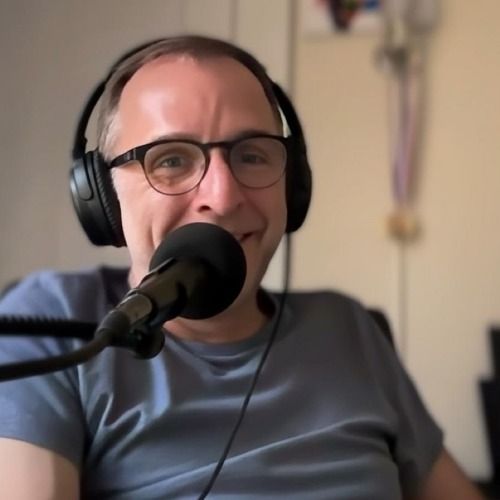
Onefjef is produced, edited & hosted by Jef Taylor.
Transcript
This
Speaker:is episode 47 of onefjef.
Speaker:47 shows up in strange, almost conspiratorial ways in pop culture,
Speaker:most famously in Star Trek where it became a kind of hidden signature,
Speaker:quietly appearing in dialogue, props and background details
Speaker:until fans started hunting for it.
Speaker:There's also a subtle human echo.
Speaker:While most people have 46 chromosomes, 47 appears in certain genetic variations.
Speaker:A small shift that changes everything.
Speaker:Hola, mis amigos.
Speaker:Qué tal?
Speaker:I hope you're all thriving as always.
Speaker:I have not learned the word for thriving in Spanish yet, but when
Speaker:I do, you'll be the first to know.
Speaker:I was just listening through all the recordings I made for this episode of, you
Speaker:know, me rambling about whatever over the past couple weeks, and it's all over the
Speaker:map, which, while it is a good reflection of my mental state over the past couple
Speaker:weeks, it's not entertaining content.
Speaker:You're probably saying to yourself, Jef, have you heard some of
Speaker:the episodes you've released?
Speaker:And to that I say, yes, I have.
Speaker:Which is exactly why you should be thanking me for not including most
Speaker:of my recordings for this episode.
Speaker:Because I do, in fact, have a quality control department here.
Speaker:It's just run by me and my head.
Speaker:And my head said that most of the stuff I recorded for this was no bueno.
Speaker:So I decided to start fresh.
Speaker:Tired, but fresh.
Speaker:Tired because I have not been sleeping well this week, because
Speaker:it has been unseasonably hot.
Speaker:Today it was 32 degrees.
Speaker:And you know what?
Speaker:I'm not going to tell you what that is in Fahrenheit.
Speaker:Double the Celsius temperature and add 30.
Speaker:It feels better if you work for it.
Speaker:Anyway, yeah, hot.
Speaker:But a dry hot.
Speaker:Which makes it far more bearable, to be honest.
Speaker:And it does cool down quite a bit at night, but it's still
Speaker:rather warm in my bedroom.
Speaker:I have an extra bedroom here, and I might actually switch to it,
Speaker:because it's much more cave like, and I think it might be cooler.
Speaker:They also don't do daylight savings time here, so the sun comes up.
Speaker:Brutally early, and it's always the sun.
Speaker:Rarely any clouds.
Speaker:Which is very nice to wake up to, but it's impossible not to wake up to it
Speaker:when it fills your bedroom with light at 630 in the morning, in spite of the
Speaker:semi blackout shade that only seems to cast the room in a strange green glow.
Speaker:I probably just need to go to bed earlier.
Speaker:This is a CDMX Dispatch episode, if you haven't picked up on that yet.
Speaker:Number five, numero cinco, and I have a moderately interesting announcement,
Speaker:and that is that this will now be a podcast about the expat experience
Speaker:in Mexico City, from all the angles, but I'll mostly be talking to expats.
Speaker:I posted in an expat Facebook group a week or two ago to find people to interview.
Speaker:And the responses poured in.
Speaker:They're still coming in.
Speaker:People want to talk about their lives.
Speaker:And I'm here for it.
Speaker:Because expats are an interesting bunch.
Speaker:Believe you me.
Speaker:So don't turn that dial.
Speaker:I'll also be changing the title of this podcast to Gringo licious.
Speaker:That was a joke.
Speaker:Or was it a joke?
Speaker:I don't know.
Speaker:Maybe that's a good title.
Speaker:When I lived in London in my twenties, I remember noticing that
Speaker:everybody always ended, often ended questions with the word, yeah,
Speaker:like you're going to the store.
Speaker:Yeah.
Speaker:You want a receipt?
Speaker:Yeah.
Speaker:It's a common thing.
Speaker:At least it felt like it was to me.
Speaker:Maybe it was just like an anomaly that everybody I was around was
Speaker:doing it, but it seemed very common.
Speaker:But in Mexico, in Mexico, it's often no.
Speaker:Like, it's cool, no?
Speaker:But you mean, it's cool, yeah.
Speaker:It's nice here, no?
Speaker:And I wonder why that is.
Speaker:No versus yes, country.
Speaker:I wonder if it's like an oppressor.
Speaker:Like, the UK very much, like, was an oppressor and a colonizer and
Speaker:a, you know, did many bad things.
Speaker:And Mexico was the oppressed to a great extent.
Speaker:You know, taken over by the Aztecs and so forth.
Speaker:So I wonder if that.
Speaker:That is why there's, it's a no here and a yes there.
Speaker:The United States, I don't hear any of that.
Speaker:There's not really a added on affirmative or negative to
Speaker:questions or anything really.
Speaker:Occasionally maybe, but not very often.
Speaker:But, but yeah, it's interesting, right?
Speaker:It's interesting, no?
Speaker:See what I did there?
Speaker:I learned a few days ago that you don't need to do a driving test to get
Speaker:your driver's license in Mexico City.
Speaker:There's a written test and some sort of sworn statement that you'll follow all
Speaker:the driving rules, but no actual evidence that you're able to drive an automobile.
Speaker:So, you know, different strokes for different folks, but this seems Unwise.
Speaker:Although, surprisingly, I haven't seen a single car accident since I've been here.
Speaker:Although I have seen, on more than one occasion, someone cutting in front of two
Speaker:or three lanes of traffic to turn left.
Speaker:So, there's also a ton of speed bumps and one way streets here,
Speaker:which I think makes driving a bit less complicated, but still, right?
Speaker:I mean, in the U. S., there is a driving test, and people still drive like asshats.
Speaker:I don't know.
Speaker:I feel like I should look up some statistics on traffic accidents in Mexico
Speaker:City, because it's not every Mexican state that doesn't have a driver's test.
Speaker:I think Mexico City might be one of the only states that doesn't
Speaker:require a driving test, which again, seems counterintuitive considering
Speaker:Mexico City is extremely populous.
Speaker:But again, what do I know?
Speaker:Maybe there's something else going on that I am not aware of.
Speaker:Speaking of driving and cars, I guess, I think I mentioned in another episode.
Speaker:About how many vintage Volkswagen Beetles I've seen here.
Speaker:Also like the micro buses, too.
Speaker:Like the ones you'd see at dead shows.
Speaker:They're all over the place.
Speaker:And now, I know why.
Speaker:Up until, I think, 2012, the official taxis in Mexico
Speaker:City were Volkswagen Beetles.
Speaker:They called them Vochos, which I imagine were very charming.
Speaker:But these are two door cars.
Speaker:So drivers would actually remove the front passenger seat to make it easier
Speaker:for people to get in and out of them, which meant that there was nothing
Speaker:preventing the passenger from flying out the front window if the driver, like,
Speaker:suddenly slammed on the brakes or, you know, God forbid, ran into something.
Speaker:Apparently, they also became a target for crime because it was really easy to trap
Speaker:the passengers in the car because you can't get out unless the person, yeah.
Speaker:So, they phased them out, and made a law that all taxis have to have four doors.
Speaker:Which seems like a sound decision.
Speaker:That said, I do wish I could have seen this city when it was full
Speaker:of Volkswagen Beetle taxis instead of generic Ubers everywhere.
Speaker:And I imagine there's a driving test for taxi drivers here, right?
Speaker:I mean, there has to be for taxi drivers.
Speaker:Although I didn't have to take one when I was driving an Uber
Speaker:in the States, so maybe not.
Speaker:I'm actually considering changing the name of this podcast to
Speaker:something a little less opaque.
Speaker:Something that actually tells you what you're going to be listening
Speaker:to, if you know what I mean.
Speaker:And now that I finally have an actual general subject matter for this podcast,
Speaker:perhaps it's time to come up with a title that reflects that subject matter.
Speaker:Which reminds me, I am sorry to announce that the podcast description
Speaker:contest that was started two or three weeks ago has been cancelled.
Speaker:I got hundreds of entries, and I appreciate each and every one of them,
Speaker:but now the podcast is changing, so the entries are all kind of moot.
Speaker:The good news is, there's a brand new contest called Come Up With
Speaker:The New Name For This Podcast.
Speaker:Pretty self explanatory, really.
Speaker:You can email your entries to onefjefpod at gmail.
Speaker:com, or leave a voicemail at 1 669 241 5882.
Speaker:That's 1 669 241 5882, 1 669 241 5882.
Speaker:I just gotta settle on a song for the phone number, and I feel like every
Speaker:time I do a different song, but not even songs, there's not really a anyway.
Speaker:Call that number, leave a voicemail message with your name ideas, and
Speaker:I'll probably play them on the air.
Speaker:I will play them on the air, who am I kidding?
Speaker:The winner, as determined by me, will get to come on the air and
Speaker:announce the new name of the podcast.
Speaker:And if you don't want to come on the air, that's fine, but
Speaker:realize that that's the prize.
Speaker:And I'll probably just have someone come on the podcast and pretend
Speaker:to be you, announcing the name.
Speaker:So you might as well just come on, is what I'm saying.
Speaker:It's a good prize.
Speaker:You won it.
Speaker:So start entering.
Speaker:Don't dally.
Speaker:Entries from my Patreon subscribers will get more consideration than
Speaker:those from the proletariat, which is why you should go to patreon.
Speaker:com slash onefjef and sign up before you enter.
Speaker:Even if you're not going to enter, you should still sign up.
Speaker:Why?
Speaker:Well, because this is an independent podcast made entirely by me, and
Speaker:while I do enjoy it, it takes a lot of time and energy to put together.
Speaker:And I give it to you for free.
Speaker:Ad free.
Speaker:Although if anyone's interested in advertising on this podcast, please
Speaker:email me at onefjefpod at gmail.
Speaker:com.
Speaker:Anyway, patreon.
Speaker:com slash onefjef.
Speaker:For just five dollars a month, or about a hundred pesos a month, you can get
Speaker:access to a bunch of extra content, subscriber only episodes, as well as
Speaker:early access to some other episodes.
Speaker:It'll make you feel special.
Speaker:And most of all, you'll be showing your support and love for this
Speaker:podcast and helping me pay for the two microphone stands I just had to
Speaker:buy here because there wasn't any room in my luggage for my old ones.
Speaker:Patreon.
Speaker:com slash onefjef and please sign up through the website and not the app
Speaker:because Apple takes a surprisingly large cut if you subscribe through the app.
Speaker:And if you're still on the fence, I can put you in touch with one of my
Speaker:current Patreon subscribers, and they will tell you what a magical, life
Speaker:changing experience it has been for them.
Speaker:You might cry, actually, but after you finish crying, you'll sign up.
Speaker:Patreon.
Speaker:com slash onefjef.
Speaker:And to my current subscribers, thank you always and again for your
Speaker:continued support of the podcast.
Speaker:You are loved and appreciated.
Speaker:Bien.
Speaker:Accidentally ordered a kilogram of tortillas last week.
Speaker:It's a long story as to how it happened and I don't really want to get into it
Speaker:because it makes me look really dumb.
Speaker:But what I learned from that experience, or mistake, or what have you, Is that
Speaker:tortillas need to be refrigerated and also that I don't need a kilogram of them.
Speaker:The end,
Speaker:the word experiment in Spanish means both to experiment and to experience,
Speaker:and I find that kind of perfect.
Speaker:Also, the word RA means to wait and also to hope, which also oddly perfect.
Speaker:I am getting better at Spanish.
Speaker:Slowly, but surely.
Speaker:Mostly slowly.
Speaker:At one of my classes last week, I had a bing moment, and I was
Speaker:suddenly, like, translating fairly complicated sentences, which, I can't
Speaker:tell you how amazing that feels.
Speaker:I mean, if you know, you know.
Speaker:But it was like, oh, look, I'm learning things.
Speaker:Later that day, however, I was getting a grocery delivery from Uber Eats.
Speaker:And I said like, you know, buenos noches to delivery guy.
Speaker:And I guess it sounded legit because he started saying a lot of things
Speaker:back to me and I was clueless.
Speaker:And when the driver realized I was clueless, he looked disappointed.
Speaker:I think he was trying to joke around with me, to be honest, but I failed.
Speaker:And I decided after that, that one day I'll be able to joke
Speaker:back with delivery drivers.
Speaker:And on that day, I will feel like I have won.
Speaker:No physical prize, more of a mental and emotional prize.
Speaker:Living in a country where I don't speak the language has given me a
Speaker:profound appreciation for the fact that I grew up in a country where the
Speaker:language is the lingua franca, or is it lingua franca, whatever, of the world.
Speaker:Means it's like the common language of the world.
Speaker:I used a fancy phrase.
Speaker:And also a profound appreciation for how difficult it must be for people who
Speaker:don't speak English to go to places.
Speaker:Someone told me recently that to learn Spanish, or any language for that matter,
Speaker:you need to kind of turn off the logic part of your brain and just like speak it.
Speaker:Don't overthink it.
Speaker:Don't translate it in your head, just speak it.
Speaker:Because languages aren't just about using different words, they're about
Speaker:different ways of expressing ideas.
Speaker:And that's kind of the beauty of it, really.
Speaker:Te quiero, for example, means I love you in Spanish.
Speaker:But it literally means I want you.
Speaker:Or more literally, you I want.
Speaker:So a direct translation wouldn't work, right?
Speaker:Te quiero.
Speaker:It's a beautiful way of saying I love you.
Speaker:It comes from, I looked this up, the Latin word for love.
Speaker:Queyerere.
Speaker:I probably pronounced that wrong, but I don't think there's any Latin
Speaker:speakers listening to this podcast that are going to correct me,
Speaker:so I'm just going to go with it.
Speaker:Queyerere.
Speaker:Queyerere.
Speaker:Which means to seek or to look for.
Speaker:And not only is the phrase te quiero beautiful, but the idea that to
Speaker:love someone is to seek them or want them, that's also beautiful.
Speaker:You can also say te amo, of course, which means I love you or You, I love,
Speaker:but it's a more direct form of love, usually just for romantic partners.
Speaker:There's actually a ton of ways to express affection and love in Spanish.
Speaker:My favorite is gordito, which literally means little fatty, which would not
Speaker:go over well in the United States.
Speaker:But in Spanish, it's a term of endearment.
Speaker:And I love that.
Speaker:And in English, we basically just have I love you, which To me, it reflects a
Speaker:profound cultural difference in attitudes about expressing affection, which might be
Speaker:part of the reason I like it here so much.
Speaker:There's also much more, like, casual politeness here.
Speaker:Whenever I walk into a store or restaurant, I'm always greeted
Speaker:with, like, buenos dias or buenos tardes, and you're expected to
Speaker:say it back, to give warmth back.
Speaker:And it's considered kind of rude if you don't, which, again, is
Speaker:not the case in the United States.
Speaker:I mean, they say, how can I help you, I guess, in a lot of places, but There's
Speaker:not often like, oh, good morning.
Speaker:Anyway, I've said it once and I'll say it again.
Speaker:The vibes are better in Mexico.
Speaker:They're better.
Speaker:But I digress.
Speaker:This morning I went to this yoga class that I've gone to several
Speaker:times in Condesa, and the class is good, but then you get out and you
Speaker:are walking through Condesa on a Sunday morning, and it is Beautiful.
Speaker:There's people everywhere.
Speaker:There's dogs everywhere.
Speaker:There's life everywhere.
Speaker:Mostly in Parque Mexico, which is an amazing park that has meditation areas.
Speaker:I mean, what are, maybe I haven't been to Portland for a while, but,
Speaker:I don't often see meditation areas in parks in the United States.
Speaker:It brings me joy just to like, I'll even have my ear, ear pods in my ear, whatever.
Speaker:And I'm listening to music, but I'm just wandering through all the people at cafes
Speaker:and the trees and the beautiful weather.
Speaker:It's magic, but I will say you should never move here.
Speaker:It's terribly dangerous and everything's very expensive and it's horrible.
Speaker:So don't move here.
Speaker:We were at this restaurant tonight and there was a table of three,
Speaker:uh, probably in their twenties.
Speaker:From the States, from Phoenix or something.
Speaker:And the conversation I often have with people here who have either moved here
Speaker:or just visiting is like, I had no idea.
Speaker:I had no idea because the media you get from the United States about
Speaker:Mexico is almost always violence, scary, bad immigrants, whatever it is.
Speaker:And great, keep doing it because the less people, the better.
Speaker:But as my.
Speaker:Wonderful podcast audience.
Speaker:I feel obliged to tell you that this is a surprisingly
Speaker:wonderful place that I live in.
Speaker:If you've never been here, if you're your impressions of what Mexico and
Speaker:Mexico city are like, it is probably a hundred percent or at least 75 percent
Speaker:wrong, but don't tell anybody else because we don't need this to get out.
Speaker:I mean, it is already getting out, but, and I suppose the podcast might
Speaker:add to that, but whatever, who cares?
Speaker:Mexico tourism company.
Speaker:I'm happy to be an advertiser.
Speaker:Anyway, I'm not sure what else to say.
Speaker:I feel like I have enough content for an episode here.
Speaker:So hopefully you agree with me and to my Patreon subscribers, I
Speaker:apologize for not giving this to you early, but it's the beginning of
Speaker:a new era for the onefjef podcast.
Speaker:And I felt like, you know, this kind of thing requires everybody
Speaker:to get it at the same time.
Speaker:But this will be a one time thing, probably.
Speaker:I'm not promising anything anymore, as I've said.
Speaker:So this will likely be a one time thing.
Speaker:My intent, I'll say that, is for this to be a one time thing.
Speaker:But again, it could happen again.
Speaker:In two years, who knows?
Speaker:I can't believe I've been doing this podcast for almost a year now.
Speaker:Can you believe that?
Speaker:47 episodes I've made of this 10, 11 months.
Speaker:I mean, plus bonus episodes, so at least 50.
Speaker:I'm impressed with myself.
Speaker:And that's okay.
Speaker:I'm going to feel that impressed with myself and run with it
Speaker:because that is absolutely allowed.
Speaker:Go me and go you for sticking with me through this journey.
Speaker:For sure.
Speaker:If you're a listener who is like committed listener day one or
Speaker:whatever, listen to all the episodes.
Speaker:And I know there's a few of you out there.
Speaker:I really appreciate you.
Speaker:And I. You help me continue to want to do this.
Speaker:So I appreciate all of the, I do get a text occasionally from
Speaker:friends who say it's great.
Speaker:Yeah, I love it.
Speaker:So that makes me really happy because it's hard to have the energy to continue this.
Speaker:It takes time and energy, but I have a rejuvenated source of energy now, which
Speaker:is the expat thing because I continue to get messages on Facebook and I Saying,
Speaker:Oh, I'd love to be on your podcast.
Speaker:podcast.
Speaker:And I'm going to meet these people.
Speaker:One guy invited me to his house and you'll get to hear their stories.
Speaker:You'll get to see how they ended up here.
Speaker:And believe you me, there's some good ones coming up.
Speaker:There's some interesting stories of how people ended up here trying
Speaker:to get a woman on who an Irish woman who I met, who was a flight
Speaker:attendant for the Saudi Royal family.
Speaker:So buckle up, my friends buckle up.
Speaker:If I could say buckle up in Spanish, or even try Arriba?
Speaker:Buckle arriba?
Speaker:Is that?
Speaker:I would do it, but I don't know how to say the word buckle.
Speaker:Bucle?
Speaker:Bucle?
Speaker:Buclo?
Speaker:I don't know.
Speaker:If you know how to say buckle in Spanish, email me at onefjefpod at gmail.
Speaker:com.
Speaker:You will get a prize.
Speaker:It has gotten expensive here.
Speaker:Part of my reason for moving here was because it's just
Speaker:You know, less expensive.
Speaker:I'm not going to lie about that.
Speaker:And I think a part of the reason a lot of people move here is because
Speaker:it's less expensive, but that influx of people from expensive countries
Speaker:is really raising prices here.
Speaker:I was looking at apartments in Condesa and they're like, I don't know,
Speaker:between 1500 and like 3, 000 a month.
Speaker:I'm paying about 1100 here in this place.
Speaker:And I think that's a good deal.
Speaker:I was told it's a good deal by a Mexican.
Speaker:That's Who was on the podcast, Bernardo.
Speaker:And that made me feel good because that's great.
Speaker:I'm getting a good deal.
Speaker:But like, you know, at some point I'd like to move if I continue
Speaker:to stay here and live here.
Speaker:I would like to find a cheap place as well, but maybe this is just a
Speaker:great, maybe this is a great bet.
Speaker:It's a good location.
Speaker:I would like to be in Condesa.
Speaker:I'll be honest.
Speaker:I don't love the fact that it feels somewhat Brooklyn y with all the
Speaker:English speakers there, but it's just such a beautiful neighborhood.
Speaker:You can't really.
Speaker:You can't really blame all of them for going there.
Speaker:But it does make me think like, you know, a popular neighborhood in Columbus
Speaker:where I first moved was the Short North.
Speaker:And I was paying 1, 500 a month for my apartment there, which seemed
Speaker:like a huge steal at the time.
Speaker:It was an elevator building.
Speaker:This is in 2018.
Speaker:But if a bunch of people from a country that was richer than the United
Speaker:States moved there and decided Short North was the most beautiful, awesome
Speaker:neighborhood in Columbus Then, and my rent started going up because of them.
Speaker:I'd be pissed too.
Speaker:So I get it.
Speaker:And I don't know what the solution is, aside from just to say, don't come.
Speaker:But we're becoming a global world now.
Speaker:And this is just going to keep happening more and more.
Speaker:Is it exploitation of another country?
Speaker:I don't know.
Speaker:It's an interesting question.
Speaker:It's a complicated question.
Speaker:Because while the rents and the prices of things are going up, there's a lot of
Speaker:people who have businesses in these areas that are doing very well because of this.
Speaker:So, I don't know.
Speaker:And there's also the factor of like, they're not building enough apartments,
Speaker:like low income housing here in Mexico City, which also does cause
Speaker:the prices of properties to raise.
Speaker:But there's no denying that all of the gringos coming in and being willing
Speaker:to spend a decent amount of money on an apartment in Condesa is going to
Speaker:raise the prices across the board.
Speaker:So.
Speaker:Who knows?
Speaker:Not me.
Speaker:I'm only a month and a half into this thing, so lord knows what could happen.
Speaker:Anyway, yeah, things are going well.
Speaker:There's good days and there's bad days.
Speaker:It's a bit of a roller coaster, this expat life in Mexico City.
Speaker:And that's okay, as long as you know that that's the way it's going to be
Speaker:and learn to Just enjoy the ride, right?
Speaker:And I am enjoying the ride.
Speaker:And slowly but surely, this life is getting less surreal and more real.
Speaker:And I wish it would just stay surreal.
Speaker:I want to hang on to that surreal nature of the whole thing.
Speaker:Because as soon as things start getting real, then time starts to speed up again.
Speaker:Nobody wants that.
Speaker:Nobody wants that.
Speaker:The saying I use quite a bit on this podcast, you can't see the
Speaker:label when you're inside the jar.
Speaker:I've been thinking about that a lot over the last month and a half,
Speaker:seven weeks that I've been here.
Speaker:Because to me, that saying is about perspective.
Speaker:And I find this important, very important, actually, to maintain
Speaker:a sense of perspective here.
Speaker:Because I'm doing a hard thing, but I'm also doing an amazing thing.
Speaker:And sometimes it's easy to forget about the amazing part
Speaker:and focus on the hard part.
Speaker:So you need to like get your jar up in front of a mirror of some sort so you
Speaker:can read that label and remind yourself that even the hard part is amazing.
Speaker:You should follow this podcast on Instagram at onefjefpod.
Speaker:You should follow this podcast on Facebook at onefjefpod.
Speaker:You should follow this podcast on substack, at onefjef, I believe.
Speaker:And thank you, as always, for listening.
Speaker:I appreciate you and your ears.
Speaker:And I'm going to leave you this week with a quote from Kurt Vonnegut,
Speaker:who is, uh, one of my heroes.
Speaker:I often say, so it goes, without even realizing that
Speaker:it's from Slaughterhouse Five.
Speaker:But it is.
Speaker:So it goes.
Speaker:Be soft.
Speaker:Do not let the world make you hard.
Speaker:Do not let pain make you hate.
Speaker:Do not let the bitterness steal your sweetness.
Speaker:Take pride that even though the rest of the world may disagree, you still
Speaker:believe it to be a beautiful place.
Speaker:I'll see you next week.
Speaker:Very good, Jeffrey.